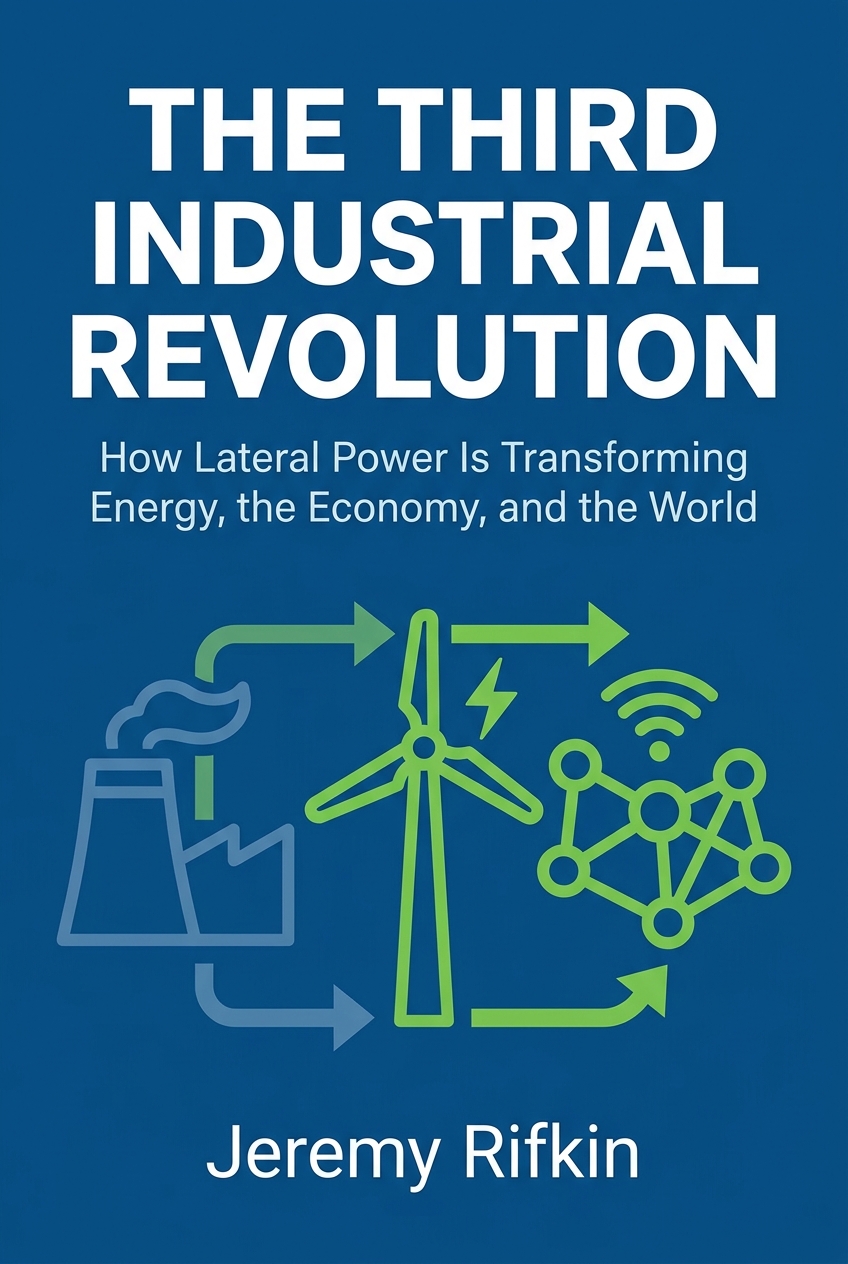
The Third Industrial Revolution
How Lateral Power Is Transforming Energy, the Economy, and the World
What's it about
Are you ready for the next great economic revolution? Our current industrial model, built on fossil fuels, is collapsing. Discover the visionary five-pillar plan for a sustainable new era, one that promises to create thousands of businesses, millions of jobs, and a fundamentally more democratic economy. Learn how the convergence of internet technology and renewable energy is creating a new "Energy Internet." You'll explore how this powerful lateral network will transform how we generate, store, and share power, fundamentally reshaping our homes, businesses, and the global economy for generations to come.
Meet the author
Jeremy Rifkin is an influential economic and social theorist whose work has been embraced by the European Union and the People’s Republic of China. As president of the Foundation on Economic Trends, he has spent decades advising governments and global businesses on the economic, social, and environmental impacts of new technologies. This unique position at the intersection of policy, business, and innovation provided the foundation for his groundbreaking vision of a new economic era powered by renewable energy and the internet.
What's it about
Are you ready for the next great economic revolution? Our current industrial model, built on fossil fuels, is collapsing. Discover the visionary five-pillar plan for a sustainable new era, one that promises to create thousands of businesses, millions of jobs, and a fundamentally more democratic economy. Learn how the convergence of internet technology and renewable energy is creating a new "Energy Internet." You'll explore how this powerful lateral network will transform how we generate, store, and share power, fundamentally reshaping our homes, businesses, and the global economy for generations to come.
Meet the author
Jeremy Rifkin is an influential economic and social theorist whose work has been embraced by the European Union and the People’s Republic of China. As president of the Foundation on Economic Trends, he has spent decades advising governments and global businesses on the economic, social, and environmental impacts of new technologies. This unique position at the intersection of policy, business, and innovation provided the foundation for his groundbreaking vision of a new economic era powered by renewable energy and the internet.
The Script
You've reached the end of the free preview.