The Haunting of Hill House
What's it about
Ever wondered what truly lurks in the shadows of your own mind? Prepare to explore the terrifying line between a haunted house and a haunted psyche. You'll discover how four strangers seeking paranormal proof find themselves trapped in a place that knows their deepest fears and weaknesses. This summary unpacks the chilling secrets of Hill House and its effect on the fragile Eleanor Vance. You'll learn how Shirley Jackson masterfully uses psychological terror, not just ghostly apparitions, to question your own perception of reality. Find out why this isn't just a ghost story—it's a journey into the darkness of the human heart.
Meet the author
Shirley Jackson is celebrated as one of the most influential American writers of the twentieth century, a master of psychological horror and the gothic tale. Drawing inspiration from her own experiences with social anxiety and the darker side of seemingly placid small-town life, she expertly crafted stories that explore the hidden evils within ordinary people and places. Her unique ability to weave supernatural terror with subtle social commentary has cemented her legacy as a literary giant whose work continues to haunt and captivate readers today.
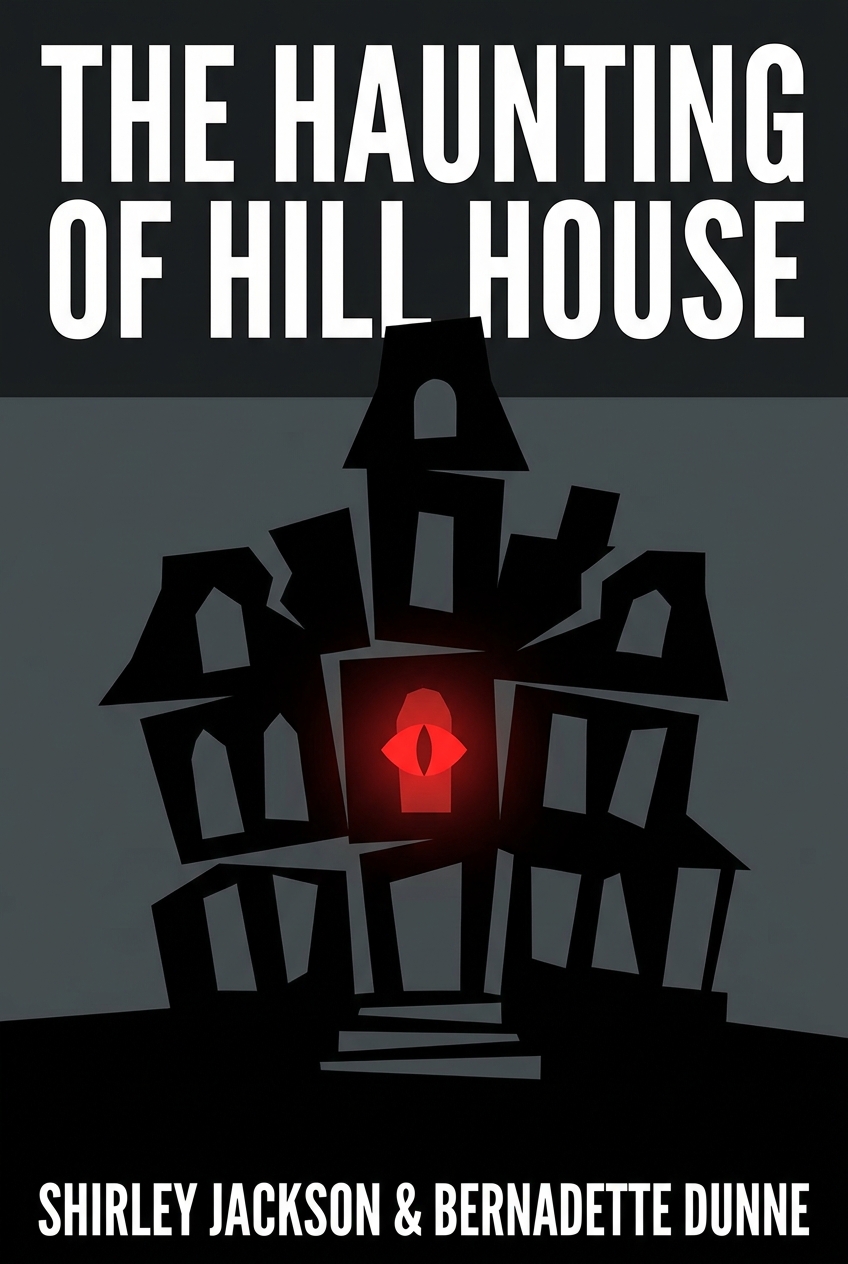
The Script
Every family has a house. A house of stories, built from shared memories and silent agreements. Each room holds a different chapter: the kitchen where triumphs were celebrated, the staircase that witnessed arguments, the bedroom where secrets were kept. We walk through these rooms in our minds, comfortable in their familiar layout. But sometimes, a draft comes from nowhere. A door you know you closed is suddenly ajar. A familiar portrait on the wall seems to look at you differently. The house, your own psychic home, begins to feel less like a sanctuary and more like a trap. The very structure you built for comfort starts to warp, its hallways twisting, its angles becoming malevolent. It’s the chilling realization that the most terrifying ghosts are born from the architecture of our own minds, from the timbers of our own unexamined lives.
This is the unsettling territory Shirley Jackson claimed as her own. She was a master of the disquiet that lurks beneath the floorboards of domestic life. For Jackson, a wife and mother living in a small, often stifling New England town in the mid-20th century, the anxieties of a woman’s inner world were a source of profound horror and fascination. She saw how a house could be a mirror, reflecting not just a family’s joy but its hidden madness. Inspired by reports of paranormal investigators studying a supposedly haunted mansion, she began to construct her own literary haunted house. She was interested in building Hill House as a psychological structure, an external manifestation of the loneliness and fragmentation she saw in the people—especially the women—around her. The result was a landmark of psychological terror that suggests the most haunted place on earth might be the space between our own ears.
Module 1: The Character of the House
The novel opens with a chilling declaration. Hill House is not sane. It stands against its hills, holding darkness within. It has been waiting for eighty years. Dr. Montague, a paranormal investigator, decides to rent the house for the summer. He wants to find scientific proof of the supernatural. He invites three others to join his experiment. Luke, the heir to the house. Theodora, a vivacious artist with psychic abilities. And Eleanor Vance, a timid woman who has spent her life caring for her invalid mother.
This setup introduces the book's first key idea. The house itself is a character with its own malevolent will. It actively participates in the haunting. The architecture is deliberately unsettling. Doors don't stay open. Hallways seem to shift. Rooms are designed to be slightly off-kilter, creating a constant, low-grade sense of disorientation. Jackson describes the house as having "a touch of utter damnation." It is evil. This is a powerful concept for anyone in a leadership or creative role. It reminds us that the environment we build—our office culture, our team dynamics, our product's user experience—is an active force. It either supports sanity and clarity, or it breeds confusion and anxiety.
As the characters settle in, the haunting begins subtly. There are strange noises. A cold spot in the hallway. A feeling of being watched. This leads to the second insight: Psychological vulnerability attracts and amplifies the supernatural. The house doesn't haunt everyone equally. It preys on Eleanor. She is lonely, guilt-ridden, and desperate for a place to belong. She arrives at Hill House feeling like she has never truly lived. The house senses this emptiness. It offers her a twisted form of belonging. It whispers to her. It writes messages on the walls meant only for her. "HELP ELEANOR COME HOME," it scrawls.
This is a critical lesson in human dynamics. In any group, the person with the most unresolved personal issues is often the most susceptible to negative influences. They can become a focal point for dysfunction. The house uses Eleanor's longing for connection to isolate her. The other characters, Theodora and Luke, are more self-assured. They experience the haunting, but it doesn't get inside their heads in the same way. They have stronger defenses. Eleanor does not.
So what happens next? The supernatural events escalate from noises to physical manifestations. Doors slam violently. Unseen forces pound on the walls. Theodora's room is vandalized with a substance that looks like blood. These events are terrifying, but they also serve a purpose. They force the characters to rely on each other. But here's the thing: Shared trauma creates intense, unstable relationships. Eleanor becomes possessive of Theodora. She sees her as a sister, a friend, a rival. Their bond shifts from affection to suspicion in an instant. The house fuels this paranoia. It drives wedges between them.
This is a stark reminder for anyone managing a team through a crisis. The pressure of a shared challenge can forge strong connections. But it can also expose fault lines and create toxic dependencies. The intensity of the situation is no substitute for genuine trust and communication. At Hill House, the characters are trapped together, but they are never truly a team. They are a collection of isolated individuals reacting to a common threat. And the house exploits that isolation masterfully.