All Books
Self-Growth
Business & Career
Health & Wellness
Society & Culture
Money & Finance
Relationships
Science & Tech
Fiction
Topics
Blog
Download on the App Store

The House of My Mother

A Daughter's Quest for Freedom

16 minShari Franke

What's it about

Do you ever feel trapped by your family's expectations, unable to live a life that's truly your own? Imagine breaking free from the suffocating grip of manipulation and control to finally claim your personal freedom. This summary will guide you on that difficult but liberating journey. You'll discover how to recognize subtle forms of abuse and coercive control that may be hidden in your own family dynamics. Learn the powerful steps Shari Franke took to set boundaries, dismantle lifelong patterns of guilt, and rebuild her identity from the ground up, providing a blueprint for your own path to healing and independence.

Meet the author

Shari Franke is a survivor and advocate who courageously exposed the severe child abuse she endured within the notorious "8 Passengers" YouTube family vlogging channel. Her harrowing journey from a silenced victim to a powerful voice for the vulnerable forms the foundation of her work. By sharing her story of survival and the complex quest for personal freedom, Shari provides a raw, firsthand account of escaping a world of control and manipulation to reclaim her own life.
Listen Now
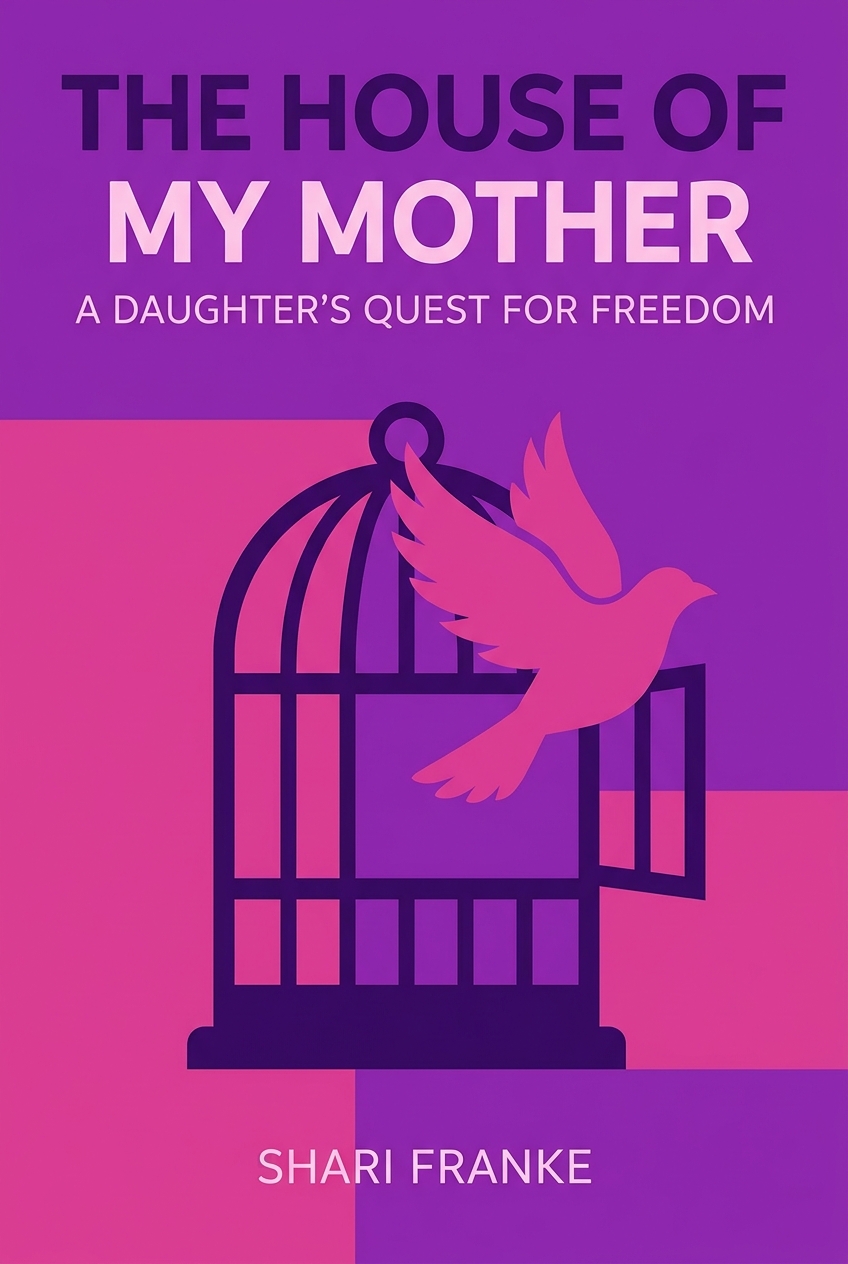
The House of My Mother book cover

The Script

In a forgotten corner of an old aviation museum, two flight simulators sit side-by-side. They are identical models, built by the same manufacturer in the same year, designed to replicate the experience of flying a small propeller plane through a storm. For years, seasoned pilots and curious visitors have used them. Yet, a strange pattern has emerged, logged meticulously by the museum’s curious staff. Pilots who train in the left-hand simulator consistently develop a calm, adaptive confidence. They learn to feel the plane's subtle feedback, to work with the wind, and to land safely and smoothly, even in the most turbulent digital weather. Their counterparts in the right-hand simulator, however, almost always end their sessions with a white-knuckled grip and a spike in heart rate. They fight the controls, overcorrecting at every gust, and often end in a simulated crash. The machine isn't broken; the simulation is identical. The only difference is the environment outside the cockpit door—the left simulator is in a quiet, sunlit atrium, while the right is next to a noisy arcade, its flashing lights reflecting off the screen.

This phenomenon, where an external environment dictates an internal state of control, is precisely what Shari Franke, a mother of six and a prominent family vlogger, experienced not in a simulator, but in her own home. For years, she followed every popular parenting model, trying to pilot her family with expert precision, only to find herself in a constant state of struggle and her children in distress. She felt like the pilot in the noisy arcade, reacting to chaos rather than cultivating calm. Her search for a different way—a quieter, more connected approach to family life—led her to dismantle the advice that was causing the turmoil. This book, The House of My Mother, documents her journey away from control and toward a family environment where everyone could learn to fly.

Module 1: The Performance of Perfection

The book opens by establishing a core, unsettling theme: the family unit as a content-creation engine. The Franke household was a production studio. Ruby Franke, the mother, meticulously crafted an online persona as a flawless, ever-present matriarch. This performance, however, masked a deeply dysfunctional reality.

A key insight here is that public image was prioritized over private well-being. Ruby started with mommy blogs, sharing aspirational recipes and picture-perfect domestic scenes. This quickly evolved into a full-fledged YouTube channel, "8 Passengers." The family's daily life was branded. Every moment became a potential video. The author, Shari, recalls her mother being omnipresent with a camera, directing her children like a producer. Even as a twelve-year-old navigating puberty, her privacy was secondary to the channel's content needs. This constant surveillance was excruciating. But for Ruby, consistency was king. Every tantrum, lost tooth, and family vacation was mined for views.

This leads to a disturbing realization. Love and affection were conditional, tied to performance and obedience. Shari learned from a young age that enthusiasm and compliance were survival tactics. During piano practice, anything less than perfect execution could trigger her mother's rage. She recalls Ruby telling her at age six that they could only be friends when Shari had a baby of her own. This cemented a devastating belief: love had to be earned by following in her mother's footsteps. Shari compares herself to a plant contorting unnaturally toward a sliver of sunlight. She knew instinctively to be pliable and obedient to earn her mother's "conditional affection."

So what happens when a child's entire life is a performance? The line between authenticity and exploitation dissolves. Ruby’s ambition was relentless. She celebrated hitting 1,000 subscribers as her "golden ticket," a gateway to monetization. The family home was remodeled to be more photogenic, with stark white walls and curated decor. Brand deals flowed in. Their lifestyle shifted from frugal to one of excess, filled with free products and sponsored vacations. But this success came at a cost. Shari notes that even her mother’s most vulnerable moments, like sharing a story about a miscarriage, blurred the line. While powerful for viewers, it raised a critical question: what happens when children's stories are shared daily without their consent? The family had become a commodity.

Read More