All Books
Self-Growth
Business & Career
Health & Wellness
Society & Culture
Money & Finance
Relationships
Science & Tech
Fiction
Topics
Blog
Download on the App Store

The Incredible Shrinking Man

13 minRichard Matheson

What's it about

What would you do if your world, your relationships, and your very sense of self began to literally shrink away? This gripping tale forces you to confront the ultimate fear: losing your place in the world, one inch at a time, until you vanish completely. Follow one man's terrifying journey as he battles a housecat that becomes a monster and navigates a landscape of everyday objects turned deadly. Discover how he fights to survive and maintain his humanity against an unstoppable, microscopic fate. This isn't just a story about shrinking; it's about the resilience of the human spirit when faced with total insignificance.

Meet the author

A master of twentieth-century science fiction and horror, Richard Matheson's visionary storytelling influenced countless creators, including Stephen King and Steven Spielberg, and earned him a place in the Science Fiction Hall of Fame. His profound ability to blend the fantastic with the everyday anxieties of modern life is perfectly captured in The Incredible Shrinking Man. This iconic novel explores deep philosophical questions about existence and humanity's place in the universe, born from his unique talent for finding terror and wonder in the mundane.
Listen Now

Opens the App Store to download Voxbrief

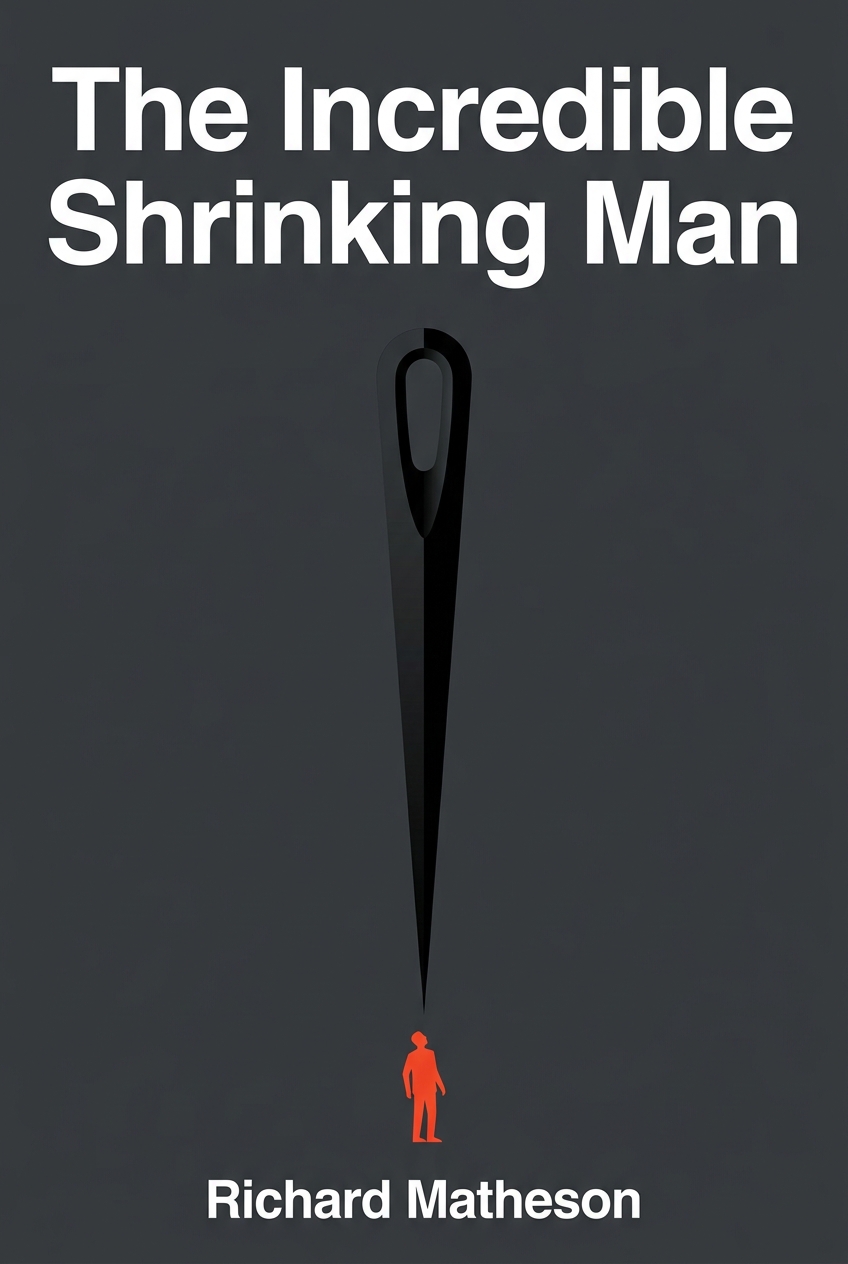
The Incredible Shrinking Man book cover

The Script

You're driving home, the same route you take every day, when you notice something odd. The steering wheel feels… bigger. Your foot seems to have more room than usual as it presses the gas pedal. You shake it off, chalking it up to fatigue. But the next day, the coffee mug you've held a thousand times feels like a soup bowl in your hands. A few days later, you have to stand on your toes to reach the cereal box on its usual shelf. The world isn't growing; you are shrinking. Each day, you lose a fraction of your height, a bit of your mass. Your clothes become cavernous, your home a landscape of looming, unfamiliar giants. The world you once mastered is slowly becoming a hostile, oversized wilderness, and the most terrifying part is that no one else seems to notice or believe you.

The terror of this gradual erasure from the world, of becoming insignificant in the most literal sense, was a feeling that haunted Richard Matheson. While watching a movie scene where a character mistakenly puts on a giant’s hat, a thought struck him: what if the hat was normal-sized, but the man had simply shrunk? This simple, almost comical image sparked a profound question about existence. Matheson, a writer who spent his career exploring the anxieties lurking beneath the surface of post-war American life, channeled this fear into a novel. From a basement office in his Long Island home, he wrote the story of Scott Carey as a grim, philosophical diary of a man whose battle is against the horrifying, unrelenting math of his own diminishment.

Module 1: The Psychological Unraveling of Identity

The novel begins with a complete psychic demolition. Scott Carey's identity is built on the normal pillars of life: his job, his role as a husband, his physical presence. As he shrinks, these pillars crumble, and his mind follows. Shrinking is about becoming less.

The initial diagnosis is a violent blow. When the doctor confirms he is shrinking, Scott feels "half dazed, half breathless with shock." It's an impossible reality that his mind rebels against. From this foundation, his entire sense of self begins to erode. Your perceived value is often tied to your physical and social scale. As Scott becomes smaller, he feels less like a man and more like a child, or worse, an object. He looks at his wife, Lou, and feels a "depleted feeling" at being shorter than her. He can no longer be the protector, the provider. His masculinity is stripped away layer by layer by an inexorable physical process.

This leads to a profound sense of alienation. He feels disconnected from his own family, wondering if he can still be considered part of their world when he’s the size of a bug. This is a logical conclusion. Extreme personal crisis severs you from the shared reality of others. His wife’s attempts to comfort him feel like pity, which he finds more horrifying than her anger. He reflects that a man can bear anything but pity, which is reserved for "helpless things." His internal world becomes a prison of shame and frustration.

So what happens next? The psychological torment intensifies. After being trapped in the cellar, he is forced to confront the absolute horror of his fate. He lies on his makeshift bed, contemplating his own disappearance into nothingness. He even considers letting the cellar's black widow spider end his suffering. When hope is extinguished, the will to live becomes a conscious, agonizing choice. He questions why he even bothers to survive. This is the ultimate psychological test: when every external validation of your identity is gone, can you find a reason to continue from within? Matheson suggests that this internal battle is far more terrifying than any physical monster.

Read More