All Books
Self-Growth
Business & Career
Health & Wellness
Society & Culture
Money & Finance
Relationships
Science & Tech
Fiction
Topics
Blog
Download on the App Store

The Last Picture Show

Thalia Trilogy, Book 1

14 minLarry McMurtry, John Randolph Jones

What's it about

Ever feel like your small town is holding you back? In the dusty, dying town of Thalia, Texas, high school seniors Sonny and Duane grapple with this very question. Discover a raw, coming-of-age story about navigating boredom, first love, and the frustrating search for something more. This classic tale of teenage restlessness explores the bittersweet reality of growing up in a place that's fading away. You'll learn how the closure of the local movie house mirrors the end of innocence for its characters, forcing them to confront harsh truths about sex, friendship, and the uncertain future that awaits them beyond graduation.

Meet the author

Larry McMurtry was a Pulitzer Prize-winning novelist and Oscar-winning screenwriter celebrated as one of the great chroniclers of the American West. Raised in a family of ranchers in Archer City, Texas—the real-life inspiration for the fictional town of Thalia—McMurtry drew from his own experiences of a fading frontier. His intimate knowledge of small-town life and its complex characters allowed him to transform personal observation into a powerful, universally resonant story of longing and loss.
Listen Now
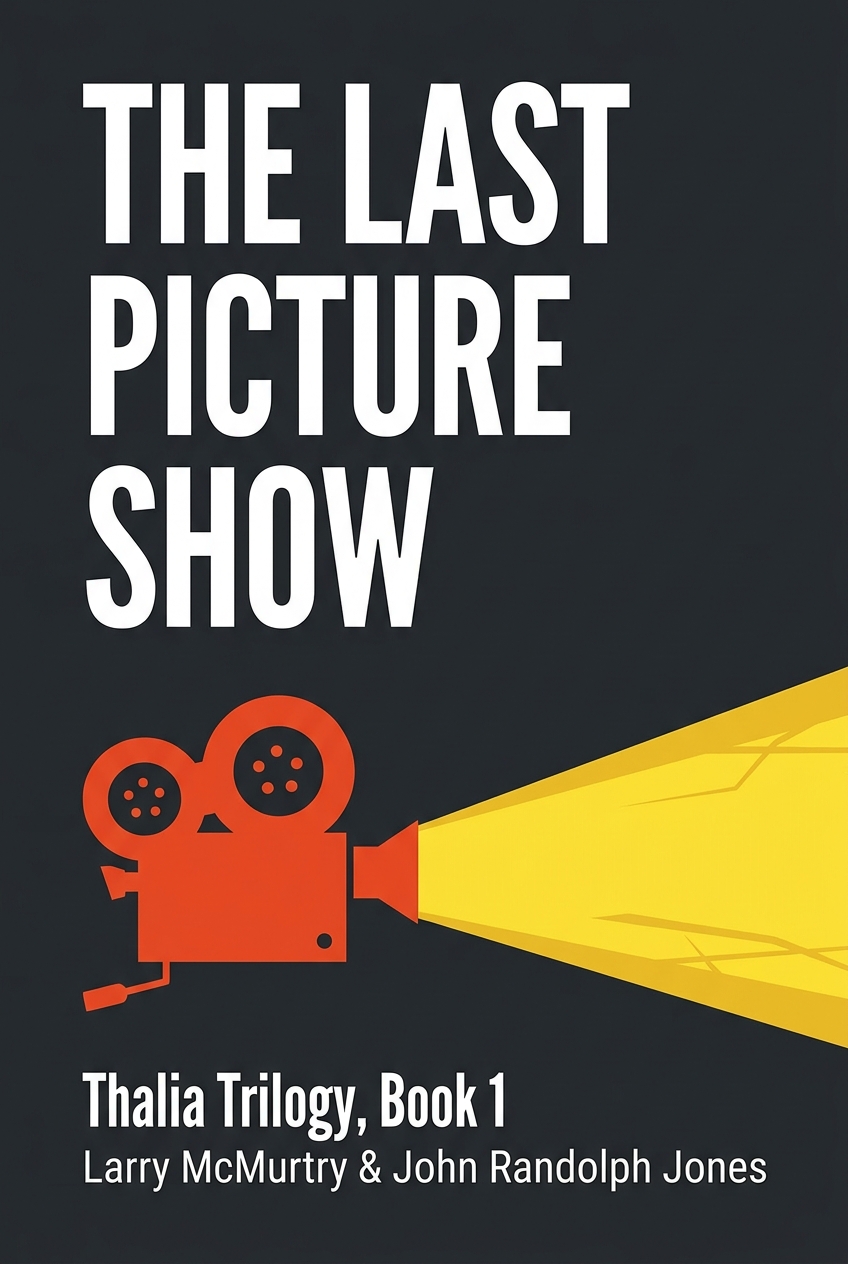
The Last Picture Show book cover

The Script

Think of the last time you passed through a small town, one of those places with a single blinking traffic light and a sun-bleached welcome sign. You might notice the boarded-up storefronts, the peeling paint on the old movie theater, the quiet that seems to hang over everything like dust. It’s easy to see it as a relic, a static photograph of a time that’s passed. But inside that quiet, life is churning. Teenagers are wrestling with clumsy first loves in the backs of pickup trucks, friendships are fraying over unspoken jealousies, and everyone is dreaming of a world just beyond the county line. The town is holding its breath, caught between a past it can’t reclaim and a future it can’t quite grasp.

This feeling of being suspended in the dying light of an era is precisely what one Texas-born writer, Larry McMurtry, set out to capture. Growing up in the small, wind-swept town of Archer City, he witnessed this slow fade firsthand. He saw the oil boom recede like a tide, leaving behind a generation of young people stranded with big desires and nowhere to put them. McMurtry, who would become a Pulitzer Prize-winning novelist and screenwriter, wanted to write about the awkward, messy, and often heartbreaking reality of coming of age when the world you were promised is quietly closing down. "The Last Picture Show" became his elegy for that time, a deeply personal story drawn from the dust of his own hometown.

Module 1: The Anatomy of Stagnation

The story is set in Thalia, a desolate North Texas town where dust and boredom are the main characters. Life here is defined by a deep sense of inertia. The young protagonists, Sonny Crawford and Duane Moore, are simply drifting. They have nothing better to do than drift toward the adult world. This is a story of what happens in the absence of ambition.

A key insight here is that stagnation is a system maintained by eccentricity and routine. The town is populated by idiosyncratic figures who, instead of driving change, reinforce the status quo. Sam the Lion is the town’s patriarch. He runs the poolhall, the café, and the picture show. These are the three pillars of social life in Thalia. He provides a haven for the town's youth, but his presence also locks the town into a familiar rhythm. Then there’s Coach Popper, a man of casual cruelty. He whips boys with towels and once shot at one for disturbing his hunting. His arbitrary authority goes unchallenged, normalizing a certain level of dysfunction. The town’s social fabric is built on accommodating these personalities, which prevents any real progress.

From this foundation, we see that in a vacuum of opportunity, life is reduced to a search for simple pleasures and escape. The poolhall is a sanctuary from the cold wind and the even colder loneliness. The picture show offers a two-hour escape into a world of Hollywood glamour, a stark contrast to their bleak reality. For characters like Billy, a boy with an intellectual disability, the theater is his entire life. He watches every movie, every night. These small pleasures are survival mechanisms. They are the only things that make the monotonous days bearable.

This leads to a critical point about the town's economic reality. Limited economic options create a cycle of hardship and resignation. Sonny drives a butane truck for meager pay. Duane works grueling shifts as a roughneck on an oil rig. They can barely scrape together enough money for breakfast. Their lives are a constant struggle against financial scarcity. Sam the Lion scolds Sonny for the "reckless" act of spending a dime on a snack. This is about the razor-thin margins they live on. The lack of fulfilling work means most people are just getting by, not building a future. This economic pressure cooker shapes every decision and every relationship.

Read More