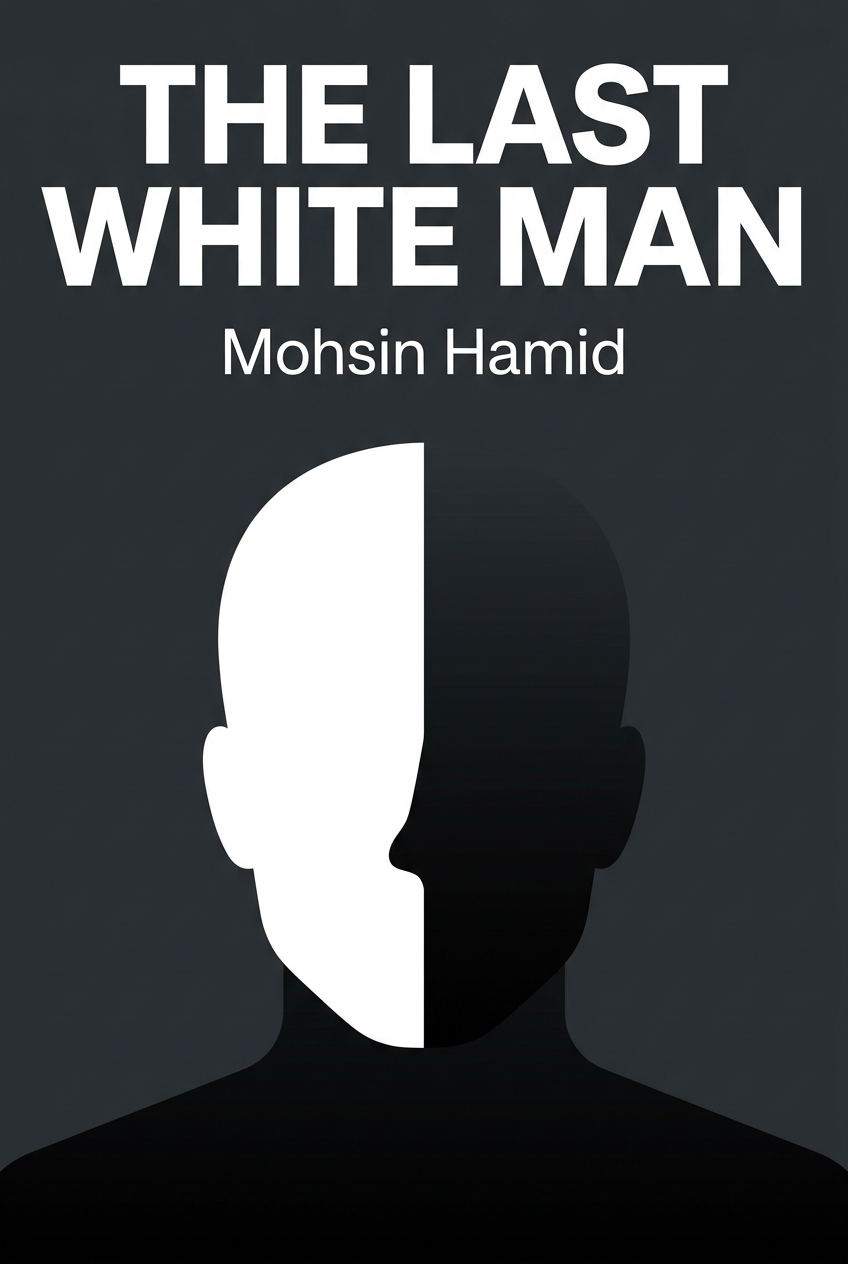
The Last White Man
A Novel
What's it about
What if you woke up one morning and your skin had turned dark, stripping you of the privilege you never knew you had? This is the reality for Anders, a white man whose sudden transformation forces him to confront a world that no longer sees him the same way. Explore a society grappling with a mysterious phenomenon where whiteness is disappearing. Through Anders's journey of loss, love, and reinvention, you'll question the very nature of race, identity, and what it truly means to belong when the old social order collapses and a new, uncertain future emerges.
Meet the author
Mohsin Hamid is a Man Booker Prize finalist and internationally bestselling author whose work has been translated into over thirty-five languages and adapted for film. Having spent his life between Pakistan, the United States, and the United Kingdom, his novels masterfully explore themes of identity, migration, and belonging. This unique transnational perspective provides the profound insight and empathy that shape the transformative narrative of The Last White Man.
Opens the App Store to download Voxbrief

The Script
Our faces are the most public part of our identity, yet the experience of having one is intensely private. We spend our lives looking out from behind our eyes, seeing our own face only in distorted reflections or frozen images. This disconnect creates a strange paradox: the very thing that signals 'us' to the world is something we can never truly see as others do. It becomes a kind of public property, a canvas onto which others project their assumptions, biases, and histories. What would happen, then, if that public property was suddenly foreclosed upon? What if the face you present to the world, the one that anchors you in your family, your community, and your own story, was replaced overnight by that of a stranger—specifically, the face of someone your society has taught you to fear?
This is a visceral, human crisis. The loss is about the erasure of a shared history and the severing of belonging. Mohsin Hamid, a novelist celebrated for his ability to blend the surreal with the deeply personal, found himself wrestling with this very idea in the years following 9/11. As a Pakistani man who had long felt at home in the West, he experienced a sudden, jarring shift in how the world saw him. The face that was once just his own now carried the weight of suspicion and prejudice. This profound personal experience of having his identity externally rewritten became the seed for The Last White Man, a novel that uses a fantastical premise to explore the fragile, often painful, reality of how we see ourselves and each other.
Module 1: The Shattering of Self
When Anders wakes up a different man, his first reaction is rage. He sees a "colored man" in his own mirror and feels a murderous impulse. This visceral reaction reveals a terrifying truth about identity. It's a dialogue between who we think we are and what the world reflects back at us.
The first core insight is that identity is anchored in physical self-recognition. When that anchor is lost, the self fractures. Anders's phone, which once used facial recognition to "unfailingly" identify him, no longer recognizes him. This technological failure is a perfect metaphor for his social erasure. He is no longer legible to the systems that define his world, or even to himself. He scrutinizes his own body with a detached horror, feeling it is "not his, and therefore bizarre, beyond acceptance." His sense of self was in his face, his skin, his reflection. Without that familiar image, Anders ceases to be Anders.
Building on that idea, the book shows how social belonging is contingent on visible identity. Before his change, Anders moved through the world with an "easy with myself and easy with you smile." It was a smile of presumed belonging. After, he becomes invisible in the worst way. A grocery store clerk he knows doesn't recognize him. A woman at a traffic light curses him out. He freezes, realizing she can't see the "white man" he used to be. He has lost the unthinking social confidence that came with his appearance. He feels he "did not belong." This is about the thousand subtle ways we are confirmed or denied by others every day.
So what happens next? This leads to the third insight: profound personal trauma leads to retreat and a desperate grasp for normalcy. Anders is "trapped indoors because he did not dare to step outside." His small apartment becomes a prison. He tries to maintain his routine. He texts his boss that he's sick. He smokes pot to manage the "strumming anxiety," only to find it amplifies his distress. This is a case study in how any sudden, inexplicable loss—a diagnosis, a layoff, a betrayal—can shatter our world. We retreat. We try to pretend things are normal. We seek coping mechanisms, often destructive ones, to manage the psychological freefall. The book forces us to ask: how much of our stability depends on our life remaining predictable?
Module 2: The Ripple Effect on Relationships
As the change begins to affect more people, the story expands. It pulls in Oona, a woman from Anders's past. Her perspective gives us a new lens on the crisis. We see how this personal apocalypse ripples outward, straining every human connection.
This brings us to our first point in this module: in times of crisis, emotional reserves are finite. Oona is already "cashed out, emotion-wise." She has just nursed her mother through the long, slow decline of her twin brother. When Anders calls her in a panic, her first instinct is self-preservation. She is "reluctant to provide" reassurance, "resistant to being drawn into that role, yet again." This is a brutally honest look at caregiver burnout. We think of empathy as a limitless resource. But Hamid suggests it's more like a bank account. And Oona's is deeply in debt. For professionals juggling high-stakes careers and personal responsibilities, this is a familiar feeling. We want to be there for others, but sometimes, the tank is just empty.
From this foundation, we see how intimacy becomes a performance under pressure. When Anders and Oona have sex, it is a "performance." Oona watches herself "with a dark-skinned stranger" and feels a "jarring and discomforting satisfaction." A sense of betrayal lingers. They are both seeking comfort but find only alienation. This is a critical insight for anyone navigating relationships in a high-stress environment. Sometimes, we use the motions of intimacy to feel something, anything. But without a genuine connection, it only deepens the isolation.
And here's the thing. This personal drama doesn't happen in a vacuum. The book makes it clear that a background of societal decay amplifies personal fear. Oona's town is already failing. There are empty storefronts. People are "ejected long ago" from the economy. Her mother, consuming a steady diet of online paranoia, becomes convinced the world is getting "more and more dangerous." She tells Oona to buy a gun. This is a powerful observation. Personal anxieties are fed by our environment. When society feels like it's fraying, it's easy to see threats everywhere. The book suggests that the militants and riots that come later are the logical conclusion of a society already weakened by fear and decline.