All Books
Self-Growth
Business & Career
Health & Wellness
Society & Culture
Money & Finance
Relationships
Science & Tech
Fiction
Topics
Blog
Download on the App Store

The Most Fun We Ever Had

A Novel

14 minClaire Lombardo

What's it about

Ever wondered what really holds a family together through decades of secrets, rivalry, and drama? Get ready to explore the messy, complicated, and beautiful reality of lifelong love and sisterhood, and discover why even the most "perfect" families are far from what they seem on the surface. You'll step inside the lives of the Sorenson family, uncovering the hidden struggles and long-buried secrets that test the bonds between four very different sisters and their seemingly idyllic parents. Learn how individual desires clash with family expectations and how love, in all its forms, can endure even the most painful truths.

Meet the author

Claire Lombardo is the New York Times bestselling author whose debut novel, The Most Fun We Ever Had, was longlisted for the Women's Prize for Fiction. A graduate of the Iowa Writers' Workshop, Lombardo spent years working in social work before pursuing writing full-time, a background that deeply informs her compassionate and keen-eyed observations of family dynamics. Her work explores the intricate, often messy, and enduring nature of love and connection within a sprawling Chicago family, reflecting her profound understanding of human relationships.
Listen Now

Opens the App Store to download Voxbrief

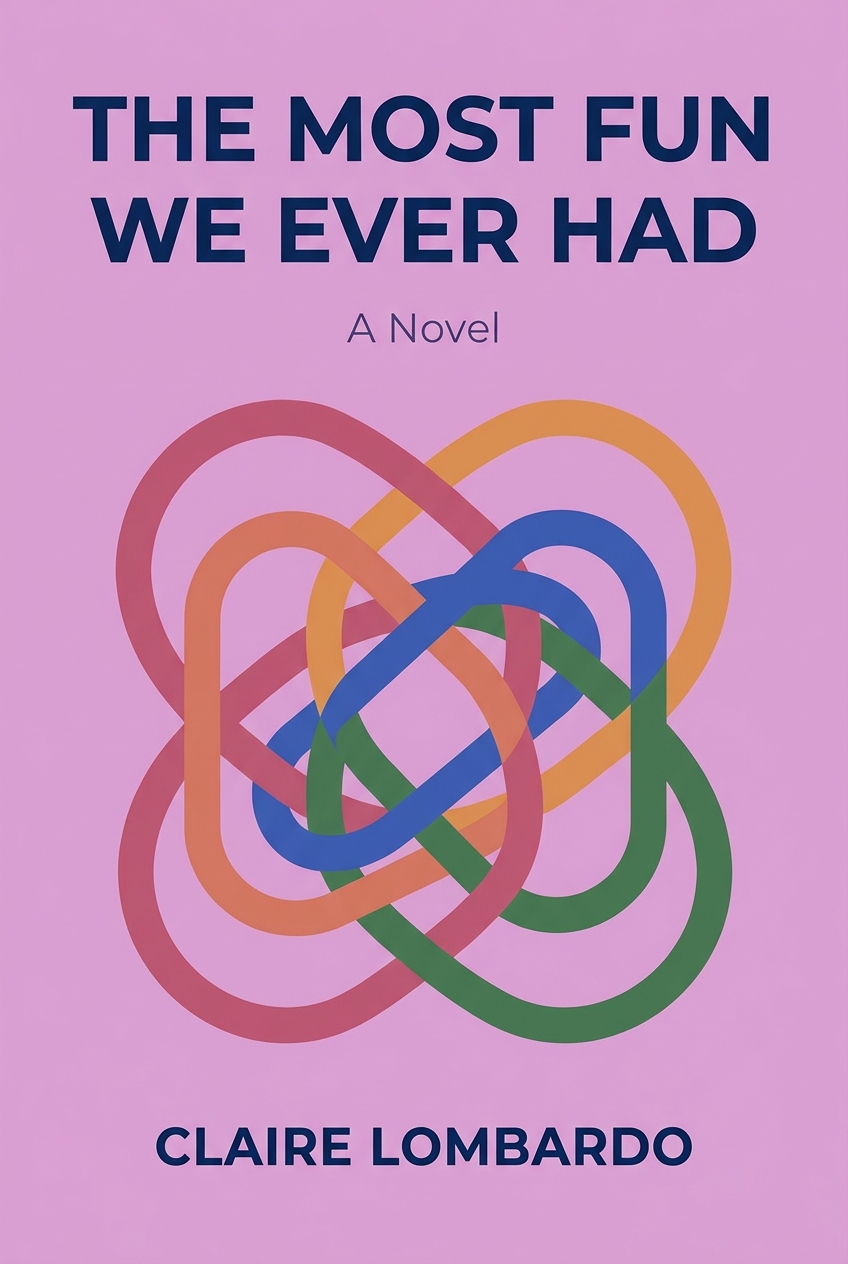
The Most Fun We Ever Had book cover

The Script

Think of a professional archivist, the kind who spends their life in the climate-controlled quiet of a university basement, surrounded by acid-free boxes. Their job is to preserve the official, documented history of a family: the birth certificates, the property deeds, the carefully dated photographs from weddings and graduations. They build a clean, linear narrative from these artifacts—a story of milestones and public declarations. But then, years later, a different kind of archive is discovered. Tucked away in a dusty attic is a jumbled box of unsent letters, forgotten diaries filled with crossed-out sentences, and receipts for solitary train tickets to unknown towns. This second collection tells a completely different story. It’s messy, contradictory, and deeply human, filled with the secret longings, private resentments, and quiet sacrifices that the official record could never capture. The real story of the family is found in the volatile space between the two boxes—the gap between the life that was presented and the one that was actually lived.

This profound tension between a family’s public mythology and its private, unarticulated truths is precisely what Claire Lombardo set out to explore. While working at a public relations firm, she found herself fascinated by the stories people construct for themselves and for the world. She began to wonder about the hidden lives simmering beneath the surface of even the most seemingly perfect families. Lombardo spent nearly a decade crafting her debut novel, meticulously weaving together the past and present of a single family to excavate the complex, often contradictory, emotions that bind them. The result is an intimate epic that feels less like a constructed story and more like a privileged glimpse into the secret, messy archives of love, rivalry, and enduring connection.

Module 1: The Gravity of a Perfect Marriage

The emotional core of this novel is the 40-year marriage of Marilyn and David Sorenson. It’s a living, breathing force that shapes everything around it. Their love story, which began with an awkward encounter in a university building, becomes a kind of family mythology. It’s a "shining unfathomable orb" that their four daughters orbit, whether they like it or not.

But here’s the thing. The book argues that a legendary parental love story can become a psychological burden for the next generation. Their daughters—Wendy, Violet, Liza, and Grace—grew up witnessing a bond so complete, so all-consuming, that it sets an impossible standard. Liza, pregnant and facing the collapse of her own partnership, tells her doctor that her parents’ "stable, perfect, desperately infatuated" marriage makes her feel like she is "falling so short of the mark." This is about feeling like you can never replicate the foundational security you grew up with, creating a lifelong sense of inadequacy.

This leads to the next point. The narrative reveals that enduring intimacy is built on a private language that outsiders can't decode. Marilyn and David communicate through a lifetime of shared jokes, physical shorthand, and unspoken understandings. They can make a life-altering decision with a simple phrase like "me neither." They can resolve a fight with a quiet kiss. This private world is their sanctuary. It’s what allows them to weather the chaos of raising four daughters and the crises that follow. But for their children, this perfect union is something they can only observe from the outside. They are witnesses to the love, but not participants in its secret language. This creates a subtle but powerful sense of separation.

Building on that idea, the book shows how even the strongest partnerships experience seasons of profound disconnection. This isn't a fairy tale. Over the decades, Marilyn and David face periods of intense loneliness, frustration, and miscommunication. After a family crisis, they spend nearly a year as "soldiers from battle," sleeping side-by-side without touching, their conversations reduced to "businesslike exchanges." The strength of their marriage lies in their capacity for reconnection. A single touch, a shared memory, or a moment of crisis can instantly bridge the gap, reminding them of the foundational bond that remains, even when buried under layers of stress and resentment.

Finally, the book makes a powerful statement about how a lifelong partnership redefines the concept of home. When their last daughter leaves for college, Marilyn and David return to an empty house. The quiet feels alien. But in that moment, they turn to each other. Marilyn realizes, "The nest would never be empty so long as she was in it with him." Their partnership is the true center of gravity. The enduring, evolving, and resilient connection between two people who have chosen each other, again and again, for a lifetime defines "home."

Module 2: The Complex Machinery of Sisterhood

We've explored the gravitational pull of Marilyn and David's marriage. Now, let’s turn to the planets orbiting it: the four Sorenson sisters. Their relationships are a masterclass in the messy, contradictory, and unbreakable bonds of sisterhood. The novel suggests that sibling dynamics are a volatile mix of love, rivalry, and shared trauma.

A key insight here is that siblings often define themselves in opposition to one another. The sisters exist in a complex hierarchy of perceived success and failure. Grace, the youngest, ranks herself as the "least interesting Sorenson child." She finds comfort in the fact that her sister Liza is only "third least interesting." This internal ranking system is a coping mechanism. It’s how she measures her own post-college stagnation against the lives of her sisters. This comparative dynamic is a constant, push-pull force. Wendy, the eldest, feels a "shameful" sense of vindication when her seemingly perfect sister, Violet, has a crisis. It temporarily levels the playing field in a lifelong competition.

Furthermore, the book demonstrates that sisterly support is often expressed through action and dark humor, not sentimentality. When Violet faces an unplanned pregnancy, she doesn't turn to her parents. She turns to Wendy. Wendy’s support is practical and authoritative. She orchestrates an elaborate lie, chaperones doctor's visits, and provides a physical sanctuary. Their conversations are filled with sarcasm and sharp teasing. But beneath the barbs is an unwavering loyalty. As Wendy puts it, "We’re sisters, Mom. I can’t explain it any better than that. You wouldn’t understand." It’s a bond forged in a shared history that outsiders, even their own mother, can’t fully penetrate.

And here’s the thing. This bond means that a crisis for one sibling becomes a crisis for all, but it is processed through the filter of individual trauma. When their father, David, has a heart attack, the sisters don't just rally. They fracture along old fault lines. In the hospital waiting room, Wendy and Violet’s conversation immediately devolves into recriminations about the past. Violet feels her emotions are never as valid as Wendy’s, who "wore them proudly and impulsively." Grace, miles away, feels abandoned and out of the loop. The shared trauma amplifies their individual histories of resentment and jealousy, forcing them to navigate the emergency while still trapped in their lifelong roles.

Ultimately, the novel suggests that the fiercest conflicts between sisters often mask the deepest need for connection. The most brutal arguments between Wendy and Violet happen because they are, in some ways, two halves of a whole. They are "Irish twins, the double helix," fueled by "equal parts love and envy." After a lifetime of hurting each other, they find themselves sitting in silence, watching the dusk. It’s a quiet moment that echoes their childhood, a time "before the world had grown so much larger than their grasp." The book suggests that sisterhood is about learning to live with the fractures, knowing that the bond itself, however complicated, is permanent.

Read More