All Books
Self-Growth
Business & Career
Health & Wellness
Society & Culture
Money & Finance
Relationships
Science & Tech
Fiction
Topics
Blog
Download on the App Store

The Natural Way of Things

A Novel

21 minCharlotte Wood

What's it about

Have you ever felt silenced or trapped by society's expectations? What would you do if you were suddenly stripped of everything and forced to survive in a brutal, unfamiliar world? Discover the raw power of resilience when all seems lost. This gripping summary explores a harrowing tale of ten women who wake up imprisoned in the Australian outback, punished for their past sexual encounters. You'll learn how they navigate a world without rules, confronting not only their captors but also the fierce, untamed wilderness—and the darkness within themselves.

Meet the author

Charlotte Wood is the acclaimed Australian author whose novel, The Natural Way of Things, won the Stella Prize and was named the 2016 Book of the Year. A former journalist and editor, her work is celebrated for its unflinching examination of misogyny, power dynamics, and female relationships. Wood's keen observations of contemporary society and her powerful, often unsettling prose, are drawn from a long career spent interrogating the hidden structures that shape women's lives, making her a vital voice in modern literature.
Listen Now

Opens the App Store to download Voxbrief

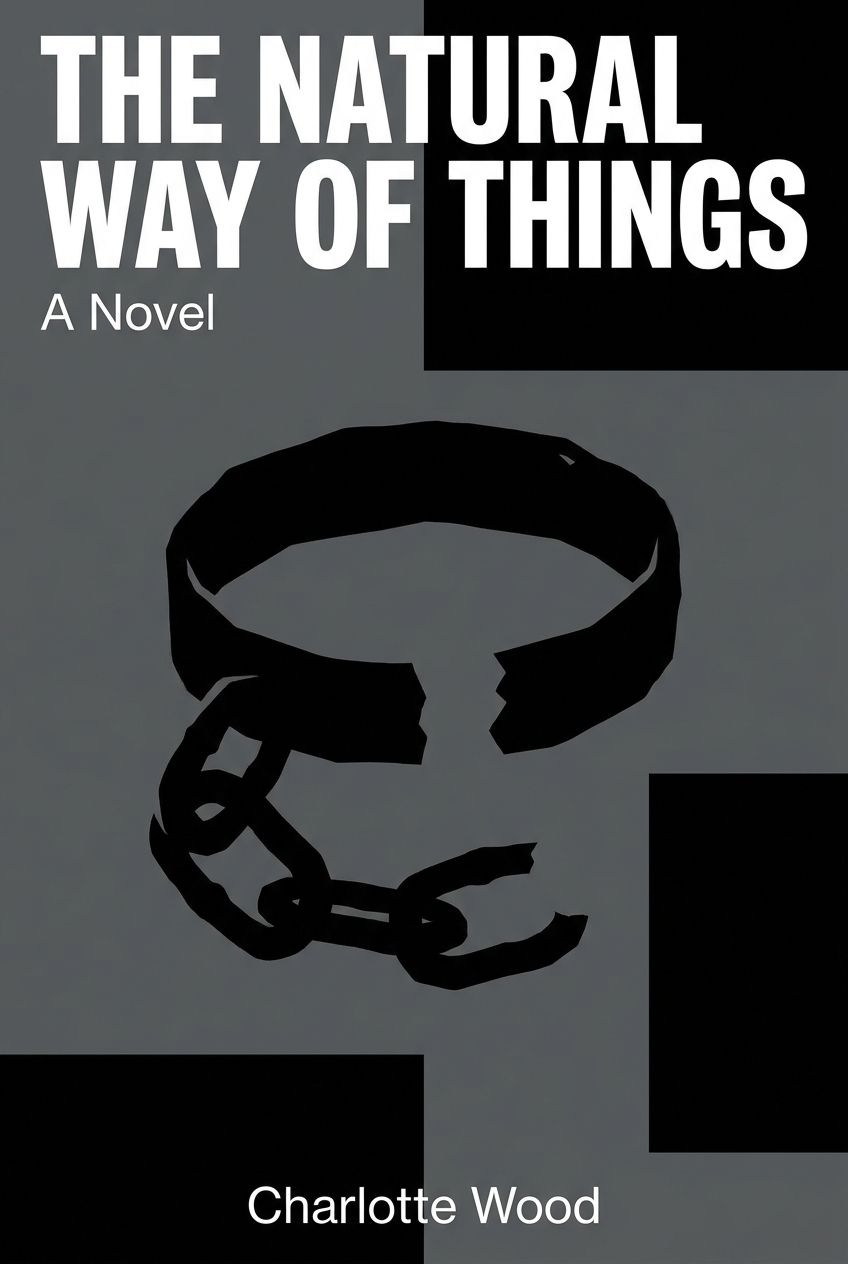
The Natural Way of Things book cover

The Script

Imagine a flock of prized, purebred chickens, each one groomed for show. One day, they are snatched from their coops and dumped into a dusty, fenced-in wasteland. The automatic feeders are gone. The clean water troughs are dry. The familiar calls of their keepers are replaced by a hostile silence. Stripped of the systems that defined their existence, they revert to something older. A pecking order emerges, based on brute survival. The weakest are ostracized, left to starve at the edges, while the strongest claim the scarce resources. Their carefully bred behaviors melt away, revealing a raw, instinctual world of dominance and submission that was dormant just beneath the polished surface.

This brutal regression from civilized performance to primal survival is the territory Australian author Charlotte Wood began to explore after a series of unsettling news stories caught her attention. She noticed a disturbing pattern: public scandals involving men in power would erupt, but it was the women connected to them—often peripherally—who would be publicly shamed, their lives dismantled, and their reputations destroyed while the men often recovered. Wood, an award-winning novelist and journalist known for her unflinching examinations of Australian life, became obsessed with this question of societal punishment and the invisible mechanisms that contain and control women. This obsession fueled the creation of The Natural Way of Things, a stark and allegorical novel born from her need to take this real-world dynamic to its most extreme and logical conclusion.

Module 1: The Architecture of Dehumanization

The first thing the captors do is erase identity. This is a calculated strategy. The women wake up drugged, disoriented, and stripped of everything that connects them to their past lives. Their clothes, phones, and personal items are gone. They are forced into identical, humiliating uniforms. Think stiff canvas smocks and heavy, ill-fitting boots. This uniformity serves a specific purpose. It makes them anonymous. It makes them a collective.

This leads to a critical insight. Dehumanization begins with the systematic removal of individual identity. The captors understand this instinctively. Yolanda, one of the main characters, mentally inventories her missing possessions. A handbag, cigarettes, a sentimental necklace from her brother. These are anchors to her personal history. Without them, she feels exposed and diminished. Verla, another protagonist, finds herself in a bizarre "prairie puppet" costume. It's so absurd it feels like a dream, but it effectively erases the woman she was just hours before. The lesson for any leader or team builder is potent. Identity, even when expressed through small personal choices, is a cornerstone of autonomy and dignity. To strip it away is the first step toward absolute control.

From there, the environment itself becomes a tool of oppression. The compound is a desolate, isolated wasteland. Think rusted machinery, dilapidated buildings, and an unnerving lack of connection to the outside world. There are no phone signals, no internet, no signs of modern life. This physical isolation reinforces psychological control. It creates a closed system where the captors' reality is the only reality.

This brings us to the next point. A controlled environment is designed to sever connections to any external reality. Verla's first survey of the landscape reveals a "rubbish tip." The so-called "Admissions" office is a mockery, with outdated rubber stamps and faded papers. It’s a performance of bureaucracy designed to feel both official and insane. The sounds are just as disorienting. The cackle of kookaburras and the shriek of a cockatoo are alien to a city dweller. They amplify the sense of being in a completely different, hostile world. For anyone building a culture, this is a powerful reminder. The physical and digital environment you create sends a constant message. It can either foster connection and autonomy, or it can breed isolation and control.

Finally, the process is cemented with language and arbitrary violence. The guards, Boncer and Teddy, use derogatory terms. They call the women "slut" and "Thirsty." They use a "horrible baby voice" to mock and infantilize them. This is a linguistic tool to reinforce a power hierarchy. When a woman asks a simple question, she is struck with a baton. The violence is swift, disproportionate, and public.

And here's the thing. Arbitrary rules and unpredictable punishment are more effective for control than a logical system. A rational system can be understood and potentially gamed. A system where you can be beaten for asking a question is terrifying because it's illogical. It forces compliance through fear of the unknown. The women are leashed together and forced to march under a hot sun. There's no clear purpose to the march. Its only function is to break their will and establish absolute dominance. This is a dark lesson in power dynamics. Predictability creates trust. Arbitrariness creates terror.

Now that we've seen how the captors establish control, let's examine how the women begin to adapt and survive.

Read More