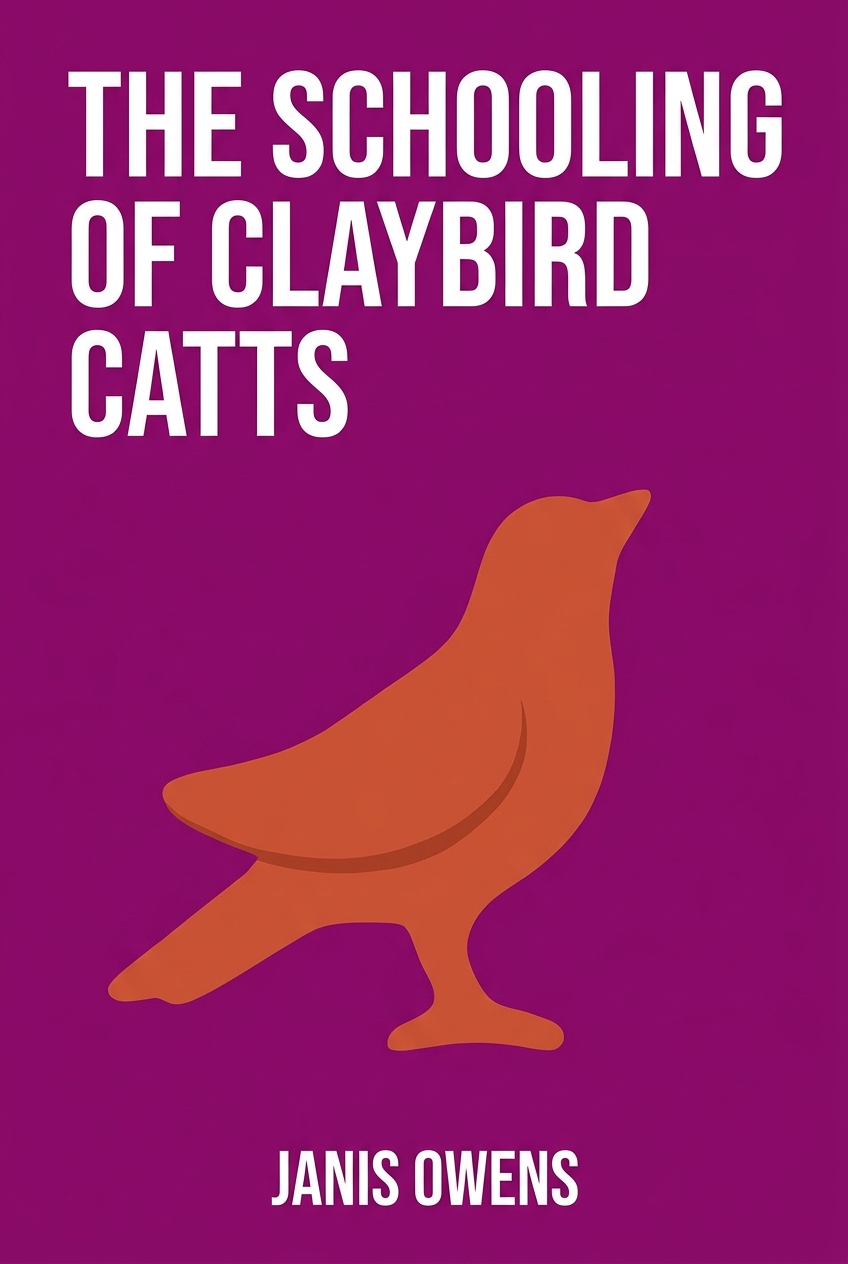
The Schooling of Claybird Catts
A Sweeping Southern Family Saga of Love, Loss, and Belonging
What's it about
Ever wonder what it takes to find your place in a world that seems determined to cast you out? Discover how a young boy, abandoned and adrift, can forge his own destiny and a sense of belonging against all odds, armed with nothing but grit and an unconventional family. You'll follow the journey of Claybird Catts through the vibrant, tumultuous landscape of the American South. This sweeping saga reveals the profound power of found family, the sting of first love, and the enduring strength required to overcome loss. Learn how to navigate life’s harshest lessons and build a life rich with meaning, even when you start with nothing.
Meet the author
Janis Owens is a Kirkus Prize-nominated novelist and food writer celebrated for her authentic portrayals of the American South and its rich, complicated storytelling traditions. A fifth-generation Floridian who grew up in a family of raconteurs, she draws from her deep-rooted heritage to craft unforgettable characters and vivid landscapes. Her work, steeped in the humor and pathos of Southern life, explores the universal themes of family, place, and the search for home, making her a defining voice in contemporary Southern literature.
Opens the App Store to download Voxbrief

The Script
In a small Southern town, there are two kinds of dirt. There’s the red clay that stains your clothes and cakes your boots, the kind that holds the town together in a physical, stubborn way. Then there’s the other kind—the rich, dark soil of the kitchen garden, fed by scraps and secrets, where things grow that are meant only for the family. It’s the soil that remembers every whispered story, every hushed argument, every quiet act of kindness that happens behind the screen door. One is the public ground everyone walks on; the other is the private earth that truly nourishes, and sometimes poisons, the people who tend it.
This is the world of Claybird Catts, a boy who understands the difference between these two soils better than anyone. He knows that what grows in the open field is for show, but what sprouts in the hidden garden is for survival. He learns that the most important lessons are found in the quiet, often brutal, logic of the natural world and the even more complex ecosystem of his own family, where love and cruelty grow tangled together like weeds and wildflowers.
The woman who planted this story, Janis Owens, grew up steeped in the soil of North Florida, a place where family lore is as vital as rain. A self-taught novelist who began writing in earnest while raising her children, Owens absorbed storytelling from the world around her—from the cadence of front-porch gossip and the unspoken histories that cling to a place like humidity. She wrote "The Schooling of Claybird Catts" to give voice to the world she knew intimately, exploring how a boy's gentle spirit can either be crushed by the harsh realities of his environment or learn to draw a unique, resilient strength from that very same ground.
Module 1: The Shattered Kingdom of Childhood
The story begins with a single, devastating event. The death of a parent. For our narrator, Claybird Catts, his father's death marks the end of innocence. The author uses an epigraph from Edna St. Vincent Millay to frame this idea. Childhood is "the kingdom where nobody dies." Claybird's father's death violates this kingdom. It forces him out of childhood's protective bubble and into a world of adult realities.
This leads to the first core idea. Grief is a confusing whirlwind of distraction and delayed realization. Claybird describes his father's final week as "one fun thing after another." His family arranges a trip to Busch Gardens to distract him. He recalls riding roller coasters and buying a souvenir photo. In the picture, he looks like a "quite the happy boy." He had no idea his father was dying miles away. At the time, the day his father died wasn't the worst day of his life. That understanding came later. The grief surfaced in quiet, lonely realizations. Like on a Friday night, waiting for a car that would never pull into the driveway again.
So what does this mean for us? It means we must recognize that coping with loss, whether personal or professional, is messy. People might seem fine. They might be going through the motions. But the real processing happens beneath the surface, often long after the event itself.
Building on that idea, the book shows how family dynamics and rituals become coping mechanisms in a crisis. Claybird's family develops unique ways to navigate the illness. His mother maintains a calm, matter-of-fact demeanor. She manages logistics and offers comfort without drama. His father, even while dying, emphasizes living fully. He tells Claybird to "keep having fun." This reveals a family value system that prioritizes resilience over somberness. Extended family and friends also play a crucial role. They provide practical support and, just as importantly, distraction. This network of support creates a scaffold of normalcy amidst the chaos.
And here's the thing. Physical artifacts become powerful anchors to memory and legacy. That souvenir photo from Busch Gardens transforms from a simple memento into a sacred relic. Claybird’s father takes it to the hospital. He tapes it to his bed rails and shows it to the nurses. After his death, the photo becomes a tangible link to his father's final days. Claybird keeps it on his nightstand "to this day." The visible tape marks are evidence of its journey. This shows how objects can carry immense emotional weight. They become focal points for our stories, helping us piece together fragmented memories and make sense of our past. In a world that's increasingly digital, the power of a physical object to connect us to our history is a lesson worth remembering.
Module 2: The Architecture of Family Secrets
Now, let's turn to the complex web of family relationships. The novel explores how families are often defined as much by what is unsaid as by what is spoken. Claybird’s family is a tapestry of love, tension, and secrets.
This brings us to a critical insight. Humor and exaggeration are often used as coping mechanisms to describe overwhelming emotions. Claybird describes his mother as a "vampire." This is a child's way of processing her unusual habits. She gardens at twilight, avoids food, and rarely sleeps. This metaphorical language softens the impact of what he observes. It allows him to frame her eccentricities in a way that is manageable. As he gets older, he learns about her struggles with mental health. He understands the "vampire" traits are symptoms of her sadness. But the metaphor sticks. It’s a testament to how childhood perceptions persist, even after we gain adult understanding.
Furthermore, family secrets create a hidden architecture that shapes identity and relationships. The most significant secret in the book is the mystery surrounding Uncle Gabe. He is the "brother who got out." He's a mythical figure, spoken of in whispers. The family avoids discussing him directly. This protective silence creates a taboo. It fuels speculation and strains relationships. Claybird learns that his family has a pattern of hiding difficult truths. They avoid talking about another uncle's prison conviction or his mother's "vampire things." This is done to maintain a sense of harmony. But the unspoken truths fester, creating an undercurrent of tension that everyone feels.
So here's what that means in a professional context. Organizations, like families, have their own secrets and taboos. Unspoken rules and hidden histories can create a toxic culture of avoidance. True collaboration requires transparency. It demands a willingness to address the uncomfortable truths, not just sweep them under the rug.
This principle extends to the idea that personal identity is forged by piecing together fragmented truths. Claybird's journey is a process of retrospective sense-making. He is constantly looking back, sifting through memories, and trying to connect the dots. The revelation of family secrets forces him to re-evaluate everything he thought he knew. The most earth-shattering secret is about his own paternity. When he discovers that Gabe, not his deceased father Michael, is his biological father, his world collapses. This revelation shatters his sense of self. It forces him to question his place in the family and his connection to the man he thought was his father. His journey becomes a painful quest to rebuild his identity from the wreckage of these broken truths.