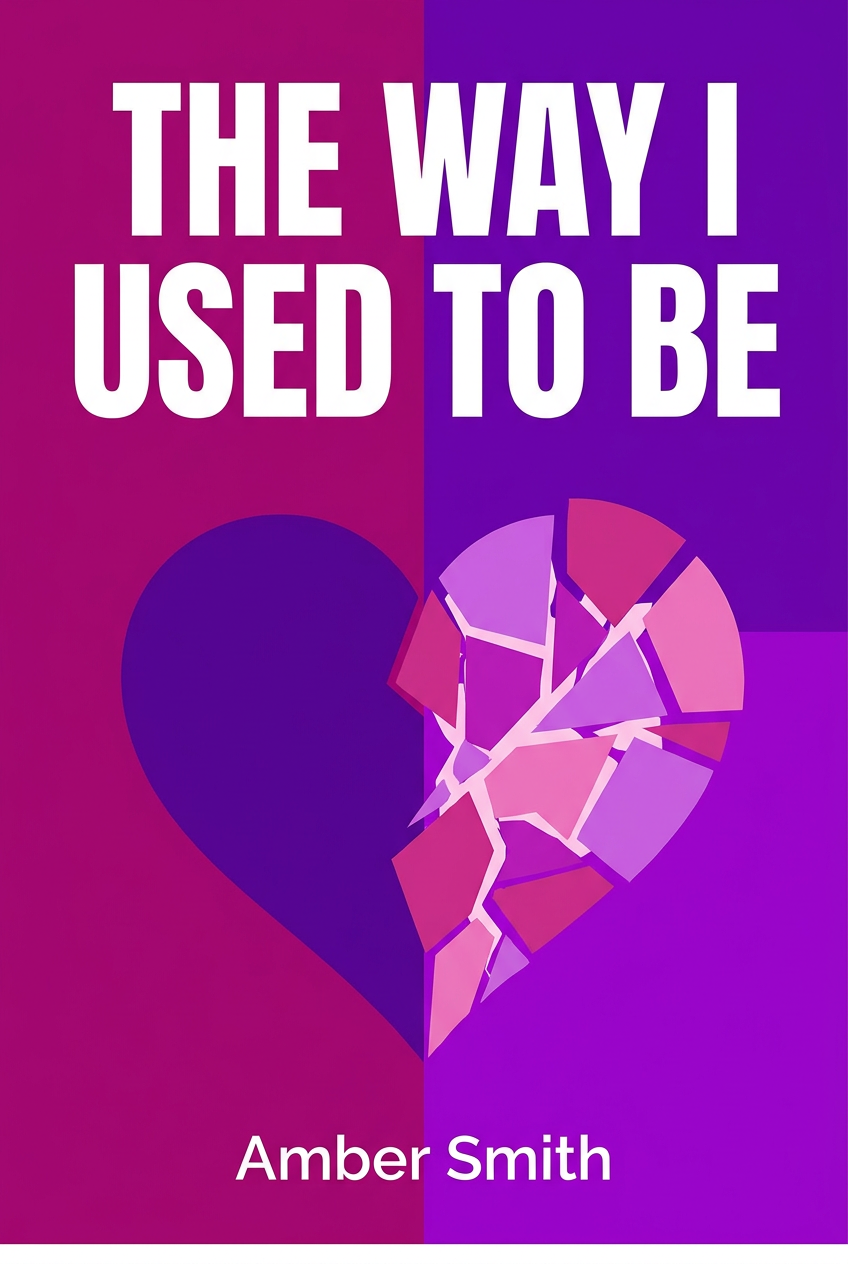
The Way I Used to Be
What's it about
Have you ever felt so broken by your past that you couldn't imagine finding your way back to yourself? Discover a story of survival that shows you how to reclaim your voice and identity after trauma, proving that even the deepest wounds don't have to define you forever. This summary of Amber Smith's powerful novel follows a young woman's journey through the four years of high school after a devastating sexual assault. You'll learn how silence can shape a life and, more importantly, how finding the courage to speak your truth can begin the long, difficult, but ultimately hopeful path toward healing.
Meet the author
Amber Smith is an award-winning and New York Times bestselling author whose advocacy for survivors has made her a leading voice in young adult literature. A former art teacher and abuse survivor herself, Smith draws on her own experiences to write powerful, unflinching stories that explore the journey from trauma to healing. She holds an M.A. in Art History and a B.F.A. in Painting, using her creative background to give authentic life to characters navigating difficult truths and finding their way back to themselves.
Opens the App Store to download Voxbrief

The Script
Every family has a set of unspoken rules for how to behave in public. The 'good coat' you wear for visitors, the voice you use on the phone with strangers, the specific smile reserved for holiday photos. It’s a performance, a carefully constructed version of 'us' that gets presented to the world. But what happens when a private catastrophe makes that performance impossible? When the costume of the happy, functioning person no longer fits, but you’re still forced onto the stage of everyday life? For some, the response is to retreat, to pull away from the world that demands a role they can no longer play. The self splits into two distinct entities: the person everyone sees, going through the motions of class, family dinners, and friendships, and the person trapped inside, screaming in a soundproof room, replaying a single, shattering moment on a loop.
The silence that follows trauma isn't empty; it's heavy, filled with the words that can't be said. This is the silence Amber Smith set out to explore in her debut novel, The Way I Used to Be. After working with at-risk teens and survivors of trauma, Smith was struck by the profound gap between a survivor's internal reality and the world's expectation to simply 'move on.' She felt a deep sense of responsibility to give voice to the quiet, agonizing journey of a young woman navigating the aftermath of sexual assault. Smith wrote the book she needed as a teenager, crafting a story that validates the messy, non-linear, and intensely personal process of healing, proving that a story about silence can sometimes be the most powerful sound of all.
Module 1: The Initial Fracture — Denial and Isolation
Trauma doesn't announce itself with a single, clean break. It’s a fracture that splinters through every part of a person's life, starting with their own mind. The immediate aftermath is often a battle between reality and self-preservation. Eden, the protagonist, wakes up after her assault and her first instinct is denial. She tells herself it was just a nightmare. This is a desperate psychological defense. Trauma triggers profound denial as an instinctive coping mechanism. Eden sees the bruises. She feels the pain. But her mind scrambles for a less terrifying explanation. She thinks, "I must be sick... I must have a fever." This shows the mind's powerful attempt to reject a truth too horrifying to accept.
This internal denial is immediately reinforced by the world outside. The people closest to us, often with the best intentions, can accidentally become agents of silence. When Eden's mother discovers the blood, she doesn't see evidence of an assault. She sees the onset of menstruation. She calls it "this mess" and says it's "nothing to be ashamed of." In doing so, she hands Eden a plausible story, a ready-made lie that is easier for everyone to accept. This leads to the next critical insight: Failed support systems compound trauma by invalidating a victim's reality. Eden feels compelled to accept this narrative. Her brother, Caelin, also senses something is wrong but doesn't press for the truth. He shrugs and moves on.
And here's the thing. The perpetrator, Kevin, exploits this silence. He sits at the breakfast table acting with cold indifference. His normal behavior in the family home makes Eden's experience feel invisible and unspeakable. His presence contaminates everything. Eden looks at him and feels that his touch is on the house, her life, the entire world. This creates a stark before-and-after divide. Trauma shatters a person's identity and poisons their sense of safety. The world literally loses its color. Eden describes it as a reverse Wizard of Oz, where everything shifts from vibrant color to bleak black and white. She is no longer the girl she used to be. That person is gone forever, and a new, fractured identity must emerge from the wreckage.
Module 2: The Search for Safe Havens
After the initial shock, the world becomes a hostile landscape. Familiar places no longer feel safe. For Eden, the school cafeteria, a space of normal teenage life, becomes a source of extreme anxiety and public humiliation. She feels exposed, bombarded, and utterly powerless. This experience drives her to find new ways to exist. She begins a desperate search for sanctuary. This is where we see a crucial survival instinct kick in. In the face of overwhelming trauma, survivors actively seek or create controlled environments to regain a sense of safety and purpose.
Eden finds her refuge in the school library. It’s quiet. It’s orderly. Most importantly, it’s a place she can control. She asks the librarian, Mrs. Sullivan, if she can volunteer during lunch to avoid the cafeteria. This is an act of agency. Mrs. Sullivan offers her a lifeline: start a book club. Eden seizes the opportunity. She immediately designs and posts flyers, taking ownership of this new project. The book club becomes a purpose, a retreat from the mainstream social world. It meets in the back of the library, next to obsolete reference materials. This physical location is symbolic. It’s a retreat from the mainstream, judgmental social world.
But even within this safe haven, communication is fraught with difficulty. When Mrs. Sullivan says "I understand," Eden questions if it's genuine empathy or just a canned response. This highlights a key challenge for survivors. Trauma creates a profound gap between internal experience and external communication. Eden can't articulate her pain directly. Instead, she speaks in code. While working on a history project about Christopher Columbus, she talks about him being an "awful" person whose horrible deeds are ignored. She says, "It's not fair that people can do horrible things and never have to pay for it." Her project partner is confused. Eden realizes she is using history as a metaphor to process her own silent story, a safer way to touch the edges of her pain.
Module 3: The Performance of a New Self
When your internal world is in chaos, sometimes the only way to survive is to build a fortress on the outside. Eden realizes that the person she "used to be" is gone, and the person she is now feels broken. So she decides to become someone else entirely. This marks a pivotal shift from passive suffering to active reinvention. Inspired by her friend Mara, who dyes her hair and declares she's done with being bullied, Eden undergoes a total transformation. External changes become a deliberate strategy to reclaim control and build a new identity. She gets contact lenses, new clothes, and learns to style her hair. She even starts going by a new name: "Eden." Her mother notes she looks "very sure of herself." For Eden, this is a battle to take back control of her life.
This new identity is a performance. Eden learns that if you act normal, people treat you as if you are. She develops a strategic smile that works on teachers and peers. But this performance creates a dizzying disconnect. A carefully constructed external persona can mask deep internal conflict and fear of vulnerability. She panics in study hall, terrified that people will see through the facade to the broken person underneath. This new persona attracts attention, specifically from a popular senior named Josh. The attention is both exhilarating and terrifying. It represents a return to a normalcy she craves, but it also threatens the controlled, sterile world she has built for herself in the library.
This push-and-pull dynamic defines her interactions with him. She is drawn to his kindness but terrified of intimacy. She agrees to a date but steers it toward a risky, transactional encounter, trying to overwrite the memory of her assault with a new experience she can control. The attempt backfires. A simple touch on her neck from Josh triggers a visceral flashback to her assault. She freezes. This moment reveals a devastating truth: Trauma rewires the body's responses, making trust and intimacy feel dangerous. She wants connection, but her body remembers the threat. To protect herself, she pushes him away, ending the date and attempting to script any future interactions on her own rigid, detached terms.