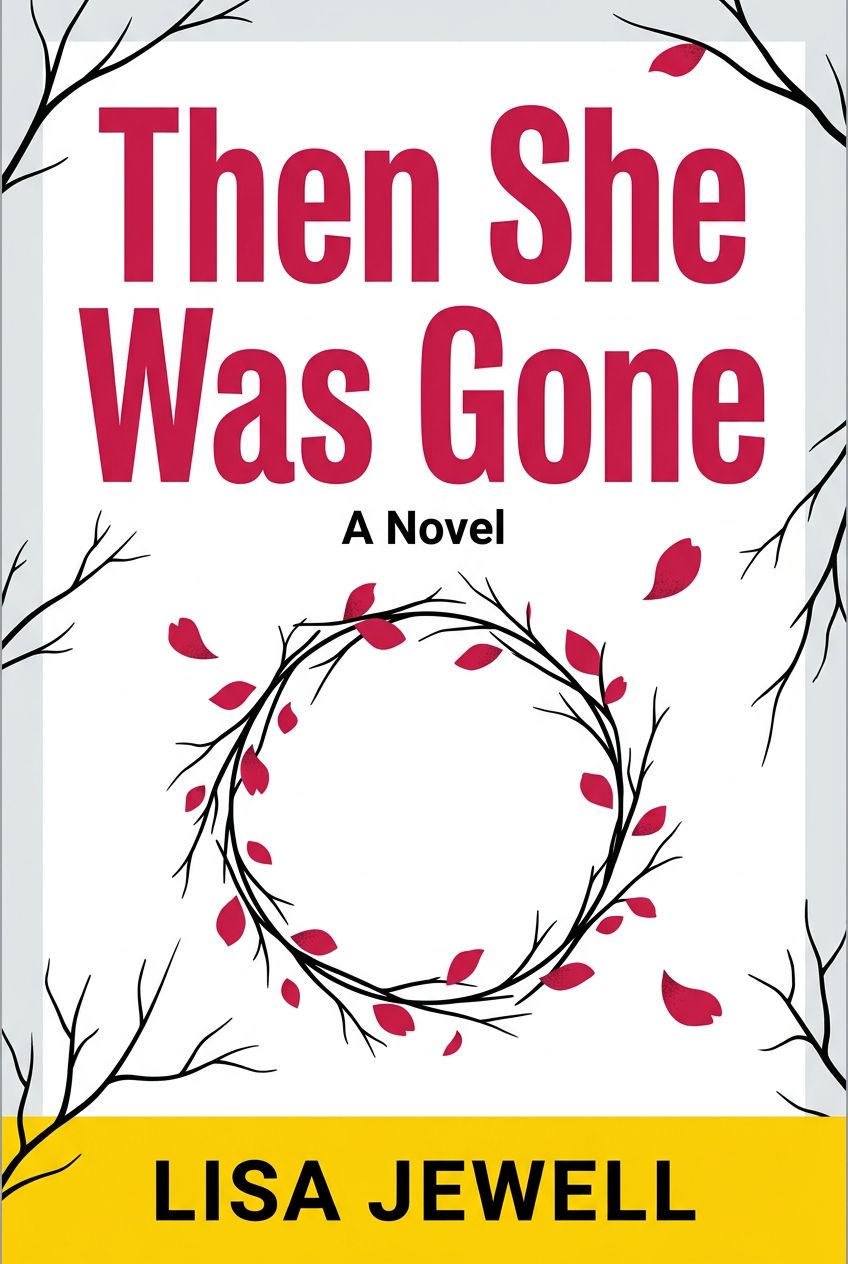
Then She Was Gone
A Novel
What's it about
Ever wondered how a mother's seemingly perfect life could unravel into a decade-long mystery? Dive into the haunting story of Laurel Mack, whose teenage daughter, Ellie, vanished without a trace. This summary explores the chilling secrets that lie just beneath the surface of a picturesque family. You'll follow Laurel's desperate search for answers, which reignites when a charming new man enters her life. His daughter bears an uncanny resemblance to the long-lost Ellie, forcing Laurel to confront a dark and twisted truth she never could have imagined. Discover what really happened the day she was gone.
Meet the author
Lisa Jewell is a 1 New York Times bestselling author whose gripping psychological thrillers have sold over ten million copies worldwide and been translated into more than twenty-five languages. Originally known for her popular contemporary fiction, Jewell transitioned to the suspense genre, where she masterfully explores the dark complexities of family secrets and relationships. Her keen insight into human nature allows her to craft the chillingly plausible and emotionally resonant stories that have captivated a global audience and solidified her status as a titan of domestic suspense.
The Script
Every family has a puzzle with a missing piece. It's a void, an empty chair, a name that hangs in the air, unspoken but felt. The family learns to live around this hole, arranging their lives so they don't fall in. They build routines on its edges, tell stories that carefully skirt the emptiness, and learn a kind of strained, functional silence. But what happens when, years later, a stranger walks into their life who seems to fit that empty space with impossible perfection? A person who feels like they were cut from the very same cloth. Suddenly, the carefully constructed peace shatters. The void becomes an active, taunting presence, forcing the family to ask a terrifying question: is this a miraculous second chance, or the final, cruel turn of a screw?
The chilling unease of that question—the way a person's absence can define a family more than their presence ever did—is the engine behind Lisa Jewell’s work. Jewell has built a career exploring the dark spaces that exist just beneath the surface of ordinary, domestic life. She is fascinated by the secrets families keep and the psychological fallout when those secrets begin to unravel. For Then She Was Gone, she was particularly interested in the idea of a mother's intuition and the unbearable tension of not knowing. She wanted to create a story that captured the visceral, all-consuming nature of a mother's grief and then twist it into a mystery that feels both completely unbelievable and terrifyingly plausible, making the reader question everything they think they know about the people they love.
Module 1: The Anatomy of Ambiguous Loss
When a loved one disappears, the pain is in the uncertainty. This is the world of Laurel Mack, ten years after her fifteen-year-old daughter, Ellie, vanished without a trace. The police eventually downgraded the case. They suggested Ellie was a runaway. But Laurel never believed it. Her life became a holding pattern, defined by a single, agonizing question: what happened to Ellie?
This leads to the first critical insight. Trauma rewires a parent's perception of reality. Laurel’s experience fundamentally altered her worldview. It made her hyper-vigilant. It made her prone to interpreting ordinary situations through the lens of past trauma. For example, when her other daughter, Hanna, doesn't come home one night, Laurel's mind immediately jumps to the worst-case scenario. She imagines Hanna "dead in a ditch." The book notes this is a "perfectly sane and reasonable" reaction given her own experience. Her past has become the blueprint for her present fears.
Furthermore, unresolved grief fractures family dynamics, creating deep emotional rifts. The Mack family didn't just lose Ellie; they lost their connection to each other. Laurel admits that after Ellie disappeared, she had nothing left to give her other children. She was consumed by waiting. This emotional void pushes her son, Jake, to move away. It leaves her daughter, Hanna, feeling guilty for being alive, inhibiting her own pursuit of happiness. In a moment of brutal honesty, Laurel even has a fleeting thought about Hanna: "It should be you missing and Ellie eating beans on toast." This reveals the ugly, unfair comparisons that can haunt a grieving parent.
And here's the thing. The search for normalcy after trauma often leads to a hollow existence. Laurel's life becomes a series of mundane routines. She works a part-time job, visits her mother in a care home, and fills her days with hobbies she doesn't enjoy. She lives in a new, safe, but soulless flat. It's a life built on endurance, not joy. She has strapped herself into a routine like a straitjacket, a conscious effort to suppress the madness of hope and the agony of not knowing. This existence is shattered when, a decade later, the police call. They’ve found something. The discovery of Ellie's partial remains finally offers a brutal, devastating closure. It transitions Laurel from ambiguous loss to concrete grief, setting the stage for an even more disturbing series of revelations.