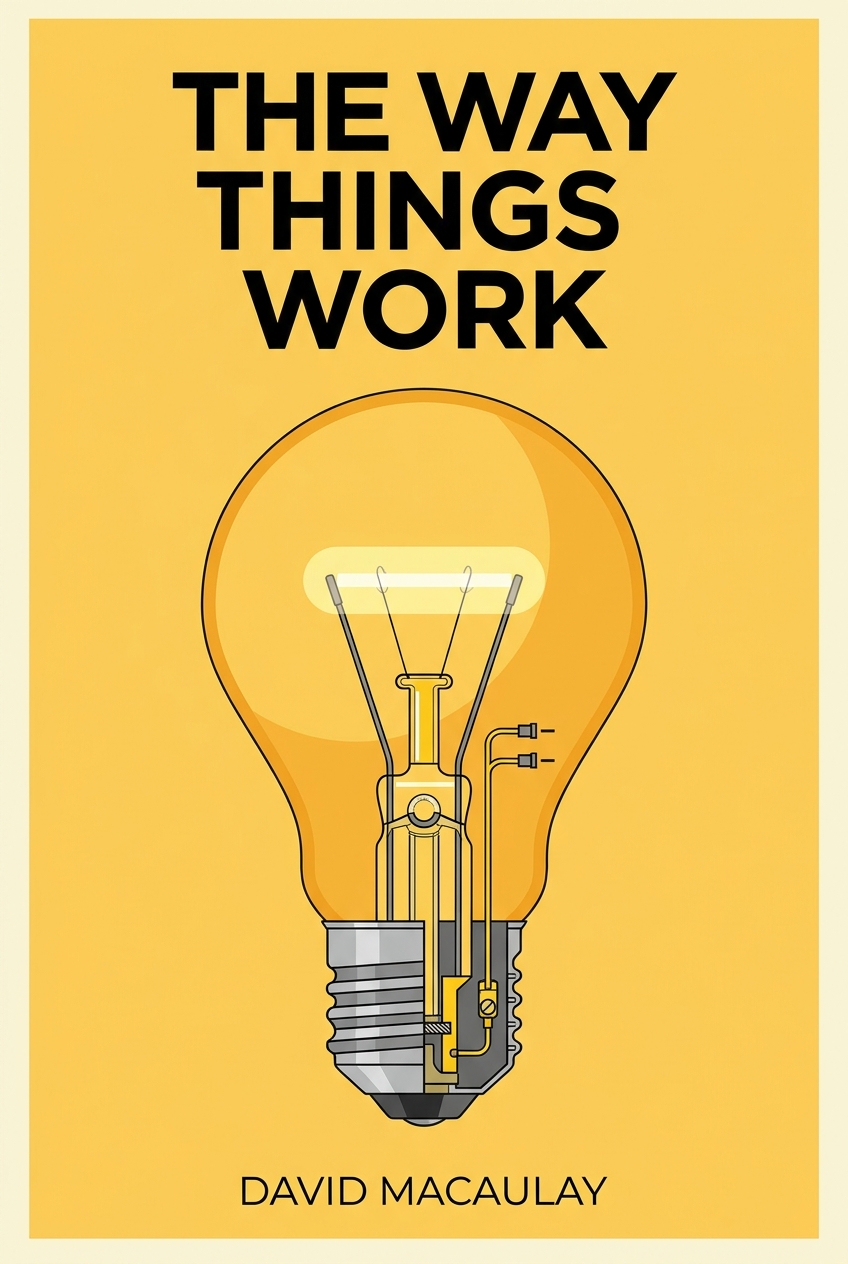
The Way Things Work
Newly Revised Edition: The Ultimate Guide to How Things Work
What's it about
Ever wondered how your smartphone connects to the world or what makes a zipper zip? Uncover the hidden genius behind everyday objects and complex machines. This guide demystifies the technology you use daily, turning complex engineering into simple, fascinating discoveries you can finally understand. Explore everything from the humble can opener to the intricate workings of the internet and digital cameras. Through clear explanations and clever analogies, you'll gain a newfound appreciation for the world around you and see the brilliant design in even the simplest of things.
Meet the author
David Macaulay is a Caldecott Medal-winning author and illustrator celebrated for his ability to demystify complex subjects through detailed and engaging visual storytelling. Trained as an architect, he possesses a unique talent for seeing the hidden structures and mechanisms within the world around us. This architectural perspective, combined with his natural curiosity and artistic skill, allows him to transform intricate technology and engineering concepts into clear, accessible, and fascinating explanations for readers of all ages in The Way Things Work.
What's it about
Ever wondered how your smartphone connects to the world or what makes a zipper zip? Uncover the hidden genius behind everyday objects and complex machines. This guide demystifies the technology you use daily, turning complex engineering into simple, fascinating discoveries you can finally understand. Explore everything from the humble can opener to the intricate workings of the internet and digital cameras. Through clear explanations and clever analogies, you'll gain a newfound appreciation for the world around you and see the brilliant design in even the simplest of things.
Meet the author
David Macaulay is a Caldecott Medal-winning author and illustrator celebrated for his ability to demystify complex subjects through detailed and engaging visual storytelling. Trained as an architect, he possesses a unique talent for seeing the hidden structures and mechanisms within the world around us. This architectural perspective, combined with his natural curiosity and artistic skill, allows him to transform intricate technology and engineering concepts into clear, accessible, and fascinating explanations for readers of all ages in The Way Things Work.
The Script
You've reached the end of the free preview.