This Republic of Suffering
Death and the American Civil War (National Book Award Finalist) (Vintage Civil War Library)
What's it about
How does a nation cope when death becomes an overwhelming, everyday reality? This Republic of Suffering confronts the unprecedented carnage of the American Civil War, revealing how the sheer scale of death forced an entire country to reinvent its relationship with loss, grief, and the afterlife. You'll discover the practical, spiritual, and political changes driven by 750,000 casualties. From creating national cemeteries and identification systems to the rise of spiritualism and new theological debates, learn how Americans forged a new understanding of a "good death" and laid the foundation for the modern nation's response to mass tragedy.
Meet the author
Drew Gilpin Faust is a preeminent historian of the American South and the Civil War, and served as the first female president of Harvard University. A daughter of the Jim Crow South, her upbringing in Virginia's Shenandoah Valley gave her a unique proximity to the Civil War's lingering legacy, inspiring her lifelong study of the region. This personal connection, combined with decades of scholarly research, provides the powerful foundation for her examination of how the war transformed America's relationship with death.
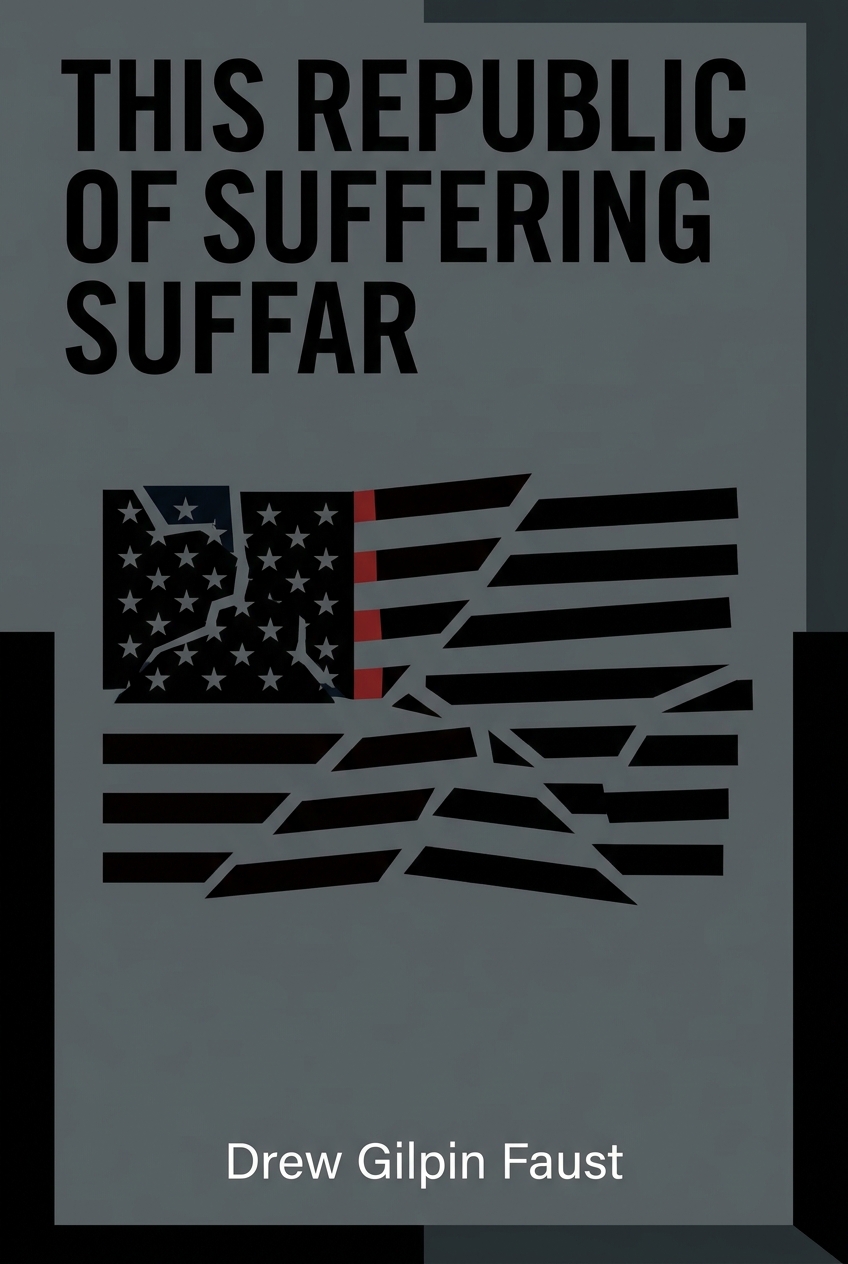
What's it about
How does a nation cope when death becomes an overwhelming, everyday reality? This Republic of Suffering confronts the unprecedented carnage of the American Civil War, revealing how the sheer scale of death forced an entire country to reinvent its relationship with loss, grief, and the afterlife. You'll discover the practical, spiritual, and political changes driven by 750,000 casualties. From creating national cemeteries and identification systems to the rise of spiritualism and new theological debates, learn how Americans forged a new understanding of a "good death" and laid the foundation for the modern nation's response to mass tragedy.
Meet the author
Drew Gilpin Faust is a preeminent historian of the American South and the Civil War, and served as the first female president of Harvard University. A daughter of the Jim Crow South, her upbringing in Virginia's Shenandoah Valley gave her a unique proximity to the Civil War's lingering legacy, inspiring her lifelong study of the region. This personal connection, combined with decades of scholarly research, provides the powerful foundation for her examination of how the war transformed America's relationship with death.
The Script
You've reached the end of the free preview.