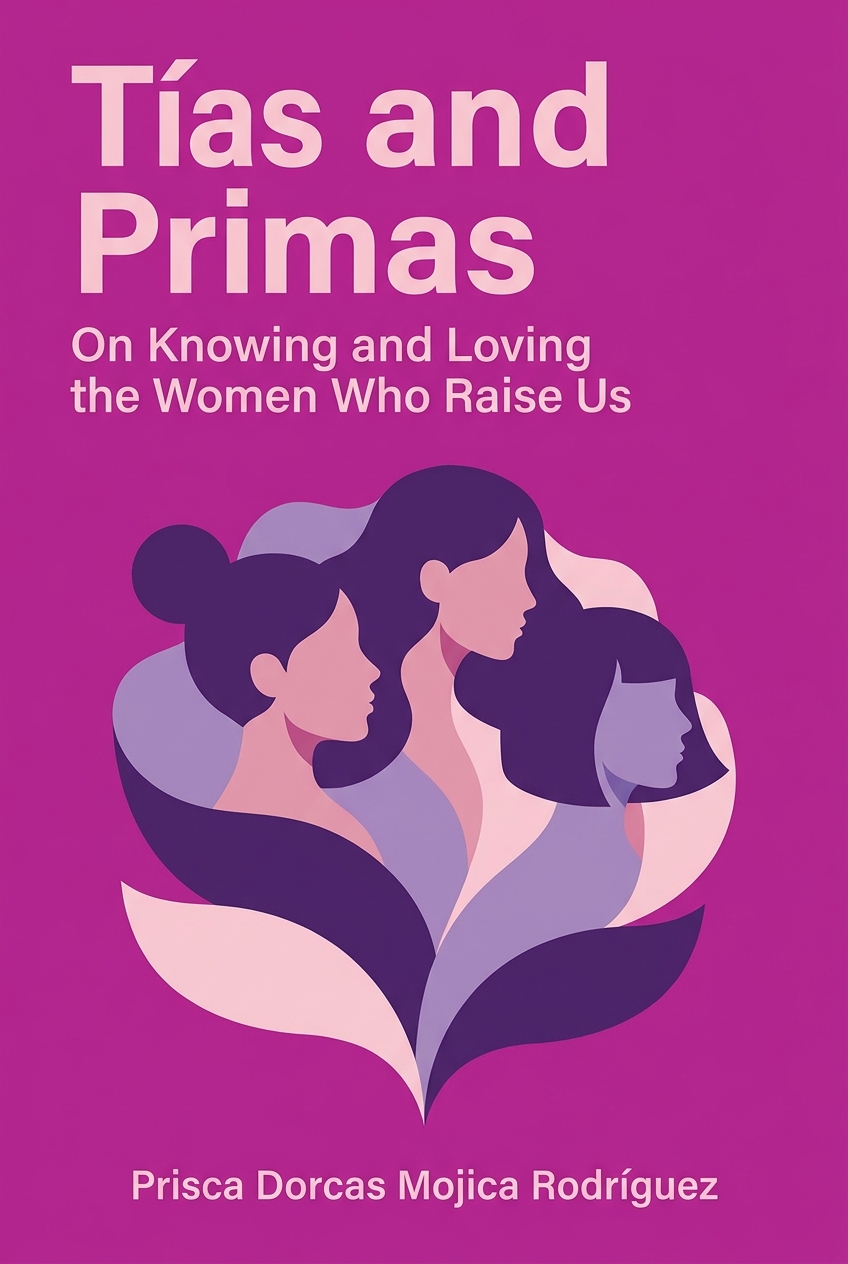
Tías and Primas
On Knowing and Loving the Women Who Raise Us
What's it about
Have you ever felt caught between the traditions of your family and the person you want to become? Discover how the powerful, often unspoken, lessons from your tías and primas can be the key to unlocking your own authentic identity and navigating a world that wasn't built for you. This summary of Prisca Dorcas Mojica Rodríguez’s work reveals how to honor your roots while forging your own path. You'll learn to reclaim the wisdom of the women who raised you, transforming their lessons on survival, love, and resistance into a powerful toolkit for self-advocacy and personal liberation.
Meet the author
Prisca Dorcas Mojica Rodríguez is a respected storyteller and theologian whose work decolonizing faith and empowering women of color has been featured in the New York Times. Growing up as a Nicaraguan immigrant in Miami, she learned firsthand the power of tías and primas in shaping identity and community. This lived experience, combined with her academic work exploring the intersections of race, gender, and class, fuels her passionate writing on the women who raise us and the love that sustains us.
Opens the App Store to download Voxbrief

The Script
Two women stand in front of identical mirrors. One sees a face, a collection of features to be cataloged and compared against a standard. She sees the curve of her nose, the shade of her skin, the texture of her hair—each a data point to be judged. Her reflection is a report card, and she is constantly grading herself, usually harshly. The other woman looks in her mirror and sees a story. She sees her grandmother’s eyes, her father’s smile, the laugh lines earned from a favorite inside joke with her cousins. Her reflection is an archive, a living family tree connecting her to generations of women who looked similar, who fought similar battles, and who found joy in the same small ways. The face is a dynamic inheritance.
This difference—seeing yourself as a score versus seeing yourself as a story—is the quiet battle fought by countless women, especially those navigating the space between their family's world and the wider culture. It’s a tension that can feel isolating, a private struggle conducted in front of bathroom mirrors and in silent moments of self-doubt. Prisca Dorcas Mojica Rodríguez felt this tension so acutely that she had to write her way through it. As a first-generation Nicaraguan-American navigating predominantly white academic spaces, she was handed a rubric for her own identity that felt foreign and wrong. Her book, "For Brown Girls with Sharp Edges and Tender Hearts," which was later retitled "Tías and Primas," became her way of tearing up that report card and instead learning to read the archive in her own reflection, creating a space for others to do the same.
Module 1: The Matriarch — The Impossible Standard
Every family has a center of gravity. For many, it's the matriarch. She is the anchor, the protector, the one who holds everything together. But this role comes with a hidden, impossibly high cost. The author introduces us to her grandmother, Rosa Esperanza, a woman who was the "safest place on earth." Her home was a sanctuary. Her care was meticulous. She knew exactly how each family member liked their nacatamales, a traditional Nicaraguan dish. This was a demonstration of deep, personal love. So here's the first thing to grasp: The matriarch’s power is built on immense, often invisible, emotional and practical labor. This labor extends beyond the home. Rosa became the neighborhood matriarch. She visited grieving families. She sent meals to those in need. Her care created a web of community support.
But where does this strength come from? It's forged in fire. The author reveals a critical insight: A matriarch’s authority is often developed as a strategic response to patriarchal constraints and economic hardship. When the author's grandfather tried to control the family finances, Rosa didn't just accept it. She started a pulpería, a small neighborhood store, right out of her home. This business gave her financial independence. It gave her community standing. It was a quiet act of resistance. She stayed in a difficult marriage for practical reasons, but she was never a victim. She carved out her own autonomous, powerful life.
And here's the thing. This level of self-sacrifice is not sustainable. It's a crushing weight. The author makes a heartbreaking point: The very traits that make a matriarch irreplaceable often lead to her depletion and create an unfillable void. Rosa died at 55 from hypertension. The author is blunt about the cause. Her grandmother had a "habit of doing little to nothing for herself." Being the family's impossible standard literally cost her her life. Her death left the family adrift, a testament to the fact that one person cannot, and should not, be the sole emotional pillar.
So what's the takeaway for us? Honoring our matriarchs—and the matriarchs in our lives—requires redefining care as a two-way street. We must learn from their sacrifices by making different choices. The author honors her grandmother by choosing to leave a marriage that wasn't working, a choice Rosa never had. It also means actively helping the matriarchs in our lives. We must tell them, "I can help." And they must learn to say, "I need help." This shifts the dynamic from overdependence to interdependence. It’s how we prevent the role from becoming a life sentence.
Now, let's move from the family's anchor to a figure who bridges worlds: the Young Tía.