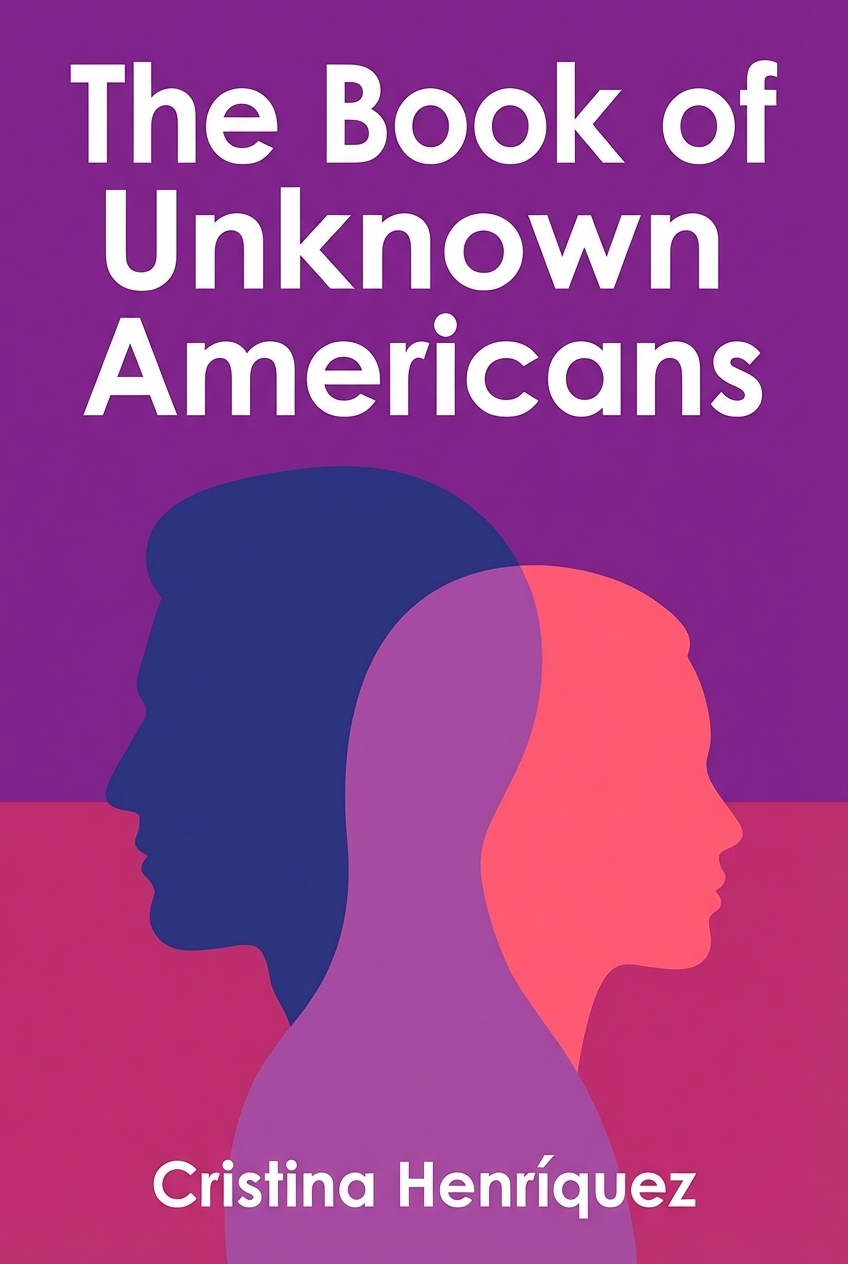
The Book of Unknown Americans
What's it about
Have you ever wondered about the hidden stories of the people who live next door? Discover a powerful novel that uncovers the secret lives, dreams, and heartbreaks of a community of immigrants, revealing the universal search for belonging that connects us all. You'll step into a Delaware apartment building and meet the Rivera and Toro families, whose lives intertwine after a tragic accident. Through their alternating perspectives, you’ll explore the complexities of first love, cultural clashes, and the immense challenges of building a new life in an unfamiliar land. This story offers a deeply human look at the immigrant experience and the true meaning of what it means to be American.
Meet the author
Cristina Henríquez is a critically acclaimed author whose work, including the celebrated novel The Book of Unknown Americans, has been published in The New Yorker and The New York Times Magazine. Her own experience as the daughter of a Panamanian immigrant father deeply informs her writing, allowing her to explore the complexities of immigration, identity, and community with profound empathy. This personal connection fuels her authentic and moving portrayal of the diverse lives that shape the American story.
The Script
Every apartment building is a library of unread stories. Behind one door, a family is mapping out a new life in a language they are still learning, their hopes pinned on a specialized school for a daughter they adore. Next door, a boy dreams of boxing, of making a name for himself that rings with strength, not strangeness. Down the hall, a landlord tries to keep the frayed threads of the building and its tenants from unraveling completely. Each resident carries a private version of their past—the country they left, the reasons they came—and a fragile blueprint for the future. They are neighbors who share walls but not worlds. They pass in the hallway with a nod, their lives running in parallel, close enough to touch but separated by the silent, invisible barriers of language, culture, and the quiet loneliness of starting over. Their stories are the hum beneath the city's noise, the lives of the 'unknown' who are, in fact, all around us.
Cristina Henríquez became fascinated by this quiet hum, by the stories held within the walls of a single apartment building in Delaware—a place not typically seen as a major hub of immigration. Having grown up in a bicultural family, moving between the United States and Panama, she was intimately familiar with the feeling of existing between two worlds. She wanted to write a book that gave voice to the everyday lives of Latin American immigrants, moving beyond dramatic headlines to capture the universal, deeply personal experiences of love, family, and the profound hope that drives someone to leave everything behind. Henríquez chose to tell this story as a chorus, letting the characters speak for themselves, turning the unread stories of one small building into a testament to the lives of millions.
Module 1: The Harsh Collision of Dream and Reality
When we think about immigration, we often picture a journey toward a better life. But what happens when the dream collides with a stark, unwelcoming reality? Henríquez dismantles the idealized vision of America from the very first pages.
The Rivera family arrives not to the picturesque suburbs of movies, but to a rundown apartment complex. Their new home smells of mildew and fish. It's surrounded by a chain-link fence and cracked asphalt. This immediate, sensory shock sets the stage for a much deeper dislocation. The immigrant journey often begins with a profound sense of disillusionment. Alma Rivera imagined "white shutters and red bricks." She got a two-story cinder block building. This is about the psychological gap between expectation and the lived experience.
So what happens next? The family has to adapt. Fast. Resourcefulness becomes a primary survival skill in the face of scarcity. Their first pieces of furniture are a discarded television and a mattress found on the curb. The advice from their driver is telling: "people throw away everything in the United States." This single line captures both the country's abundance and the family's precarious position at its margins. They are building a home from what others have deemed worthless. This forces them to be creative and resilient from day one.
And here's the thing. This new world is socially alienating. Every simple task becomes a hurdle. A trip to the gas station convenience store turns into a confusing, tense ordeal. They can't read the signs. They struggle to communicate with the cashier. The line of impatient people behind them grows. In this moment, Alma wonders, "What must we look like to people here?" This question reveals a core anxiety of the immigrant experience. You are constantly aware of being seen as "other." Your language, your clothes, your confusion—it all marks you as an outsider. This feeling is amplified when a teenage boy stares at their daughter, Maribel. He doesn't look away with the polite deference they knew back home. He stares because he doesn't know their story, objectifying them in his gaze.
In this environment of vulnerability, the family unit becomes a fortress. Protective instincts are heightened in an unfamiliar and intimidating world. Alma's focus is relentlessly on her daughter, Maribel, who is recovering from a traumatic brain injury. "Is she okay?" is her constant refrain. When the boy stares, Alma physically pulls Maribel closer. Her husband, Arturo, shepherds them out of the store, whispering, "Just walk." This small, unified act shows how the family closes ranks. They become a self-contained unit, moving through a world they do not yet trust, with their love and protection for one another as their only true shield.