All Books
Self-Growth
Business & Career
Health & Wellness
Society & Culture
Money & Finance
Relationships
Science & Tech
Fiction
Topics
Blog
Download on the App Store

Too Big to Fail

The Inside Story of How Wall Street and Washington Fought to Save the Financial System--and Themselves

23 minAndrew Ross Sorkin

What's it about

Ever wonder what really happens when the world's financial system is on the brink of collapse? Get a front-row seat to the 2008 crisis and discover the secret deals and high-stakes gambles made by Wall Street and Washington's most powerful players to prevent a global meltdown. You'll go behind the closed doors of Lehman Brothers, AIG, and the Federal Reserve to understand the egos, greed, and fear that drove every decision. Learn exactly how close we came to total economic disaster and what it reveals about the fragile, interconnected nature of modern finance.

Meet the author

Andrew Ross Sorkin is the award-winning chief mergers and acquisitions reporter for The New York Times, providing unparalleled access to the world of high finance. It was from this unique vantage point, covering Wall Street for over a decade, that he gained the trust of the most powerful figures in finance and government. This allowed him to meticulously reconstruct the harrowing, behind-the-scenes decisions made during the 2008 financial crisis, offering readers an definitive insider’s account of how the global economy was saved from collapse.
Listen Now
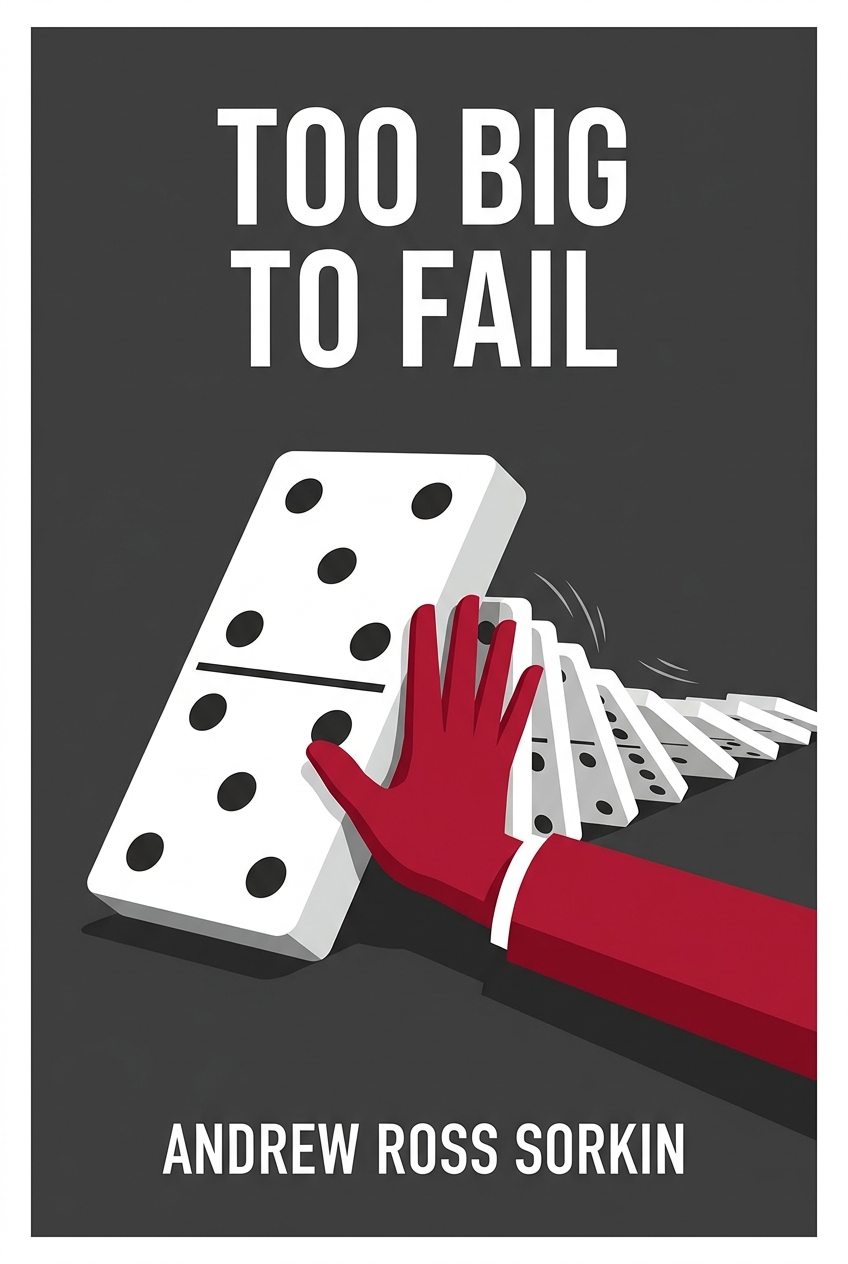
Too Big to Fail book cover

The Script

In a hospital trauma center, the chief of surgery doesn't just evaluate the patient on the table; they must also assess the stability of the operating room itself. Is the power grid reliable? Are the blood bank's reserves contaminated? Is the anesthesiologist about to collapse from exhaustion? If any part of this complex, interconnected system fails, the patient dies, regardless of the surgeon's skill. But what happens when the patient is an entire global economy? And what if the surgeons—the heads of the world's most powerful banks and governments—discover that the very tools they're using to save it are part of the disease?

This is the chaotic, minute-by-minute reality that unfolded during the 2008 financial crisis. The frantic phone calls, the secret weekend meetings, the desperate bluffs—all of it felt like a black box to the outside world. Andrew Ross Sorkin, then a young, driven reporter for The New York Times, became obsessed with prying that box open. He spent years cultivating unparalleled access, conducting hundreds of hours of interviews with every major figure, from CEOs like Lehman Brothers' Dick Fuld to Treasury Secretary Hank Paulson. Sorkin wanted to reconstruct the conversations in the room as they happened, creating a definitive, human-level account of how the global financial system was pushed to the absolute brink of collapse and the agonizing choices made to pull it back.

Core Content Breakdown

Viewpoint One: The Financial System's Interconnectedness Creates Systemic Risk

The narrative highlights how the complex, interwoven nature of major financial institutions meant that the failure of one could trigger a chain reaction, threatening the entire system. This interconnectedness, particularly through securitized products and derivatives, made firms dangerously dependent on each other's stability. Officials like Timothy Geithner and Hank Paulson argued that extraordinary measures, including bailouts, were required to prevent a broader economic collapse, framing the crisis as a systemic panic akin to historical financial crises.

  1. Example of Interconnectedness and Systemic Risk: The text describes how Wall Street firms, through the process of securitization , ended up owning various pieces of each other's assets. This created a situation where "every firm was now dependent on the others—and many didn’t even know it. If one fell, it could become a series of falling dominoes." This was a key reason for the government's intervention in Bear Stearns.
  2. Example of a "Contained" Crisis Turning Systemic: The Bear Stearns situation is presented as a symptom of a broader, systemic problem. Timothy Geithner's prepared testimony for the Senate states: "The most important risk is systemic: if this dynamic continues unabated, the result would be a greater probability of widespread insolvencies, severe and protracted damage to the financial system and, ultimately, to the economy as a whole."
  3. Example of Global Contagion: AIG's potential failure was deemed catastrophic because it had sold credit default swaps wrapping hundreds of billions in assets for European banks. If AIG failed, those banks would lose their "AAA" credit wrap, forcing them to mark down assets and raise billions in new capital in a frozen market, creating a global capital crisis. A document lists AIG's biggest counterparties, including ABN AMRO , Calyon, Goldman Sachs, Barclays, and Morgan Stanley, showing why regulators feared AIG's failure would directly hit numerous other major global firms.
  4. Example of Money Market Contagion: The Reserve Primary Fund, a U.S. money market fund, "broke the buck" because it held $785 million in Lehman Brothers debt. This event caused a panic in the global commercial paper market, a key source of short-term funding for corporations, demonstrating how one institution's failure could freeze credit across the international system.

Viewpoint Two: Reliance on Short-Term Funding and Leverage Made Institutions Vulnerable

Financial firms operated with extremely high levels of debt and depended on constant, daily access to funding from other investors. This business model was inherently fragile, as a loss of confidence could lead to a rapid collapse.

  1. Example of Funding Vulnerability: The text explains that investment banks are "financed literally overnight by others on the assumption that they will be there the next morning." Bear Stearns failed due to a "run on the bank" where panicky investors refused to trade with it, cutting off its essential funding. Dick Fuld of Lehman Brothers is acutely aware that his firm faces the same risk.
  2. Example of Excessive Leverage: Wall Street firms are described as having "debt to capital ratios of 32 to 1." While this strategy generated massive profits during good times, it also meant that "when it failed... the result was catastrophic." Fuld himself acknowledges the risks of leverage, comparing it to "paving the road with cheap tar. When the weather changes, the potholes that were there will be deeper and uglier." The book notes specific leverage ratios in early 2008: Lehman Brothers , Morgan Stanley , Merrill Lynch , and Goldman Sachs .

Viewpoint Three: Overconfidence, Denial, and Groupthink Preceded and Prolonged the Crisis

A collective belief in financial engineering and ever-rising markets led to a dismissal of risks and warnings. Even as the crisis unfolded, executives of failing firms frequently underestimated the severity of their situations, clung to unrealistic valuations, and resisted necessary actions due to pride or misjudgment.

  1. Example of Widespread Overconfidence: At the peak of the bubble, financial leaders like Sandy Weill of Citigroup evangelized the "American model of free enterprise and capital markets," believing they had created a new, low-risk paradigm. The text states that financial titans were confident they had invented a new financial model.
  2. Example of Ignored Warnings: The text references early Cassandras like Professor Nouriel Roubini and a 1994 warning from Comptroller General Charles A. Bowsher about the dangers of the derivatives market. Bowsher told Congress that the failure of a major dealer "could cause liquidity problems" and that "in some cases intervention has and could result in a financial bailout paid for or guaranteed by taxpayers." These warnings went unheeded.
  3. Example of Leadership Denial: Dick Fuld of Lehman Brothers reacted with anger when Treasury's Ken Wilson suggested Lehman might have to sell for "low single digits" per share, exclaiming, "No fuckin' way... Bear Stearns got $10 a share, there’s no fuckin' way I will sell this firm for less!" despite Lehman's rapidly deteriorating position. He was also described by Hank Paulson as being "in denial" during an emergency meeting.
  4. Example of the "Too Big to Fail" Mindset: Despite mounting losses in its Financial Products unit, AIG executives, including CEO Martin Sullivan, expressed confidence in 2007 that the firm was "too big to fail." Sullivan boasted to investors that AIG had a $1 trillion balance sheet and was not reliant on short-term funding markets, implying the government would not allow it to collapse.

Viewpoint Four: The Difficulty of Valuing Complex Assets Paralyzed Markets

The new, highly complex financial instruments, particularly mortgage-backed securities and collateralized debt obligations , became impossible to price accurately once the housing market turned. This uncertainty froze trading, capital markets, and rescue negotiations.

  1. Example of Market Paralysis: During the subprime collapse, French bank BNP Paribas "briefly suspended customer withdrawals, citing an inability to properly price its book of subprime-related bonds. That was another way of saying they couldn’t find a buyer at any reasonable price." The text notes that "the very complexity of mortgage-backed securities meant that almost no one was able to figure out how to price them."
  2. Example of Skepticism Over Asset Valuations: Even after Lehman Brothers reported positive earnings, skeptics like hedge fund manager David Einhorn and analyst Peter Schiff doubted the numbers. Schiff told the Washington Post: "I still don’t believe any of these numbers because I still don’t think there is proper accounting for the liabilities they have on their books." This reflects a widespread loss of trust in how firms were "marking" their assets.
  3. Example of Misplaced Faith in Models: AIG Financial Products aggressively sold credit default swaps, believing their models showed the odds of simultaneous defaults were remote "short of another Great Depression." They viewed the premiums as "free money." This business ultimately required AIG to post tens of billions in collateral as the underlying mortgage securities collapsed.
  4. Example of Rescue Negotiation Difficulties: During presentations to potential rescuers at the Fed, Lehman's materials showed it had marked down its commercial real estate assets by only 15%, while most Wall Street bankers assumed the reduction should be far greater. This discrepancy in valuation led to skepticism and complicated efforts to assess the true hole in Lehman's balance sheet.

Viewpoint Five: Government Intervention Was Ad Hoc, Politically Fraught, and Created a "Moral Hazard" Dilemma

Government officials faced immense difficulties in managing the crisis due to limited legal tools, political backlash against "bailouts," and the challenge of maintaining market confidence. Their actions were often reactive and inconsistent, creating confusion and debate over "moral hazard"—the idea that shielding investors from failure encourages greater risk-taking.

  1. Example of the Moral Hazard Dilemma: Treasury Secretary Hank Paulson explicitly pushed JP Morgan's Jamie Dimon to buy Bear Stearns for a very low price because he wanted to send a message that "shareholders should not profit from a government rescue."
  2. Example of Inconsistent Intervention: Paulson publicly stated the government would not bail out Lehman Brothers, citing moral hazard, and allowed it to fail. Days later, faced with the imminent collapse of AIG, he and the Fed orchestrated an $85 billion loan. This rapid reversal showed policy was dictated by the perceived magnitude of systemic risk in the moment, leading former Goldman Sachs CEO Jon Corzine to note, "There hasn’t been a consistent pattern.... The market is going to have a hard time sorting through what the underlying principle is."
  3. Example of Political Backlash: Paulson faced criticism from both sides of the political aisle. Democrats like Barney Frank framed the Bear Stearns rescue as a "ransom," while conservatives like Senator Jim Bunning called the request for authority to backstop Fannie Mae and Freddie Mac "socialism." After the Fannie and Freddie takeover, Bunning accused Paulson of knowing "more than he was telling us."
  4. Example of a Punitive Bailout: To justify using taxpayer money for AIG and offset political backlash, the government imposed harsh terms. The loan came with an 11% interest rate and demanded warrants for 79.9% of the company's equity, effectively transferring ownership to the government and punishing existing shareholders. CEO Bob Willumstad was also replaced as a condition of the deal.

Viewpoint Six: Internal Firm Dynamics and Leadership Conflicts Exacerbated Vulnerabilities

Crises within major financial firms were made worse by weak internal oversight, flawed personnel decisions, and leadership conflicts that prevented timely corrective action.

  1. Example of Leadership Conflict at Lehman: CEO Dick Fuld faced a revolt from senior executives like Skip McGee, who urged the removal of COO Joe Gregory over concerns about risk management and personnel decisions, leading to Gregory's eventual resignation. Fuld’s new President, Bart McDade, also began developing a restructuring plan without Fuld's direct oversight.
  2. Example of Governance Failure at Merrill Lynch: CEO Stan O'Neal's aggressive push into mortgage securitization and CDOs, coupled with the ousting of risk-conscious executives like Jeffrey Kronthal, left the firm heavily exposed when the housing market collapsed.
  3. Example of a Breakdown in Trust at AIG: As Chairman, Bob Willumstad discovered the FP unit had insured over $500 billion in subprime mortgages. He secretly ordered an audit by PricewaterhouseCoopers without informing CEO Martin Sullivan, highlighting a breakdown in communication and trust at the highest level.
  4. Example of Personal Relationships and Rivalries: The crisis was managed by a small group of individuals whose long-standing relationships and rivalries played a role. At Lehman, the bond between Dick Fuld and his president, Joe Gregory, was central to the firm's power structure. Meanwhile, Treasury Secretary Hank Paulson and private equity executive Chris Flowers had a long-standing feud, and Paulson dismissed Flowers's involvement with AIG, calling him a "troublemaker."

Viewpoint Seven: The Crisis Response Involved Secretive, High-Stakes Planning and Negotiation

Government officials and financial executives engaged in secretive, carefully timed operations and parallel negotiations to prevent market panic, often using coercive pressure and operating with incomplete information.

  1. Example of Secret Government Planning: Treasury Secretary Hank Paulson and Fed Chairman Ben Bernanke secretly planned the takeover of Fannie Mae and Freddie Mac, scheduling meetings for a Friday afternoon to ensure markets were closed and giving them a 48-hour window to execute the conservatorship before information could leak.
  2. Example of Secret Parallel Negotiations: While publicly focused on acquiring Lehman, Bank of America was also secretly negotiating with Merrill Lynch. BofA's Ken Lewis met with Merrill's John Thain at Lewis's apartment, exploring a merger while Lehman remained unaware that BofA had dropped its bid for them.
  3. Example of Coercive Pressure: During the Fannie and Freddie takeover, Paulson told the executives, "We’d like your cooperation," but added, "We have the grounds to do this on an involuntary basis, and we will go that course if needed." Similarly, during a call with Lehman's board, SEC Chairman Christopher Cox strongly implied they should file for bankruptcy without directly ordering it, leaving the board feeling coerced.
  4. Example of Information Control: At a critical meeting about AIG, New York Fed President Tim Geithner ordered everyone to put away their cell phones and BlackBerrys, forbidding communication outside the room as he floated the radical idea of a Fed bailout. This demonstrates the shift to a secret, war-room mentality.

Viewpoint Eight: Cross-Border Regulatory and Political Hurdles Complicated International Rescues

When U.S. firms sought foreign buyers, overseas regulators and politicians imposed conditions or expressed reservations due to concerns about financial stability and national interests, adding layers of complexity to potential deals.

  1. Example of a Blocked International Deal: Barclays' attempt to acquire Lehman was blocked by UK regulators. The Financial Services Authority and Chancellor Alistair Darling refused to approve the deal without a shareholder vote, which could take 30-60 days, and were concerned about importing U.S. "cancer" into the British financial system. This regulatory hurdle directly contributed to Lehman's bankruptcy.
  2. Example of International Reluctance: U.K. Chancellor Alistair Darling called Hank Paulson to express "serious concerns" about Barclays potentially buying Lehman, stating, "Barclays shouldn’t take on any more risk than they could possibly manage," indicating international reluctance to import U.S. financial troubles.
  3. Example of Cross-Cultural Negotiation Challenges: Morgan Stanley’s Paul Taubman insisted that his Tokyo-based colleague wake senior Mitsubishi executives at home to advance deal talks, a breach of Japanese protocol. Later, China's sovereign wealth fund made what CEO John Mack considered an "offensive" low offer for Morgan Stanley and withdrew angrily upon learning the firm was pursuing a deal with Mitsubishi instead.

Viewpoint Nine: Psychological Factors, Market Rumors, and Short-Sellers Drove Panic

In a climate of fear, targeted short-selling and damaging rumors could become self-fulfilling prophecies, driving down a firm's stock price and creating a liquidity crisis that threatened its survival regardless of its underlying asset quality.

  1. Example of Blaming Short-Sellers: Dick Fuld of Lehman Brothers aggressively confronted rumors and short-sellers, insisting to Jim Cramer that Lehman had "tons of cash." He accused a "cabal of shorts" of driving down Lehman's stock price and sought help from CNBC to combat negative rumors.
  2. Example of a Self-Fulfilling Prophecy: Morgan Stanley's stock fell dramatically despite reporting strong earnings. CEO John Mack blamed "fear and rumors" and "short sellers," sending a company-wide email accusing them of "irresponsible action." He lobbied regulators to ban short-selling of financial stocks.
  3. Example of Predatory Behavior: The text cites a former Morgan Stanley trader recalling a culture where a senior executive would say, "There’s blood in the water, let’s go kill someone!" during times of competitor weakness. During the panic, there were reports of hedge funds and other banks aggressively shorting or buying credit default swaps against rivals.

Viewpoint Ten: The Crisis Culminated in a Forced, System-Wide Recapitalization

When piecemeal interventions failed to stop the panic, officials concluded that a comprehensive, congressionally approved program was necessary. This led to the Troubled Asset Relief Program , which ultimately became a vehicle for forcing capital injections into the nation's largest banks.

  1. Example of TARP's Contentious Creation: The initial TARP legislation drafted by Paulson’s team was just three pages long, granting the Treasury Secretary non-reviewable powers and a $700 billion authorization, causing immediate political backlash. The House initially rejected the bill on September 29, 2008, causing the Dow Jones Industrial Average to drop 777 points.
  2. Example of a Shift in Strategy: Paulson initially favored a TARP model focused on buying toxic assets. However, his team and others argued for direct capital injections as a more effective use of funds. This led to the pivotal meeting where the government forced banks to take capital.
  3. Example of the Forced Capital Injection: On October 13, 2008, Paulson, Geithner, and Bernanke summoned nine major bank CEOs to Washington and presented them with term sheets for capital injections, making it clear the program was not optional. Wells Fargo CEO Dick Kovacevich initially resisted, but relented after regulators indicated they would deem his bank undercapitalized if he refused.
  4. Example of the End of an Era: The Federal Reserve granted Goldman Sachs and Morgan Stanley bank holding company status on September 21, 2008, giving them access to the Fed’s discount window but subjecting them to stricter regulation. The New York Times described this as "a blunt acknowledgment that their model of finance and investing had become too risky," marking the end of the standalone investment bank era.

Abbreviations and Terminology

  • AIG: American International Group. A multinational insurance corporation whose financial products division incurred massive losses from credit default swaps.
  • CDO : A structured financial product that pools various debt assets and slices them into tranches with different risk profiles.
  • CDS : A financial derivative that functions like an insurance contract, providing a payout if a specific credit event occurs.
  • FHFA : The U.S. regulator of Fannie Mae and Freddie Mac.
  • FSA : The UK's financial regulatory body at the time, whose rules complicated the potential Barclays-Lehman deal.
  • GSEs : Refers to Fannie Mae and Freddie Mac.
  • Leverage: The use of borrowed money to amplify potential returns, which also increases risk. High leverage ratios indicate heavy reliance on debt.
  • LIBOR : The average interest rate at which major global banks borrow from one another; it spiked during the crisis.
  • Liquidity: The ability to quickly convert assets into cash. A lack of liquidity, often from a freeze in short-term funding, can cause a firm to fail.
  • Mark-to-Market: An accounting practice of valuing an asset at its current market price. During the crisis, this forced massive write-downs on complex, illiquid assets.
  • Moral Hazard: The risk that a party insulated from risk may behave differently and take on more risk than it otherwise would.
  • Repo : A form of short-term borrowing where dealers sell securities with an agreement to repurchase them later at a higher price. The repo market is a key source of daily funding for investment banks.
  • SpinCo: A term for a planned spin-off of troubled assets into a separate "bad bank" entity, as proposed by Lehman Brothers.
  • Subprime Mortgages: Loans made to borrowers with poor credit histories, which became high-risk assets that triggered the crisis.
  • TARP : A U.S. government program created to purchase toxic assets and equity from financial institutions to strengthen the financial sector.