All Books
Self-Growth
Business & Career
Health & Wellness
Society & Culture
Money & Finance
Relationships
Science & Tech
Fiction
Topics
Blog
Download on the App Store

We Do Not Part

A Novel

11 minHan Kang

What's it about

Have you ever felt a deep, unspoken connection to your family's past, even the parts you've never been told? This novel explores the powerful, often painful, ways history lives within us, shaping our present in ways we can't always see. You'll follow a writer haunted by her family's silence as she travels to a remote island, the site of a forgotten massacre. Through her journey, you'll uncover the hidden stories of love, loss, and incredible resilience that bind generations together, revealing how we can find peace by confronting the ghosts of history.

Meet the author

Han Kang is the internationally acclaimed author of The Vegetarian, winner of the 2016 Man Booker International Prize, celebrated for her lyrical and unflinching explorations of the human condition. Drawing from her own country's turbulent history and a deep interest in memory, trauma, and resilience, she crafts profoundly moving narratives. Her work, including We Do Not Part, gives voice to the silenced and examines the fragile, yet persistent, bonds that connect us through suffering and love.
Listen Now

Opens the App Store to download Voxbrief

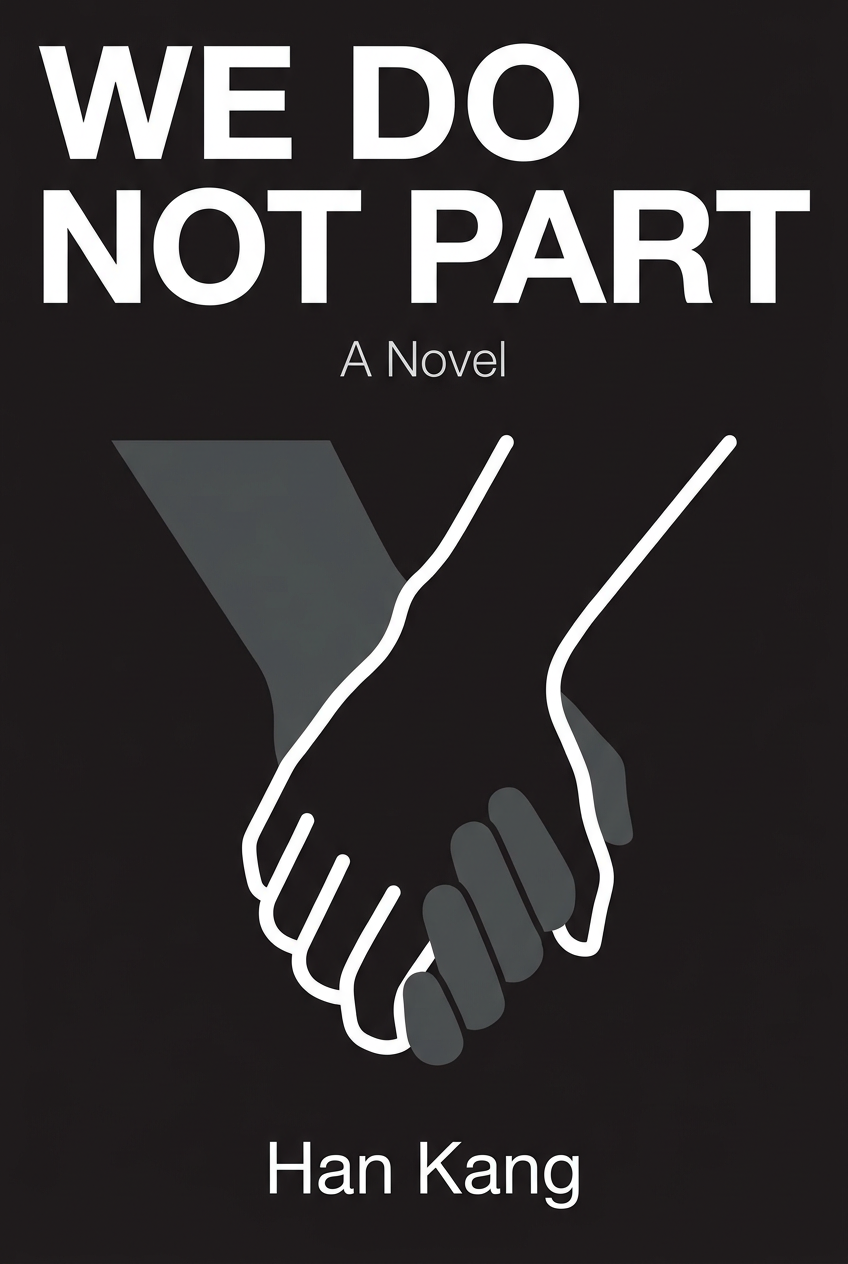
We Do Not Part book cover

The Script

Two women, separated by a century, are given identical tasks: embroider a shroud. The first, a court lady in the final days of a collapsing dynasty, works with pristine white silk, her needle moving with the quiet precision of ritual. Each stitch is a prayer, a perfect, uniform mark meant to preserve the dignity of a body soon to be lost. Her work is an act of formal mourning, a final, beautiful lie against the chaos outside the palace walls. The second woman, a present-day textile artist working in a disaster zone, is given a box of scorched, fragmented cloth salvaged from a fire. Her task is the same, but her materials are the chaotic remnants of life. Her stitches are sutures, pulling together disparate pieces of fabric—a bit of a curtain, a piece of a wedding dress, a scrap from a child's shirt. Her work is about holding together what has been violently torn apart, creating a new, scarred whole.

Both women create a shroud, but one is a monument to what was, while the other is a testament to what survived. This profound difference between a perfect, sealed memory and a messy, living one is the space Han Kang explores in her work. Her own life has been a study in these tensions. Growing up in the shadow of South Korea's Gwangju Uprising, a brutal event her family narrowly avoided, she became intimately familiar with the gap between official histories and the fragmented, traumatic memories of survivors. Her writing, including the collection We Do Not Part, emerges from this need to stitch together the pieces left behind—to give voice to the unspoken grief and the stubborn, enduring connections that refuse to be erased by violence or time.

Module 1: The Weight of Witnessing

The story begins with a writer, Kyungha, who is haunted by the weight of the stories she has told. After writing a book about a historical massacre, she is plagued by nightmares. She dreams of a vast, snowy plain filled with thousands of black, chopped-off trees, a landscape of profound loss. This dream is a powerful symbol. It shows that engaging with trauma is a lasting process. You don't just write the book and move on. The story becomes a part of you.

This leads to a core insight: witnessing trauma, even secondhand, carries a profound psychological cost. Kyungha’s life unravels. She withdraws from the world, isolates herself in a small apartment, and sinks into a deep depression. She writes a will with no one to leave it to. Her body and mind are breaking under the strain of what she knows. This is a complete psychological and physical collapse. The author makes it clear that the work of remembering is dangerous. It requires a kind of strength that can easily be mistaken for fragility.

Here's where it gets practical. The novel suggests that you can't simply will this weight away. Kyungha tries to intellectualize it, to turn her haunting dream into a conceptual art project. She plans to plant ninety-nine blackened logs in a snowy field, a physical manifestation of her nightmare. But the project stalls for years. This shows that art can be a response to trauma, but it is a long, difficult process. It’s a long, difficult process of trying to give form to the formless. For professionals, this is a powerful reminder. When dealing with high-stakes, emotionally charged projects or even just the vicarious stress of the modern world, we can't expect to just "get over it." The impact is real, and acknowledging its weight is the first step toward managing it.

Module 2: The Agony of Care

Now, let's pivot from the internal world of the writer to the physical reality of her friend, Inseon. The narrative shifts when Kyungha learns Inseon has been in a terrible accident. Inseon, a documentary filmmaker and carpenter living on Jeju Island, has severed her fingertips. The treatment she must endure is both brutal and necessary. This introduces another key idea.

Healing can be a form of deliberate, repetitive pain. To save the reattached fingertips, a carer must jab needles into the open wounds every three minutes, around the clock, for weeks. This prevents scabs from forming and keeps blood flowing to the delicate nerves. If they stop, the tissue will die and rot. The alternative, amputation, risks permanent phantom pain. It’s a horrifying choice: endure constant, acute agony now, or risk a lifetime of untreatable suffering later. This is a powerful metaphor for processing deep trauma. Sometimes, the only way through is to systematically, painfully, revisit the wound. You can't just cover it up and hope it gets better.

This brings us to the complex nature of friendship. Inseon's resilience is staggering. Her motto is, "I’ll carry on in any case." But her pain also connects her to a wider history of suffering. While enduring the agony in the back of a truck on the way to the hospital, her mind doesn't focus on herself. Instead, she thinks of the victims in Kyungha's book, the people killed by bullets and blades. She thinks, "How agonizing it must have been when it hurts this much to have the tips of one’s fingers sliced off."

In that moment, personal suffering can become a bridge to understanding collective history. Her individual pain allows her to empathize, on a cellular level, with the historical trauma she and Kyungha have been circling through their art. It’s a devastating, profound connection. It suggests that our personal struggles, no matter how isolating they feel, are part of a larger human story of pain and endurance.

Read More