All BooksSelf-GrowthBusiness & CareerHealth & WellnessSociety & CultureMoney & FinanceRelationshipsScience & TechFiction
Download on the App Store

When Crickets Cry

13 minCharles Martin

What's it about

Have you ever wondered if a second chance at life—and love—is truly possible, even after devastating loss and secrets? Discover a story that proves redemption can be found in the most unexpected of places, reminding you that hope often whispers when all else is silent. This powerful narrative follows a brilliant heart surgeon who has exiled himself to a small town, hiding from a tragic past. When a seven-year-old girl with a failing heart and a mysterious connection to his own history appears, he must confront his demons. You'll learn that true healing requires immense courage, forgiveness, and the willingness to risk everything for a chance at a new beginning.

Meet the author

Charles Martin is a New York Times bestselling author whose novels have been translated into over thirty-five languages, captivating millions of readers worldwide with his powerful storytelling. He earned his Ph.D. in English and, after a decade in academia, left to pursue writing full-time, drawing on his deep understanding of human connection and redemption. This unique blend of scholarly insight and heartfelt narrative gives his work its profound emotional resonance and widespread appeal.
Listen Now
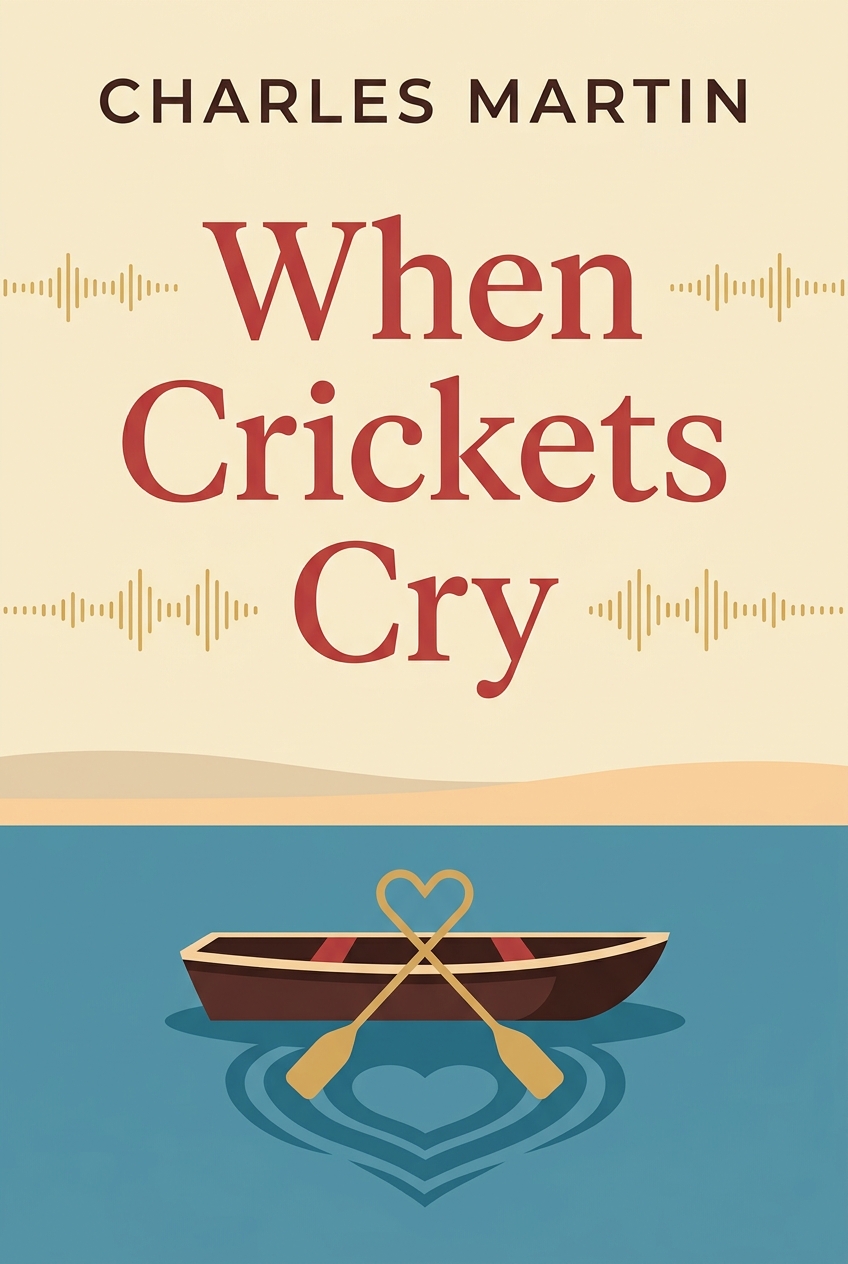
When Crickets Cry book cover

The Script

Every town has its ghosts. The living, breathing kind—people who exist on the periphery, their pasts carefully locked away behind a quiet routine. They are the ones who fix your engine without meeting your eye, the ones who know the tides by heart but never speak of the storms they’ve weathered. Their silence is a fortress, built brick by brick from memories too heavy to carry in conversation. We see them, we might even interact with them, but we don't truly know them. We sense a deep well of pain, a story of profound loss that has reshaped them into who they are now, but we respect the walls they've built. The most profound tragedies are often the quietest, echoing not in screams, but in the steady, solitary rhythm of a life lived in the aftermath.

This landscape of quiet suffering and the possibility of redemption is the terrain Charles Martin explores. Martin, who holds degrees in English and journalism, has a gift for finding the extraordinary within the ordinary lives of people scarred by their past. He was drawn to the idea of a character whose hands were gifted enough to mend the most intricate parts of the human body, yet were powerless to fix his own broken heart. This led him to create a story that delves into what happens when a brilliant man, shattered by a devastating loss, retreats from the world, only to find that the world—and a chance at healing—has a way of finding him, whether he’s ready for it or not.

Module 1: The Anatomy of Grief and Seclusion

Grief is a state of being that can fundamentally alter your identity. In "When Crickets Cry," we meet a man named Reese, who is living in self-imposed exile. He's a ghost. He exists off the grid, with a P.O. box forwarding mail to another P.O. box. For all practical purposes, he has erased himself from the world. Why? Because the man he was—a brilliant heart surgeon—died along with his wife, Emma.

This leads to a powerful insight. Unresolved trauma leads to a life of avoidance and isolation. Reese cannot bear to face his past. He avoids mirrors because he's become unrecognizable even to himself. His reflection is a painful reminder of his failure. He lives by a lake, but his dock is dark on the Fourth of July. The sounds of celebration feel alien to him. He even possesses letters from his late wife that he was meant to open years ago. He can't. Final words are too hard to hear when you know they are final. This avoidance is an active, daily choice to remain in a "nowhere place," a quiet purgatory where even the crickets seem to hold their breath.

From this foundation, we see how this seclusion is maintained. Daily rituals can become walls that protect you from the world. For Reese, this ritual is a pre-dawn rowing session with his blind brother-in-law, Charlie. They row in near silence. The physical pain of the exertion is a welcome distraction, a shared, unspoken catharsis. They communicate in taps and gestures, their bond forged in a mutual, unspoken grief. This routine is sacred. It's predictable. And it keeps the rest of the world, with its unpredictable demands and painful memories, at a safe distance.

But here’s the thing. No matter how high the walls, life finds a way to breach them. A seven-year-old girl named Annie, full of life despite a failing heart, has an accident. Reese is the first on the scene. And in that moment, his carefully constructed seclusion shatters. He instinctively uses his hidden medical expertise to save her, performing emergency procedures he hasn't touched in years. He tries to lie, claiming he just "works on boats." But his skills betray him. The community, initially hostile toward this stranger, quickly sees he is a healer. And so, the ghost is forced back into the world of the living.

This brings us to a critical point about purpose. Your deepest skills are an inescapable part of your identity. Reese can change his name and hide in the woods, but he can't erase the years of training and the innate drive to heal. When confronted with Annie's suffering, his hands move with a memory of their own. He assesses her Glasgow Coma Scale. He suspects a pneumothorax. He administers nitroglycerin. He is a highly trained specialist. His past, the very thing he fled, is the only thing that can give Annie a future. His journey shows us that you can run from who you were, but you can't run from who you are.

Read More