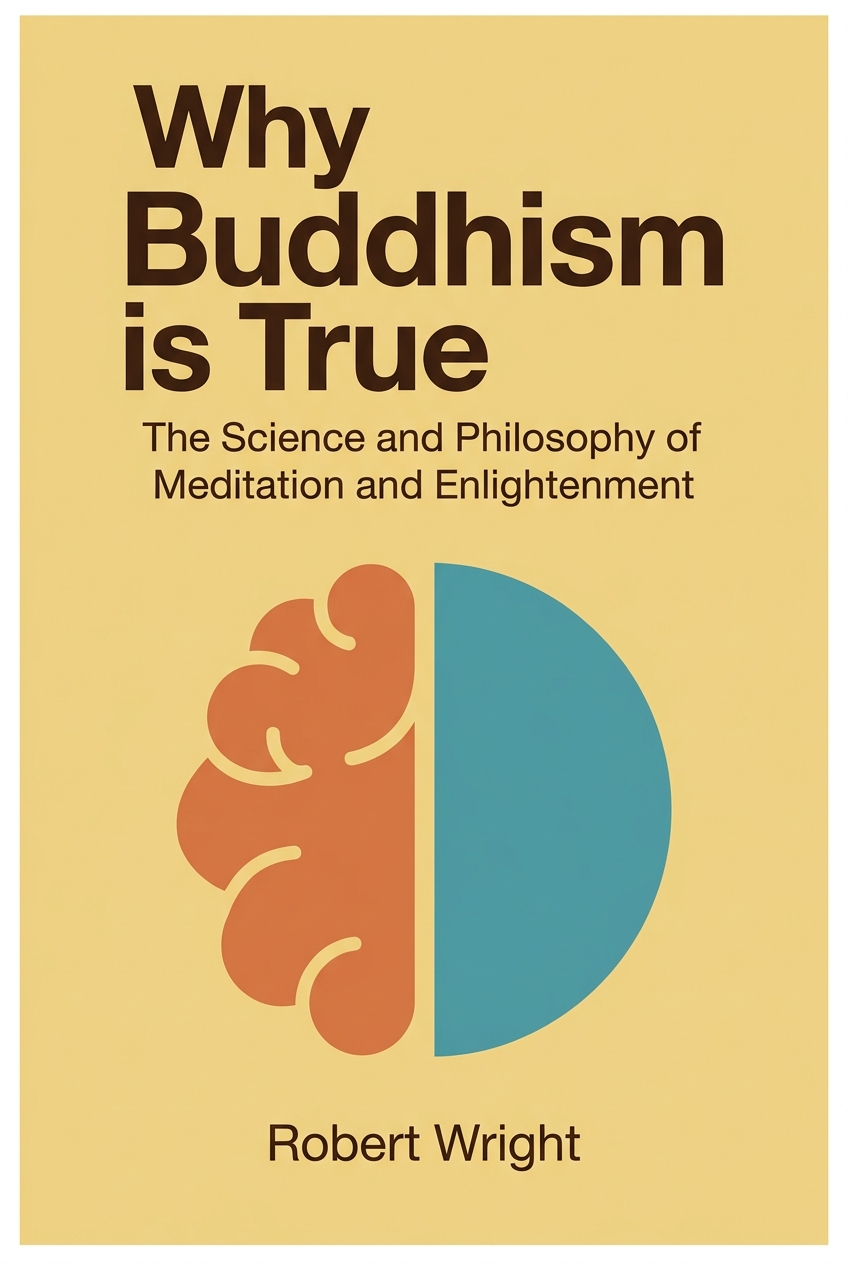
Why Buddhism is True
The Science and Philosophy of Meditation and Enlightenment
What's it about
Ever feel like your brain is working against you? What if you could rewire your natural impulses for anxiety, craving, and dissatisfaction? This summary reveals how modern science is confirming what Buddhist philosophy has taught for millennia: you can fundamentally change your relationship with your thoughts and feelings. Learn how evolutionary psychology explains our daily struggles and why meditation isn't just about relaxation—it's a practical tool for seeing reality more clearly. Discover how to use mindfulness to break free from destructive emotional loops and find a more lasting sense of well-being.
Meet the author
Robert Wright is a National Book Award finalist and a New York Times bestselling author whose work explores the intersection of science, religion, and evolutionary psychology. A former senior editor at The New Republic and visiting professor at Princeton and the University of Pennsylvania, Wright's background in science journalism and evolutionary theory gave him a unique lens through which to investigate Buddhist philosophy. This journey led him to discover the profound, scientifically-backed connections between ancient contemplative practice and the modern understanding of the human mind.
What's it about
Ever feel like your brain is working against you? What if you could rewire your natural impulses for anxiety, craving, and dissatisfaction? This summary reveals how modern science is confirming what Buddhist philosophy has taught for millennia: you can fundamentally change your relationship with your thoughts and feelings. Learn how evolutionary psychology explains our daily struggles and why meditation isn't just about relaxation—it's a practical tool for seeing reality more clearly. Discover how to use mindfulness to break free from destructive emotional loops and find a more lasting sense of well-being.
Meet the author
Robert Wright is a National Book Award finalist and a New York Times bestselling author whose work explores the intersection of science, religion, and evolutionary psychology. A former senior editor at The New Republic and visiting professor at Princeton and the University of Pennsylvania, Wright's background in science journalism and evolutionary theory gave him a unique lens through which to investigate Buddhist philosophy. This journey led him to discover the profound, scientifically-backed connections between ancient contemplative practice and the modern understanding of the human mind.
The Script
You've reached the end of the free preview.