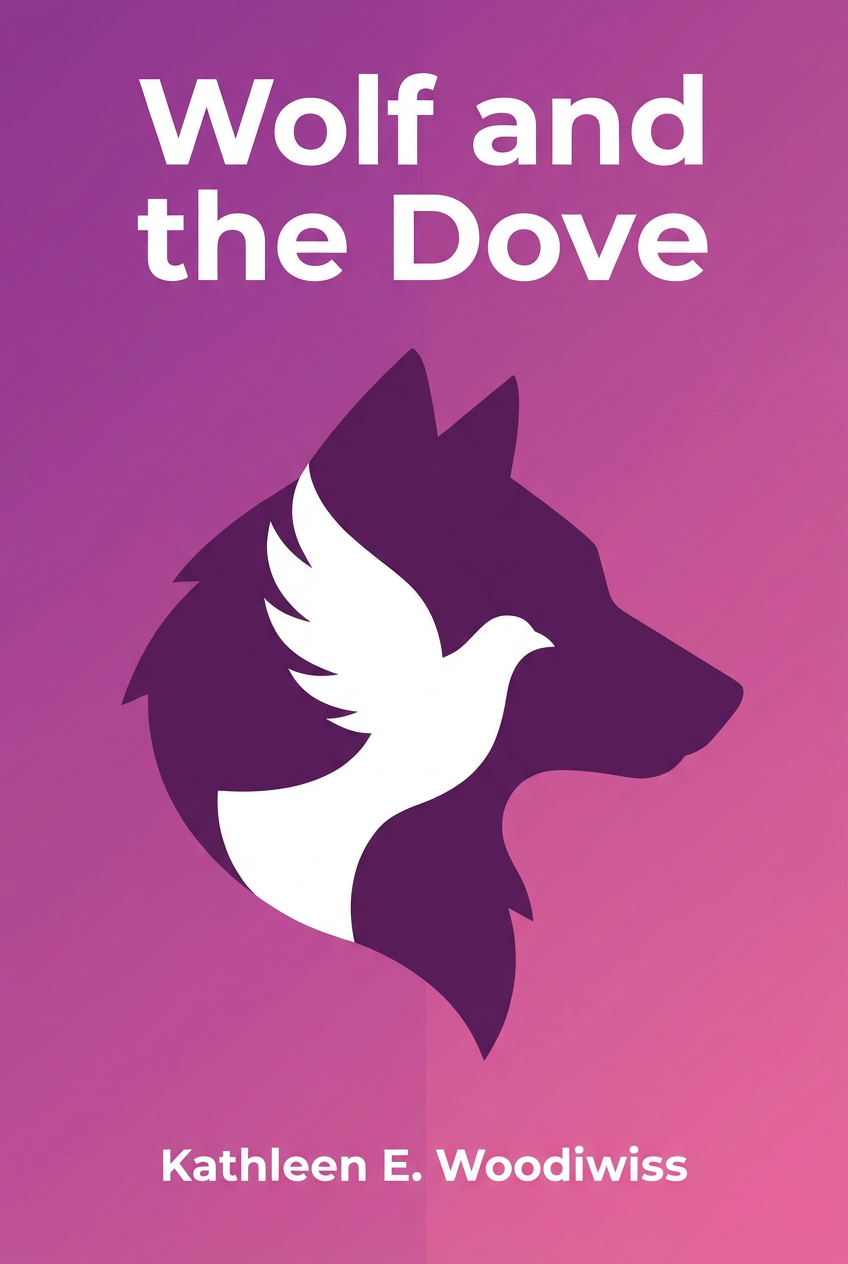
Wolf and the Dove
A Medieval Historical Romance of Conquest and Passion
What's it about
Can a captive's fiery spirit conquer the heart of her conqueror? Dive into a sweeping medieval saga where Aislinn of Darkenwald, a proud Saxon noblewoman, is taken prisoner by Wulfgar, the Norman warrior who seized her home. Discover if hate can truly turn to passion. You'll explore the raw, turbulent world of 11th-century England, a land torn by conquest. Witness the clash of wills between a defiant lady and a powerful lord, and learn how their initial animosity sparks an undeniable, dangerous attraction that could either unite their warring peoples or destroy them both.
Meet the author
Kathleen E. Woodiwiss is widely celebrated as the pioneering author of the modern historical romance genre, with her debut novel selling over two million copies. Frustrated by the chaste heroines of her time, she created a bold new template for romance by writing the passionate, sweeping epics she herself wanted to read. This revolutionary approach, born from a desire for more realistic and fiery love stories, established her as a legend whose influence is still felt by readers and writers today.
Opens the App Store to download Voxbrief

The Script
A Norman warrior, his face hardened by conquest and loss, stands over the ruins of a Saxon keep. In his hand, he holds a single, intricately carved wooden bird, a remnant from the life he just shattered. It is smooth, delicate, impossibly fragile—a stark contrast to the scorched earth and the cold steel of his armor. For the Saxon woman who watches him from the shadows, that bird is the last echo of her father's love and the world she knew. To the warrior, it is an unexpected and unsettling curiosity, a flicker of beauty in the brutal calculus of war. In this charged silence, the space between conqueror and captive is a chasm of conflicting worlds, where one person’s cherished memory becomes another’s spoil of war.
This potent clash of worlds—the fierce Norman conqueror against the defiant Saxon noblewoman—is the very heart of the historical romance genre as we know it. The author who dared to imagine this scene, Kathleen E. Woodiwiss, did so at a time when romance novels were largely polite, chaste affairs. Frustrated by the lack of depth and passion in the books she was reading, this young mother and homemaker from the Midwest decided to write the story she wanted to read. Pouring her fascination with history and her belief in a love that could bridge even the deepest divides onto the page, she spent five years crafting a sprawling, 700-page epic. It was a story so bold and unconventional that it was initially rejected by every major hardcover publisher, but it would go on to ignite a revolution in fiction.
Module 1: The Psychology of Conquest and Dehumanization
The story opens with the brutal reality of the Norman invasion. The depiction of war is intimate, personal, and devastating. The Normans, led by the cruel Ragnor de Marte, storm the Saxon hall of Darkenwald. They don't just defeat their enemies; they seek to erase their humanity. This sets the stage for a core theme of the book. Conquerors assert dominance by systematically dehumanizing the conquered. Ragnor ties a rope around the neck of the Saxon lady, Aislinn, treating her like an animal. He parades her around, chafing her skin for his own amusement. Her home is ransacked, her personal treasures reduced to a pile of loot. Her people are tormented. A servant girl, Maida, is hobbled and tripped for sport. Another, Hlynn, is dragged away to be raped while soldiers laugh. This is a psychological strategy. By treating the Saxons as less than human, the Normans justify their own brutality and solidify their power.
But here’s where it gets interesting. Even in the face of this overwhelming force, the human spirit finds ways to resist. Subtle defiance is a powerful tool for survival when overt resistance is impossible. Aislinn refuses to grovel or plead. Her calm defiance unnerves Ragnor, giving her a small psychological victory. She even uses her knowledge of French, the conquerors' language, to insult him directly, calling him a "filthy swine." This small act of rebellion reclaims a piece of her dignity. Her mother, Maida, mutters curses in Saxon, a language the Normans don't understand. It's a covert war waged with words. These acts seem small, but they are lifelines. They are proof that while a body can be captured, a spirit can remain free.
This module shows us that power is about psychology. The conqueror's goal is to break the spirit. The survivor's goal is to keep that spirit intact, even through small, seemingly insignificant acts of defiance. It’s a lesson in resilience. When you can't fight back directly, you find other ways to hold your ground.
Module 2: The Wolf Arrives—A New Form of Power
Just as Aislinn is about to be completely broken by Ragnor, a new power arrives. Wulfgar, a formidable Norman knight known as "The Wolf," storms in. He is the new lord of Darkenwald, granted the lands by William the Conqueror. And he is furious. Ragnor has violated his orders by slaughtering the peasants who were meant to be his workforce. This introduces a critical dynamic. Even among conquerors, power is fractured by internal rivalries and conflicting agendas. Wulfgar and Ragnor are both Normans, but they represent two different approaches to rule. Ragnor is driven by pure brutality and personal greed. Wulfgar is a pragmatist. He’s ruthless, yes, but his violence serves a purpose: establishing order and control. He sees Ragnor's chaotic cruelty as inefficient and stupid.
This clash sets up a new, terrifying choice for Aislinn. Wulfgar saves her from Ragnor, but only to claim her for himself. He sees her as a spoil of war, another asset of his new domain. Here, the story drills down into the brutal gender dynamics of conquest. In a martial society, women's bodies are treated as currency and territory. Aislinn becomes a pawn in the power struggle between two powerful men. She is passed from one captor to another. But even in this impossible situation, she finds a sliver of agency. She chooses Wulfgar as a calculated move to spite Ragnor. She tells Wulfgar, "Thus I choose you," turning a moment of utter powerlessness into a tactical decision.
Building on that idea, Wulfgar himself is a study in complexity. He is the "Wolf," a ruthless warrior, but he is not a simple villain. Effective leaders blend brutality with pragmatism to maintain control. He punishes those who defy him, but he also understands the need for a functioning estate. He values Saxon labor more than Saxon lives, but this cold calculation is what saves the remaining people of Darkenwald from the senseless slaughter Ragnor preferred. He is marked by a "bend sinister" on his shield, a symbol of bastardy. This detail tells us he is an outsider even among his own people, a man who has had to fight for every scrap of power and respect. His authority comes from his strength and his utility to the king, not from a noble name. This makes him dangerous, but it also makes him different. He understands what it means to be on the outside, and this complexity will define his relationship with Aislinn.