All BooksSelf-GrowthBusiness & CareerHealth & WellnessSociety & CultureMoney & FinanceRelationshipsScience & TechFiction
Download on the App Store

Words on Bathroom Walls

19 minJulia Walton

What's it about

What if you could step inside the mind of someone whose reality is constantly questioned? This is your chance to experience the raw, witty, and unflinching world of a teen navigating high school, first love, and a new life—all while living with schizophrenia. You'll join Adam on his journey through a clinical trial for a new drug, ToZaPrex. Through his candid journal entries to a therapist, you'll discover his coping mechanisms, his hilarious and heartbreaking interactions with an imaginary crew, and his desperate attempt to keep his diagnosis a secret from his dream girl, Maya. This is a powerful story about love, acceptance, and finding your voice when everyone else is trying to silence it.

Meet the author

Julia Walton is the award-winning author of the acclaimed novel Words on Bathroom Walls, which was adapted into a major motion picture produced by LD Entertainment. A former middle school teacher, she was inspired to write her debut after witnessing the profound challenges and triumphs of her students navigating mental health. Walton combines her firsthand classroom experience with powerful storytelling to create authentic and resonant narratives that champion empathy and understanding for young adults.
Listen Now
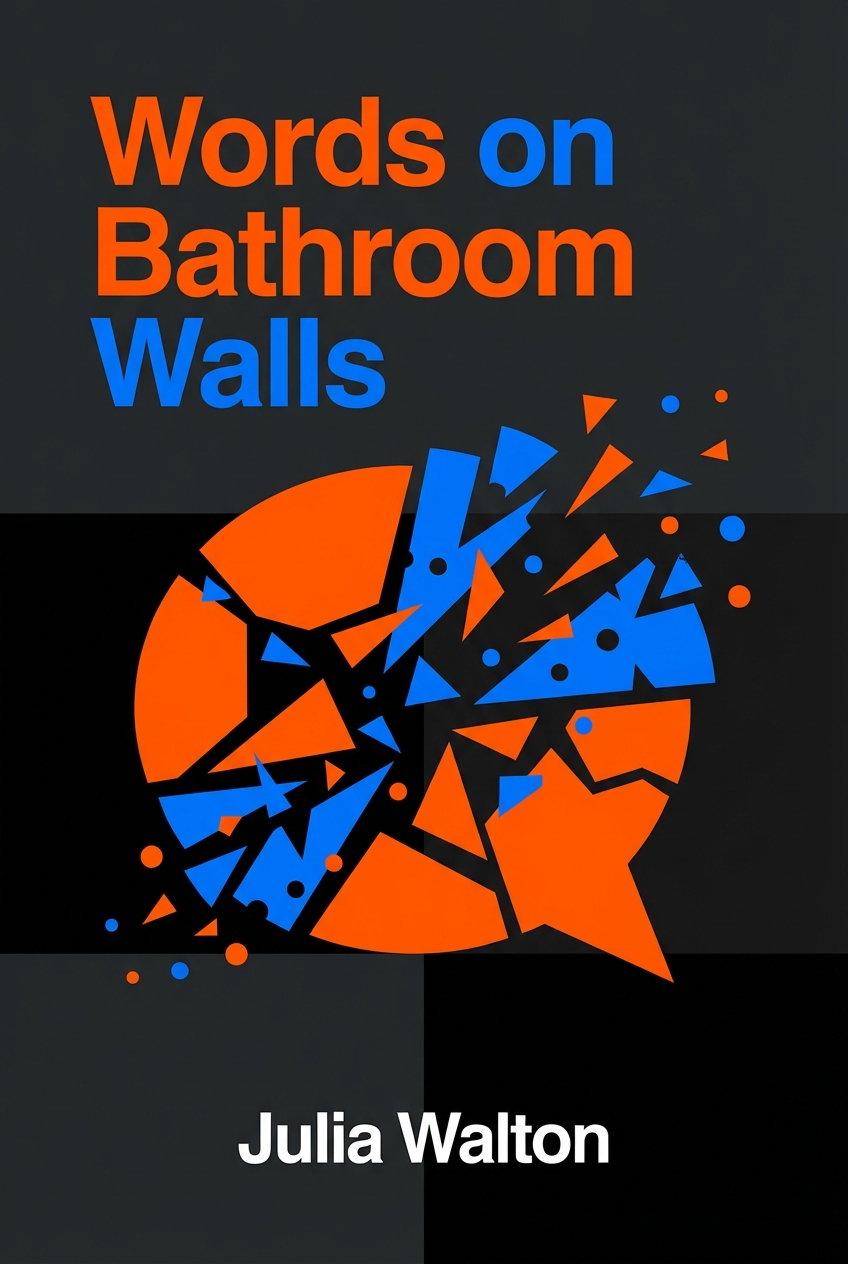
Words on Bathroom Walls book cover

The Script

A high school hallway can feel like a warzone of whispered judgments and unspoken rules. For most teenagers, the goal is simple: blend in. Don't be the one whose backpack strap gets caught, whose voice cracks during a presentation, or who sits alone at lunch. It’s a full-time job managing the public performance of being normal, a carefully constructed identity designed for survival. Now, add a secret. Something bigger than a crush or a failed test—a constant, unwelcome companion in your own mind, one that whispers, shouts, and projects things that no one else can see. How do you maintain the facade of normalcy when your own brain is the one betraying you, staging elaborate, unwanted performances in the middle of chemistry class?

This is the tightrope walk at the heart of Adam Petrazelli’s story, a reality born from author Julia Walton’s own experiences. Walton started with a feeling—the profound anxiety and isolation she witnessed in a loved one grappling with a similar diagnosis. She saw how a condition that affects the mind is often treated like a character flaw to be hidden, creating a lonely, internal battleground. Walton, a debut novelist at the time, channeled this empathy into a voice. She created Adam, a witty, sarcastic, and deeply relatable teenager, giving readers a direct line into a mind that simply works differently, offering a story that replaces stigma with humanity.

Module 1: The Internal Battlefield

Living with schizophrenia is a constant, full-time job of reality-testing. The protagonist, Adam Petrazelli, gives us an unfiltered view of this internal battlefield. He's a high school junior navigating a new school, a new stepfather, and a clinical drug trial for a medication called ToZaPrex. His primary challenge is simple but profound: distinguishing what is real from what is not.

This leads to the first crucial insight. You must develop a personal methodology for verifying reality. Adam can't just trust his senses. He sees things others don't. A silent, beautiful girl named Rebecca who mirrors his emotions. A group of mobsters who appear in his cafeteria. A man in a bowler hat who delivers cryptic warnings. To cope, he develops a system. He looks for contextual cues. Are their eyes a strange color? Is their voice odd? Most importantly, do other people react to them? He describes seeing an old woman doing backflips in a driveway. The couple pushing a stroller nearby didn't even look up. That was his confirmation. It was a hallucination. For a professional in a high-stakes environment, this translates to cross-referencing your perceptions. Before acting on a strong gut feeling or a surprising piece of data, validate it with a trusted colleague. Ask, "Am I seeing this correctly?" This simple check can prevent you from reacting to a "ghost" in the data.

Building on that idea, Adam's experience shows that medication is a tool for control, not a cure for chaos. The drug ToZaPrex doesn't eliminate his hallucinations. It changes his relationship with them. Before, the visions felt overwhelmingly real, causing panic. He might not have been sure if his bed was actually on fire. On the medication, he can observe the visions "like a movie." He knows they aren't real. This gives him the cognitive distance to function. The goal of treatment, as Adam experiences it, is to gain enough control to navigate the world. Progress is measured by his improved reaction. In a professional context, think about the tools you use to manage stress or high-pressure situations. They don't eliminate the pressure. They give you the space to respond thoughtfully instead of reacting impulsively.

And here's the thing. This internal battle creates a unique form of guilt. He feels guilty for not feeling guilty. He describes a fantasy of giving his schizophrenia to someone else. He imagines the immense relief he would feel. Then, immediately, he's hit with a wave of guilt. Not for the selfish thought itself, but for the lack of guilt he felt about it. This meta-guilt, this feeling of being an "awful person" for his own internal wiring, is a heavy burden. It's a powerful reminder of the hidden emotional labor that comes with managing any chronic condition, be it mental or physical. It’s the invisible tax on your energy and self-worth.

Finally, the hallucinations themselves are not always monstrous. Some internal "voices" can serve as coping mechanisms or even moral guides. Adam's most consistent hallucination is Rebecca. She appears when he's afraid or overwhelmed, doing cartwheels to distract him. She is a protective presence. Another hallucination, a naked man named Jason, often reminds him to be polite, like holding a door open for someone. Adam's mind has created characters that help him regulate his emotions and navigate social norms. While these are symptoms of a serious illness, they show the brain's incredible, sometimes bizarre, attempts to self-soothe and maintain order. It’s a fascinating look at how our minds can generate their own support systems, even when they are also the source of the chaos.

We've covered the internal struggle. Now, let's look at how Adam manages the external world.

Read More