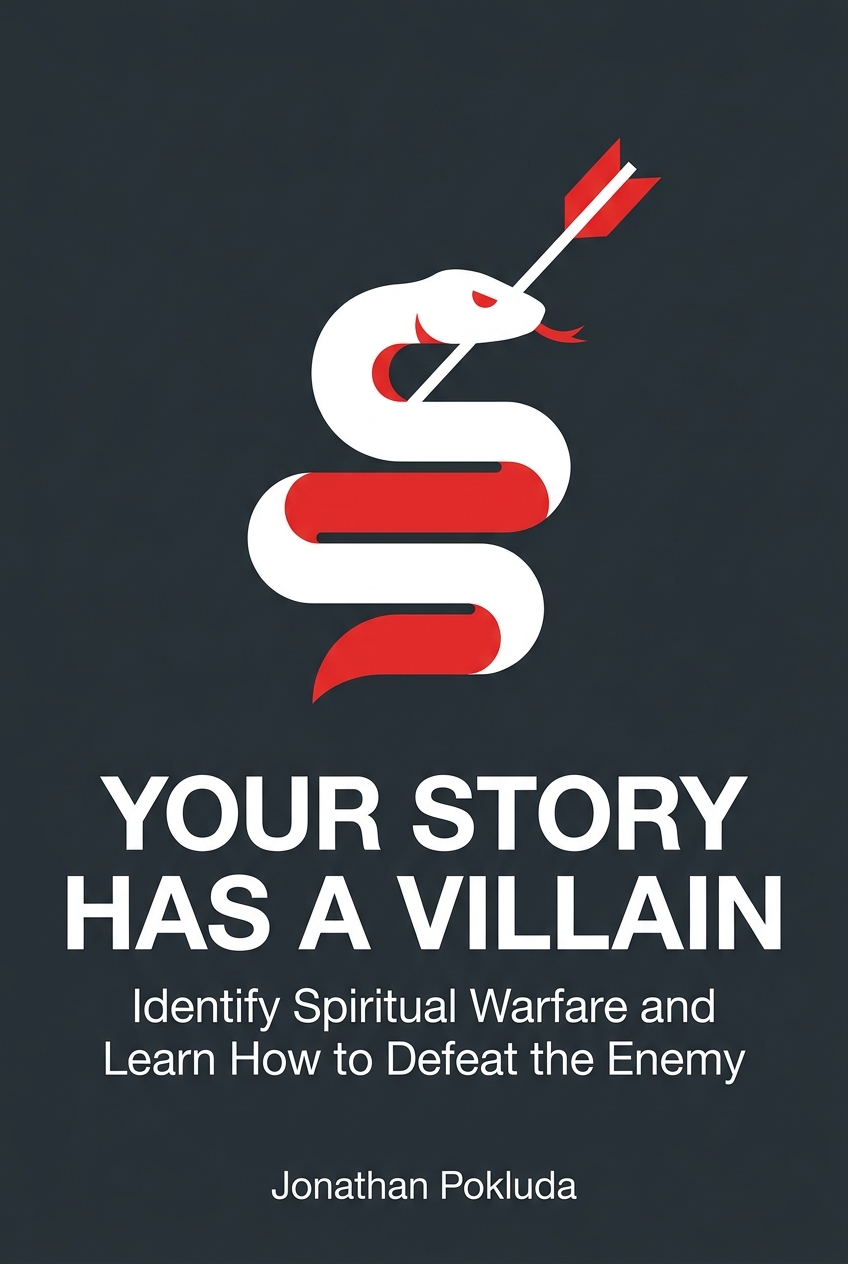
Your Story Has a Villain
Identify Spiritual Warfare and Learn How to Defeat the Enemy
What's it about
Do you ever feel like something is actively working against you, sabotaging your relationships, career, and faith? What if it's not just bad luck, but a real enemy? This book reveals the truth about spiritual warfare and gives you a battle plan to win. Learn to identify the subtle tactics and outright lies the enemy uses to keep you defeated, discouraged, and distracted. Jonathan Pokluda unpacks biblical strategies to recognize your adversary, stand firm in your identity in Christ, and claim the victory that is already yours.
Meet the author
Jonathan Pokluda is the lead pastor of Harris Creek Baptist Church, a former leader of The Porch, and a bestselling author who has discipled thousands of young adults. His extensive frontline ministry experience revealed a critical need for believers to understand the spiritual battles they face daily. This firsthand knowledge of the enemy's tactics and God's power to overcome them provides the foundation for his urgent message on spiritual warfare, equipping readers to identify and defeat the villain in their own stories.
Opens the App Store to download Voxbrief

The Script
The old woman’s apartment was a museum of small, cherished things—porcelain birds, a silver thimble, a well-worn Bible. Her new caregiver, a young woman named Clara, learned the history of each object, the story behind every faded photograph. But she couldn't shake a feeling of unease. The old woman spoke of her life as a series of gentle currents, a peaceful stream flowing toward a quiet sea. Yet, Clara noticed the locks on the inside of the doors, the way the woman flinched at sudden noises, the frantic, whispered prayers she’d sometimes overhear from the next room. One story was being told, but another was being lived.
The official narrative was one of grace and peace, but the evidence suggested a hidden war, a constant, unseen struggle against a relentless intruder. This gap between the story we tell ourselves and the one we’re actually living is what drove Jonathan Pokluda to write this book. As the lead pastor of a large church in Dallas, Texas, he saw countless people, himself included, living out these contradictory narratives. They spoke of freedom and purpose, yet their lives were marked by anxiety, addiction, and quiet despair. He realized that many of us misidentify the conflict in our own stories, treating symptoms while the real villain—a force of spiritual opposition—operates in the shadows, sabotaging our joy and derailing our purpose. This book is his effort to turn on the lights, to help people finally name the enemy they’ve been fighting all along without even knowing it.
Module 1: The Unseen War
We often misidentify our threats. We see a political party, a difficult boss, or even a global crisis as the enemy. The book argues this is a critical mistake. It starts by asserting a foundational truth: spiritual warfare is a real, constant, and personal reality. It’s a daily conflict affecting every believer. Pokluda uses the metaphor of a soldier in a combat zone. A soldier on the front lines never debates whether the war is real. They are always on alert. Yet, many believers treat their faith like a peacetime activity, only engaging with spiritual reality on Sunday mornings. This complacency is the villain's first victory.
This leads to the next crucial point. The spiritual villain—Satan—is not a passive force. He's not a cartoon character with a pitchfork. The enemy is an active, personal adversary who plots to steal, kill, and destroy. The book references John 10:10, where Jesus describes the thief’s mission. Pokluda suggests we see this play out everywhere. It’s in the anxiety fueled by social media comparison. It’s in the division sown by arguments over masks and vaccines. It’s in the personal tragedies that create distance in families. The villain’s goal is to derail our relationship with God. He uses distraction, deception, and disunity to achieve this.
So what's the first step? It’s simple but profound. Awareness is the beginning of victory. You can’t fight an enemy you don’t see. Pokluda shares his own journey. His awareness sharpened when he moved to a city with a complex spiritual history. The visible tension between religiosity and darkness forced him to research and preach on the topic. For us, this means moving beyond a superficial understanding of faith. It requires intentionally learning about the enemy's playbook. It means recognizing that the struggles we face—anxiety, division, temptation—may have a spiritual dimension. This is about acknowledging the reality of the unseen realm and refusing to remain naive.
Module 2: Know Your Enemy's Tactics
Once you accept the reality of the war, the next step is to study the enemy's methods. Intelligence agencies study their adversaries to predict their moves. Quarterbacks study film of the opposing defense. In the same way, the book argues, we must understand the villain’s primary tactics. Pokluda identifies six, which he calls the "Six D's."
The first tactic is Destruction, which tests your faith through loss and hardship. This is the most overt strategy. The book points to the story of Job. Satan, with God's permission, systematically destroyed everything Job held dear. His wealth, his family, his health. The goal was to make Job curse God. Pokluda shares a modern story. He was set to preach to thousands of students when a sudden, torrential downpour with a 0% forecast forced a cancellation. It felt like a direct attack. But here's the twist. The organizers pivoted to Instagram Live. More than double the number of people tuned in. God can use the enemy's destructive attempts to bring about an even greater good. Our role is to trust Him through the storm.
Next up, the villain uses Distraction, which diverts your attention from your mission. This is perhaps the most common tactic in our modern world. Pokluda tells a simple story. He went into a gas station to buy a water bottle for his wife. He got mesmerized by snacks, his phone, and other shiny objects. He left without the water. We are all easily distracted. The enemy exploits this. He uses the endless scroll of social media, the hustle of work culture, and even good things like family activities to keep us busy. The book offers a stark acronym for BUSY: Being Under Satan’s Yoke. The solution is to have a clear aim. Like the Apostle Paul, we must see our primary task as testifying to the gospel and filter our choices through that lens.
And here's the thing, the enemy also uses Deception, which twists the truth to lead you astray. This is his native language. The book traces it back to the Garden of Eden. The serpent’s question, "Did God really say that?" was the first lie. It was designed to make Eve doubt God's goodness. Today, the lies are the same, just repackaged. "God is ripping you off by asking you to wait for marriage." "More money will finally make you happy." "You are worthless because of what you did." The only defense against a lie is the truth. This means we must be so saturated with God’s Word that we can immediately recognize a counterfeit. When the lie says, "You are worthless," the truth responds, "I am created in God's image and purchased by Christ's blood."
The final three tactics are interconnected. Disunity fractures relationships, Desensitization makes sin feel normal, and Deconstruction sows doubt that unravels faith. The villain loves to create conflict in churches and families over politics, worship styles, or personal preferences. He uses media to slowly numb our conscience to sin, so what once shocked us now entertains us. And he whispers questions that cause us to doubt God's goodness, power, or even His existence. Recognizing these patterns is the key to disarming them.