Best Economic History Books
Understanding why is economic history important is key to making sense of today's world. This guide offers our top economic history book recommendations for beginners and experts alike. From the rise of capitalism to modern financial crises, these must read economic history books reveal how past events continue to shape our current economy and your personal finances. Explore these summaries to gain critical context and a deeper understanding of the forces that move markets and societies. Curated by the VoxBrief team.
Basic Economics
Learn the common-sense principles that explain everything from prices to government policy.
- Prices are signals that allocate scarce resources efficiently.
- Profits and losses guide businesses toward meeting consumer needs.
- Government intervention often has unintended negative consequences.
Anyone seeking a jargon-free introduction to core economic concepts.
Learn the common-sense principles that explain everything from prices to government policy.
Economics in One Lesson
See the hidden, long-term consequences of popular economic policies.
- Good economics looks at long-term effects on all groups, not just one.
- The 'broken window' fallacy ignores unseen opportunity costs.
- Government spending doesn't create wealth, it just diverts it.
Readers who want a simple framework for analyzing economic news and claims.
See the hidden, long-term consequences of popular economic policies.
Good Economics for Hard Times
Get Nobel-winning, data-driven answers to today's most urgent economic debates.
- Popular opinions on immigration and trade are often wrong.
- Cash transfers can be a highly effective anti-poverty tool.
- Human dignity and respect are as important as economic incentives.
Citizens wanting evidence-based perspectives on current policy issues.
Get Nobel-winning, data-driven answers to today's most urgent economic debates.

The World for Sale
Uncover the secret world of commodity traders who control the world's resources.
- A few powerful firms dominate the trade of essential raw materials.
- Traders thrive on chaos, war, and political instability.
- Their actions can move markets and shape international politics.
Those interested in geopolitics and the hidden levers of global power.
Uncover the secret world of commodity traders who control the world's resources.
Economic Facts and Fallacies, 2nd edition
Use hard data to dismantle popular economic myths about income, gender, and race.
- Widely held beliefs often collapse under statistical scrutiny.
- Good intentions in policies don't guarantee good outcomes.
- Learn to spot statistical deception in media and politics.
Critical thinkers who prefer data-driven arguments over rhetoric.
Use hard data to dismantle popular economic myths about income, gender, and race.
Lords of Finance
Discover how four central bankers' decisions caused the Great Depression.
- Personal flaws of leaders can have global economic impacts.
- The gold standard created a rigid, fragile financial system.
- Lack of international cooperation worsened the 1920s crisis.
History buffs fascinated by the human drama behind financial crises.
Discover how four central bankers' decisions caused the Great Depression.
The Great Crash 1929
See the parallels between the Roaring Twenties and today's speculative markets.
- Speculative bubbles are fueled by irrational optimism and easy credit.
- Political blunders can turn a market crash into a depression.
- The psychology of mass delusion is a timeless market force.
Investors looking to spot the warning signs of a market bubble.
See the parallels between the Roaring Twenties and today's speculative markets.
The Worldly Philosophers
Meet the revolutionary thinkers who invented modern economics, from Smith to Marx.
- Economic systems are not natural laws, but human inventions.
- Great economists grappled with big moral and social questions.
- Understanding history's thinkers demystifies modern capitalism.
Students and readers curious about the origins of major economic ideas.
Meet the revolutionary thinkers who invented modern economics, from Smith to Marx.

Power and Progress
Learn why technology often enriches a few instead of benefiting everyone.
- Technological progress doesn't automatically create shared prosperity.
- Throughout history, elites have directed innovation for their own gain.
- We can make choices to create more equitable technologies like AI.
Anyone concerned about AI's impact on jobs and inequality.
Learn why technology often enriches a few instead of benefiting everyone.

Americana
Discover the 400-year story of innovation and risk that built American capitalism.
- America's economy was built on a series of risky ventures.
- Everyday products drove massive economic and cultural shifts.
- Innovation is a core component of the American identity.
Entrepreneurs and readers interested in American business history.
Discover the 400-year story of innovation and risk that built American capitalism.

Capitalism
Uncover the brutal history of "war capitalism" built on cotton, coercion, and slavery.
- Early capitalism was inseparable from slavery and state-sponsored violence.
- Cotton was the key commodity that fueled the Industrial Revolution.
- This history created the global inequalities we see today.
Readers wanting a critical, de-romanticized history of capitalism.
Uncover the brutal history of "war capitalism" built on cotton, coercion, and slavery.
Capital in the Twenty-First Century
Understand the simple formula driving wealth inequality in the modern economy.
- When capital returns (r) exceed economic growth (g), inequality rises.
- Inherited wealth often grows faster than income from labor.
- Without intervention, wealth is likely to become more concentrated.
Anyone trying to understand the root causes of modern wealth inequality.
Understand the simple formula driving wealth inequality in the modern economy.
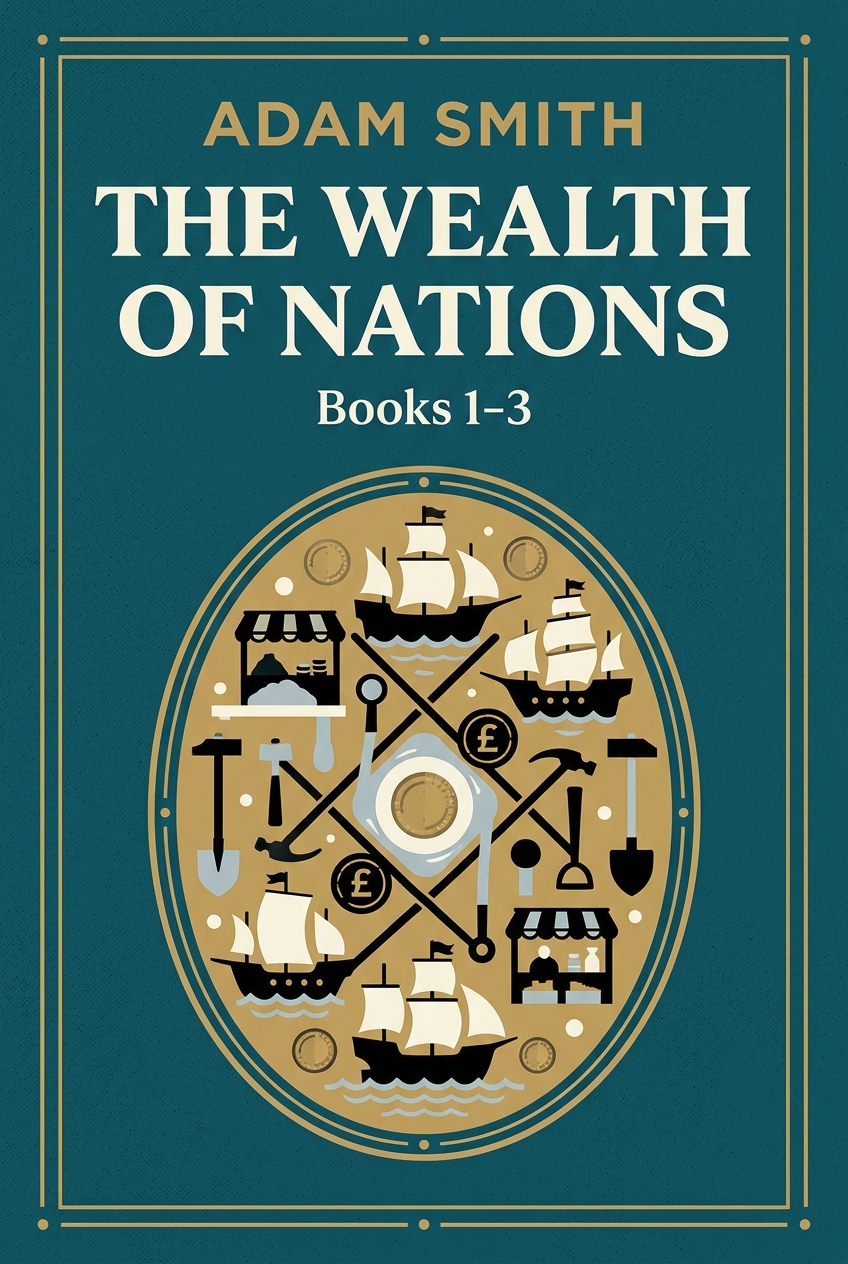
The Wealth of Nations
Unlock Adam Smith's foundational principles of free markets, labor, and prosperity.
- The 'invisible hand' guides self-interest toward public good.
- Division of labor is the key to massive productivity increases.
- Free trade between nations generally benefits all participants.
Beginners wanting to grasp the foundational text of modern capitalism.
Unlock Adam Smith's foundational principles of free markets, labor, and prosperity.
Frequently Asked Questions
Studying economic history provides crucial context for understanding today's world. It shows us that current economic challenges, from inequality to financial crises, are not new and have deep historical roots, helping us make better decisions for the future.
For a narrative approach, *The Worldly Philosophers* is excellent as it introduces the big thinkers who shaped economics. For understanding core concepts, *Basic Economics* by Thomas Sowell is a clear, jargon-free starting point.
You don't need to buy and read every dense book to get started. Platforms like VoxBrief offer concise summaries of the best economic history books, letting you absorb key ideas in minutes. This is a great way to explore many topics and find which ones you want to dive into deeper.