What Makes the Best Books on Leadership? A Beginner's Guide
By VoxBrief Team··7 min read
Embarking on a leadership journey can feel like being handed a map with no compass. You have a destination in mind—a thriving team, a successful project, a meaningful impact—but the path forward is unclear. This is a common challenge, whether you're a new manager or a seasoned executive looking to refine your approach. The good news is that you don't have to navigate it alone. The distilled wisdom from the best books on leadership offers a powerful guide, providing principles that have been tested in boardrooms, battlefields, and every arena in between. This article serves as an introduction to best books on leadership, explaining the core concepts that turn good managers into great leaders.
We will explore a fundamental truth echoed across these texts: true leadership is an inside-out process. It begins not with managing others, but with mastering yourself. We will break down how to build that inner foundation, develop resilience, and then apply those skills to cultivate high-performing teams. This guide is designed for beginners and anyone seeking a clear framework for growth, offering actionable insights drawn from world-renowned thinkers.
The Foundation of Leadership: Mastering Your Inner World
Before you can inspire a team, set a vision, or navigate complex challenges, you must first build a solid personal foundation. Many of the most influential leadership texts argue that external success is a direct result of internal mastery. This concept, often called the "inside-out" approach, prioritizes character over charisma and principles over personality. It’s the difference between having a temporary influence and building a lasting legacy.
In his classic work, The 7 Habits of Highly Effective People, Stephen R. Covey contrasts what he calls the "Character Ethic" with the "Personality Ethic." The Personality Ethic focuses on public image, skills, and techniques—the quick fixes. The Character Ethic, however, is built on a foundation of integrity, humility, and discipline. Covey argues that long-term effectiveness can only be achieved by first securing what he calls the "Private Victory," a state of self-mastery that allows you to lead your own life before attempting to lead others.
Building Unshakable Discipline, One Habit at a Time
How do you build this internal foundation? According to Admiral William H. McRaven, author of Make Your Bed, it starts with something incredibly simple. His core message is that profound change begins with small, consistent acts of discipline. Making your bed to perfection every morning is not about housekeeping; it's a Keystone Habit. It's your first accomplishment of the day, a small win that proves you can exert order over a small piece of your world. This creates a ripple effect, giving you the momentum to tackle bigger, more complex tasks.
McRaven argues that "the foundation for success is built on something far simpler" than complex frameworks. It's built on doing the small things right, consistently. For a leader, this translates into reliability and credibility. A team is more likely to trust a leader who demonstrates discipline in their own life, because it signals that they can be counted on when the stakes are high.
The Principle-Centered Character Ethic
Discipline provides the structure, but principles provide the direction. Stephen R. Covey's first three habits in The 7 Habits of Highly Effective People are dedicated to achieving the "Private Victory." This is the journey from dependence on others to independence and self-reliance. It is the core of how to learn best books on leadership—by internalizing the principles they teach.
Be Proactive (Habit 1): This is the understanding that you are in charge. Instead of reacting to external events and circumstances, you choose your response based on your values.
Begin with the End in Mind (Habit 2): This habit is about defining your personal mission and vision. A leader without a clear destination will lead their team in circles.
Put First Things First (Habit 3): This is the practical application of the first two habits. It's about prioritizing your actions based on importance, not just urgency, ensuring you focus on what truly matters.
Mastering these habits creates a person who is not swayed by moods or circumstances but is guided by a steady inner compass. This self-mastery is the non-negotiable prerequisite for effective leadership.
What Makes the Best Books on Leadership So Powerful?
The market is flooded with books on management and influence, so what sets the truly best books on leadership apart? The answer is that they provide more than just passing inspiration; they deliver actionable frameworks built on timeless human principles. For beginners, the most effective guides are those that explain complex ideas with clarity, turning abstract theory into practical daily application. They offer best books on leadership tips that can be implemented immediately, regardless of your title or position.
These books understand that leadership isn’t a single skill but a combination of competencies. It requires the resilience to withstand pressure, the emotional intelligence to connect with others, and the strategic thinking to navigate uncertainty. The most enduring works address these facets in a holistic way.
Developing Resilience to Navigate Adversity
No leadership journey is free from failure, unfairness, or unexpected crises. A leader's true test comes not when things are going well, but when they are falling apart. This is why resilience is a cornerstone of leadership philosophy. In Make Your Bed, Admiral McRaven dedicates several lessons to "embracing adversity." He draws from his grueling Navy SEAL training to illustrate that facing down challenges—the "sharks" in the water—is what builds the courage and fortitude necessary to lead.
This modern military wisdom finds a parallel in ancient philosophy. In The Daily Stoic, Ryan Holiday breaks down the Stoic Discipline of Will. Its purpose is to fortify the soul, "building an inner fortress that can withstand any storm." The Stoics taught that while we cannot control external events, we can control our response to them. This mental framing transforms obstacles from paralyzing threats into opportunities for growth. A leader armed with this mindset doesn't just endure hardship; they are strengthened by it, providing a source of stability and hope for their team.
The Force-Multiplying Power of Human Connection
While discipline and resilience are internal qualities, leadership is ultimately an external act. It is about mobilizing people toward a common goal. This is impossible to do alone. In Make Your Bed, McRaven emphasizes that the human element is a critical "force multiplier." Your personal strength is amplified exponentially by the strength of your team.
As he puts it, "You cannot change the world alone." This requires an understanding that your success is entirely dependent on the people you surround yourself with. It involves finding the right people, giving them hope, and inspiring them to work together. This fundamental insight serves as the bridge from self-mastery to team leadership, setting the stage for building something far greater than any one individual could achieve.
Leading Others: The Art of Building High-Performing Teams
Once you have established a strong inner foundation, the focus shifts outward. Leading a team is one of the most challenging and rewarding aspects of the leadership journey. It involves navigating a complex web of personalities, motivations, and group dynamics. Great leaders are architects of great teams, and the best books on the topic provide clear blueprints for building them.
This is where an understanding of human psychology and team dynamics becomes critical. It's not enough to simply assemble a group of talented individuals; a leader must transform that group into a cohesive, functional, and winning unit. This involves systematically addressing the common barriers that prevent teams from reaching their full potential.
Laying the Groundwork with Vulnerability-Based Trust
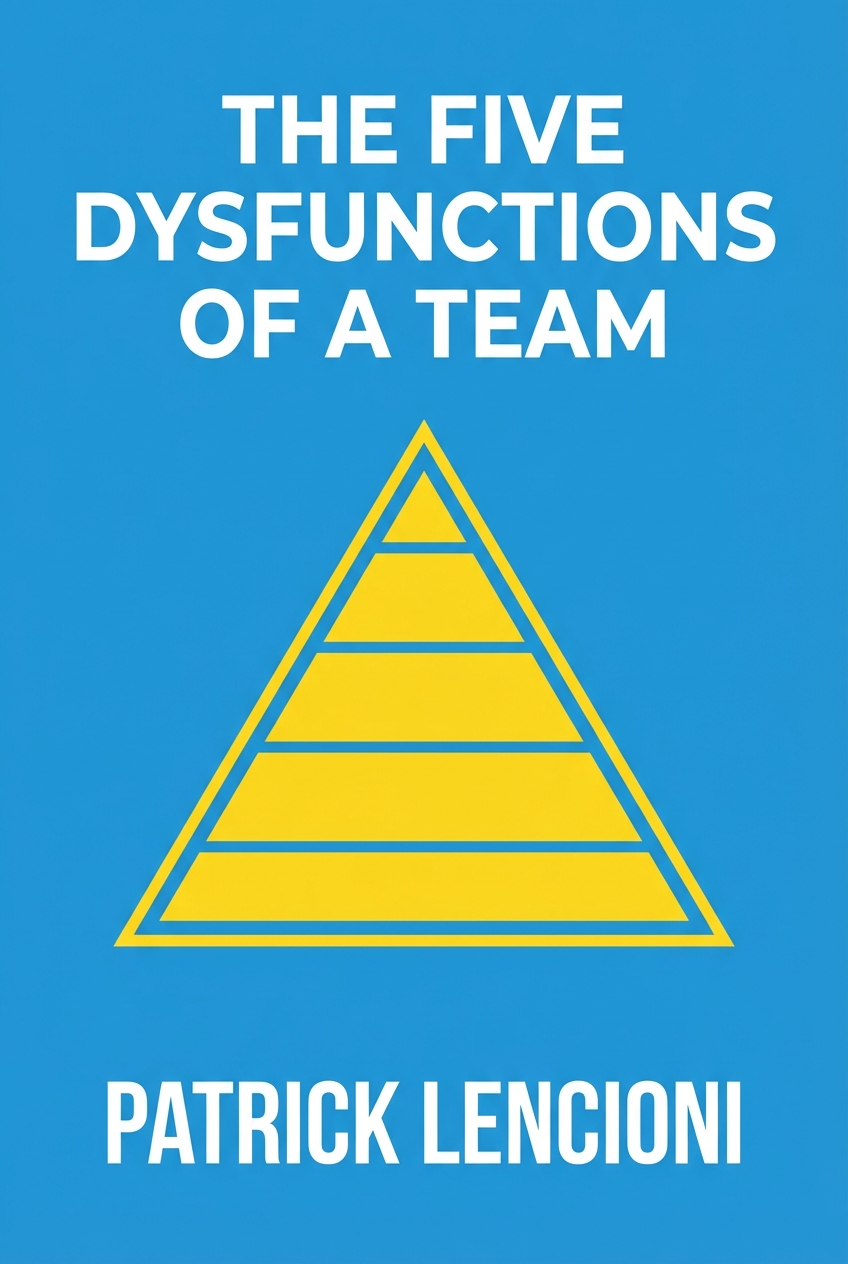
Patrick Lencioni's masterpiece, The Five Dysfunctions of a Team, presents a simple yet profound model for understanding why teams fail. At the bottom of his pyramid, the foundational dysfunction is an "Absence of Trust." This isn't just about trusting that a coworker will deliver their work on time. It's about vulnerability-based trust, where team members feel safe enough to be completely open with one another about their weaknesses, mistakes, and fears.
A leader's role is to go first. By being a model of vulnerability—admitting when they don't have the answer or when they've made a mistake—a leader creates the psychological safety for others to do the same. Without this trust, no team can ever achieve high performance.
Unlocking Performance Through Conflict and Commitment
Once trust is established, a team can overcome the second dysfunction: "Fear of Conflict." In great teams, conflict is not something to be avoided; it's a tool for finding the best possible answer. Team members engage in passionate, unfiltered debate around ideas, knowing that the conflict is ideological, not personal. This is only possible when vulnerability-based trust exists.
This healthy conflict leads directly to overcoming the third dysfunction, a "Lack of Commitment." When team members have had the opportunity to weigh in and debate an issue, they are far more likely to buy into the final decision, even if they initially disagreed. This clarity and buy-in pave the way for the fourth layer: "Avoidance of Accountability." When everyone is committed to the same plan, they are more willing to hold each other accountable for behaviors and performance that might hurt the team. Finally, with all these elements in place, the team can avoid the ultimate dysfunction, "Inattention to Results," and focus on achieving its collective goals.
Achieving Collective Success Through Interdependence
Lencioni's model for a functional team aligns perfectly with Covey's ultimate stage of development in The 7 Habits: the "Public Victory." This is the move from independence to interdependence. The key habit here is "Synergize" (Habit 6), which is the idea that the whole is greater than the sum of its parts.
A synergistic team is one that has overcome the five dysfunctions. It values differences, builds on individual strengths, and collaborates to produce outcomes that no single member could have achieved alone. This is the pinnacle of leadership: creating an environment where a team becomes a self-sustaining, high-performing unit. The leader's role transforms from director to facilitator, empowering the team to achieve collective success.
In conclusion, the journey to becoming an effective leader is a clear, learnable process. It starts with the profound work of mastering yourself—building discipline, defining your principles, and developing resilience. From that strong foundation, you can then move outward to build teams grounded in trust, capable of healthy conflict, and unified in their commitment to collective results. By drawing on the timeless wisdom found in these seminal works, you can build not just a successful career, but a legacy of positive impact on the people you lead.
Master key ideas in 15 minutes
Listen to audio summaries of these books on VoxBrief
The central lesson is that effective leadership starts from within. Before you can lead others, you must master yourself through discipline, clear principles, and resilience, a concept explored in many foundational texts on the topic.
Learning from premier leadership books provides you with proven frameworks and timeless wisdom. It's a way to learn from the successes and failures of others, helping you avoid common pitfalls and accelerate your own growth as a leader.
A great starting point for beginners is building self-discipline, as discussed in *Make Your Bed*. Another is focusing on what you can control, a key tenet from *The Daily Stoic*. These foundational practices help you build the inner strength needed for any leadership role.