A Beginner's Guide to Buddhism: Core Beliefs & Essential Buddhism Books
By VoxBrief Team··5 min read
In our fast-paced, always-on world, the search for calm, clarity, and genuine happiness has never been more urgent. Many find themselves drawn to ancient wisdom for modern problems, leading them to explore Buddhist philosophy. But what is Buddhism, really? Far from being just an exotic religion, it's a practical and profound guide to understanding your own mind. This article serves as a simple introduction to Buddhism, explaining its core tenets and showing how foundational buddhism books can illuminate the path to a more mindful and compassionate life.
Whether you're looking for ways to manage stress, improve your relationships, or find a deeper sense of purpose, the principles of Buddhism offer a timeless roadmap. This guide is designed for beginners, breaking down the essential ideas into accessible concepts that you can begin to explore today.
What is Buddhism? A Simple Explanation
At its heart, Buddhism is a path of spiritual development that leads to an insight into the true nature of reality. It was founded by Siddhartha Gautama, a prince living in what is now Nepal over 2,500 years ago. Despite living a life of luxury, he was troubled by the existence of suffering, old age, and death. This prompted him to leave his palace on a quest for enlightenment.
After years of study and intense meditation, he finally achieved his goal, becoming the Buddha, or "the awakened one." The core of his teaching is not based on a deity or divine scripture, but on the direct experience that human suffering is optional and can be overcome through wisdom, ethical conduct, and mental discipline. This focus on practical self-inquiry is why many consider it less of a religion and more of a science of the mind. Buddhism explained simply is about waking up to the present moment and freeing yourself from the mental patterns that cause unhappiness.
Core Principles: The Foundation of Buddhist Philosophy
To understand Buddhism in everyday life, it’s essential to grasp a few of its foundational ideas. These aren't rigid dogmas to be believed, but principles to be investigated through your own experience. They provide the framework for how to practice Buddhism.
The Four Noble Truths
The Buddha's very first teaching after his enlightenment was the Four Noble Truths. This is the diagnosis, cause, prognosis, and treatment plan for human suffering.
The Truth of Suffering (Dukkha): This states that life inherently involves dissatisfaction. It's not a pessimistic view, but a realistic one. We all experience stress, loss, anxiety, and the general feeling that things aren't quite right.
The Truth of the Origin of Suffering (Samudāya): The cause of this dissatisfaction is craving, attachment, and aversion. We suffer because we cling to things we want, push away things we don't want, and are ignorant of the true nature of reality.
The Truth of the Cessation of Suffering (Nirodha): This is the good news. Since suffering has a cause, it also has an end. It is possible to attain a state of liberation, known as Nirvana, free from this cycle.
The Truth of the Path (Magga): The way to end suffering is to follow the Noble Eightfold Path. It is the practical prescription for achieving lasting peace.
The Eightfold Path
The Eightfold Path is the practical guide to living an awakened life. It’s not a series of sequential steps, but eight interconnected practices that should be cultivated simultaneously. They are often grouped into three categories:
Wisdom (Prajñā): Right Understanding and Right Intention.
Ethical Conduct (Sīla): Right Speech, Right Action, and Right Livelihood.
Mental Discipline (Samādhi): Right Effort, Right Mindfulness, and Right Concentration.
Following this path means cultivating a clear view of reality, committing to compassionate intentions, acting in ways that don't harm yourself or others, and training your mind to be focused and aware.
Mindfulness and Meditation
Central to the Eightfold Path is the practice of mindfulness. This is the ability to be fully present and aware of where we are and what we’re doing, without being overly reactive or overwhelmed. It is the bedrock of zen meditation and other contemplative practices.
In his classic guide, The Miracle of Mindfulness, Zen master Thich Nhat Hanh makes this practice beautifully simple. He teaches that the core of mindfulness begins with conscious breathing. The breath acts as an anchor, pulling our scattered mind back to our body and uniting them in the present moment. He emphasizes that meditation isn't confined to a cushion; the true power of mindfulness is integrating it into daily life. Whether you're washing the dishes, drinking tea, or walking to work, each moment is an opportunity to be fully present and awake.
Applying Buddhist Wisdom: Insights from Modern Buddhism Books
The beauty of Buddhist philosophy lies in its practical application. It offers a toolkit for navigating the complexities of modern existence with greater ease and wisdom. Many contemporary buddhism books translate these ancient teachings into actionable advice for today's world.
Cultivating Happiness and Compassion
Many of us believe happiness depends on external factors—a better job, a bigger house, or a perfect partner. In The Art of Happiness, His Holiness the Dalai Lama, in collaboration with psychiatrist Howard C. Cutler, challenges this assumption. He presents the powerful argument that happiness is an "inside job"—a skill that can be systematically developed through mental training.
The book reframes the pursuit of happiness from a chase for fleeting pleasures to the cultivation of a stable inner state. One of the most important methods for this is developing compassion. The Dalai Lama argues that our intense focus on individualism—the "me"—is a primary source of anxiety and loneliness. By shifting our focus to the well-being of others—the "we"—we naturally reduce our own suffering and cultivate a profound sense of connection and joy.
Finding Purpose and Flow
While not exclusively a Buddhist text, Ikigai: The Japanese Secret to a Long and Happy Life shares deep parallels with Buddhist principles. The book explores the concept of "flow," a term coined by psychologist Mihaly Csikszentmihalyi, which describes the state of being completely absorbed in an activity. This is essentially applied mindfulness—a state where your mind is so focused that you lose track of time and your sense of self dissolves into the action.
Finding activities that induce a state of flow is a key part of discovering your ikigai, or reason for being. This aligns with the Buddhist principle of Right Livelihood, encouraging us to engage in work and activities that are meaningful and beneficial. This shows how does buddhism apply to modern life by providing a framework for uniting our daily actions with a deeper sense of purpose.
The Journey of Self-Discovery
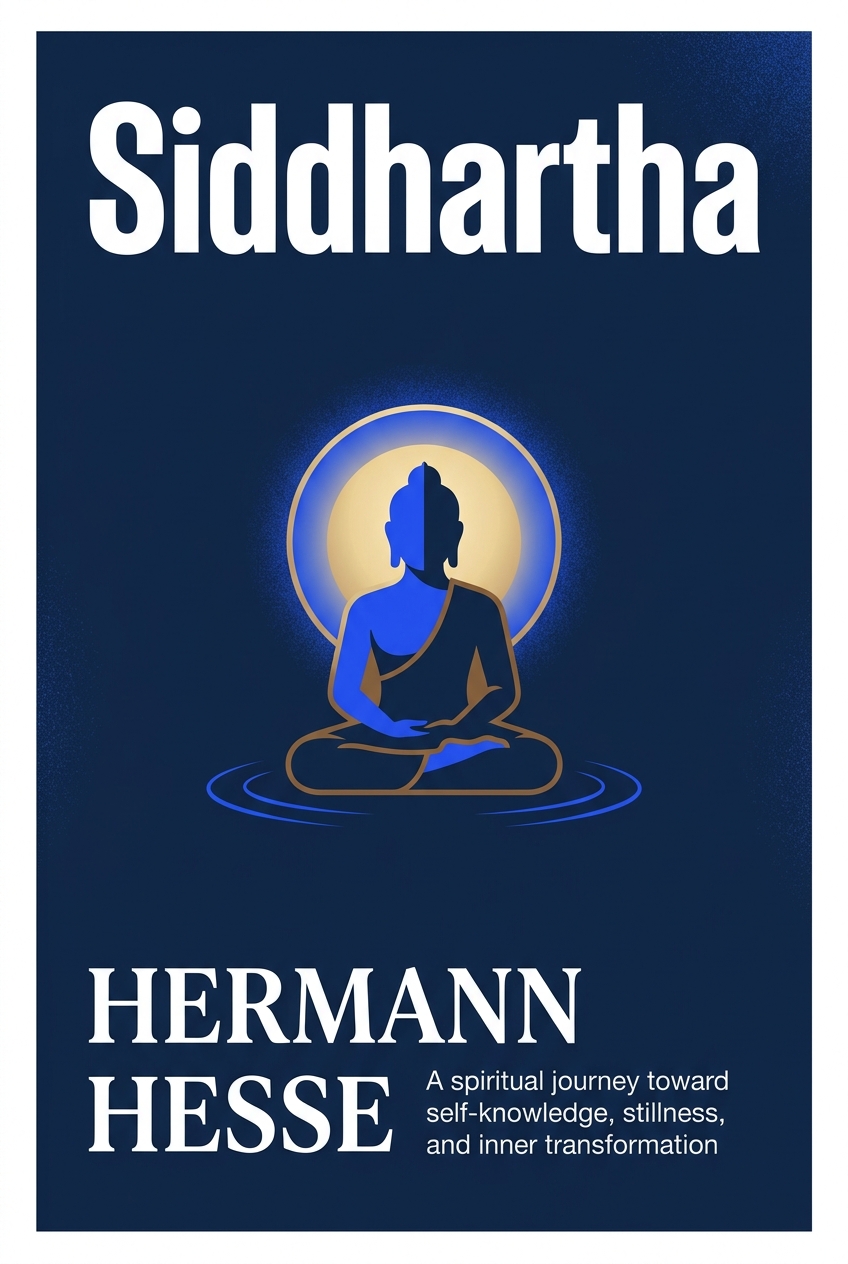
Buddhism is not about blindly accepting doctrine. It is a path of personal inquiry, a journey you must walk for yourself. Hermann Hesse’s allegorical novel Siddhartha masterfully illustrates this idea. The protagonist, Siddhartha, leaves his home to seek enlightenment, studying with various teachers, including the Buddha himself.
However, he ultimately concludes that wisdom cannot be taught; it must be experienced. Siddhartha's path of rejection—leaving behind every doctrine—and immersion in the ordinary world teaches a vital lesson. True understanding doesn't come from memorizing scripture but from living fully, making mistakes, and listening to the wisdom that arises from direct experience. This serves as a powerful reminder that any spiritual path is ultimately your own.
Your Path Forward
Embarking on a study of Buddhism is like opening a door to your own mind. The buddhism principles—from the Four Noble Truths to the practice of mindfulness—offer a powerful and compassionate way to navigate life's challenges. It teaches that while pain is inevitable, suffering is not. By understanding the workings of our minds, we can learn to cultivate peace, joy, and wisdom from within.
Starting this journey can be as simple as picking up a book, practicing five minutes of conscious breathing, or trying to bring a moment of non-judgmental awareness to a daily routine. The path is not about becoming someone different, but about awakening to the clarity and compassion that already exist within you.
Master key ideas in 15 minutes
Listen to audio summaries of these books on VoxBrief
Buddhism was founded by Siddhartha Gautama, a prince from ancient Nepal who lived around the 5th century BCE. After achieving enlightenment through profound meditation and insight, he became known as the Buddha, which means 'the awakened one,' and spent his life teaching others the path to awakening.
The main ideas are centered on the Four Noble Truths and the Eightfold Path. These tenets provide a framework for understanding the nature of suffering, its origins in craving and attachment, the possibility of its cessation, and the practical steps to achieve liberation and inner peace.
Buddhism offers timeless, practical tools for contemporary challenges like stress, anxiety, and digital distraction. Practices like mindfulness meditation help cultivate focus and resilience, while its ethical teachings promote compassion and connection, improving both personal well-being and relationships. Reading a good buddhism book is an excellent way to start this journey.
Zen meditation, or 'Zazen,' is a core practice in Zen Buddhism focused on seated meditation. It involves maintaining a specific, stable posture while observing the breath and the flow of thoughts without judgment. The goal is to quiet the mind and cultivate deep, present-moment awareness.