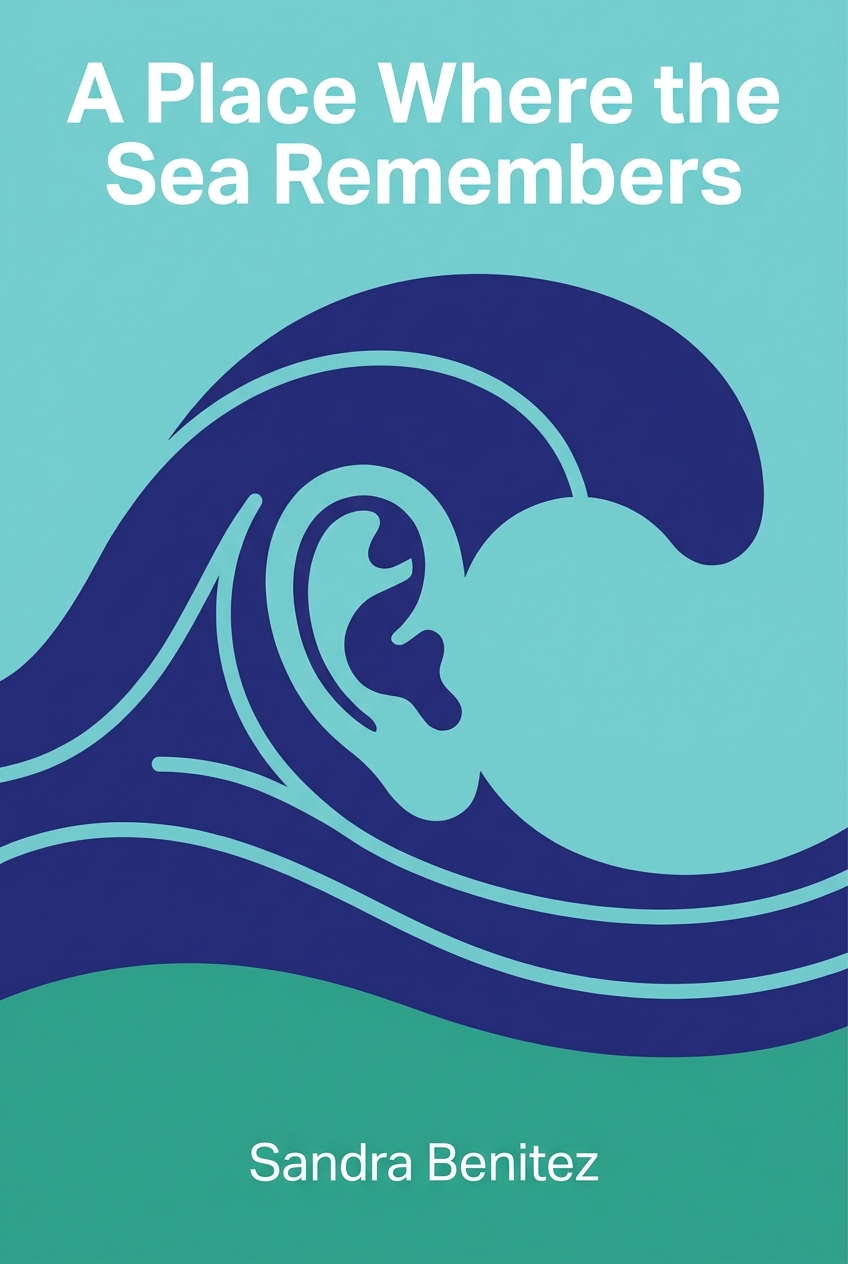
A Place Where the Sea Remembers
What's it about
Have you ever wondered if a single secret could shatter an entire community? In the small Mexican village of Santiago, a hidden truth threatens to unravel the lives of two sisters, Chayo and Candelario, forcing you to question the true cost of silence and the bonds of family. This poignant story explores the devastating ripple effects of one desperate act. You'll discover how a dark secret, born from shame and fear, poisons relationships, challenges faith, and ultimately tests the resilience of a community bound by tradition. Witness how love and loyalty are pushed to their breaking points in a place where the sea remembers everything.
Meet the author
A two-time winner of the Minnesota Book Award, Sandra Benítez is a celebrated voice in Chicano literature whose fiction is deeply informed by her heritage. Born to a Puerto Rican father and a mother of Irish-German descent, she spent her formative years in Mexico, El Salvador, and Missouri. This bicultural upbringing gave her a profound understanding of the borderland experiences and vibrant communities she so vividly brings to life in her novels, including the acclaimed A Place Where the Sea Remembers.
Opens the App Store to download Voxbrief

The Script
In the small town of Santiago, Mexico, there are two kinds of secrets. The first kind is a fish bone, small and sharp, caught in the throat of the community. Everyone knows it’s there; they feel the discomfort, they talk around it, they adjust their lives to accommodate the shared, unspoken pain. It is the affair everyone sees but no one names, the debt that shifts from a friendly loan to a quiet burden. These secrets are part of the town’s public, communal memory, as visible and weathered as the salt-bleached fishing boats pulled up on the sand.
Then there is the second kind of secret. This one is a seed, planted deep in the private soil of a single heart. It is silent, dark, and fed by shame. This is the secret of a violation, a desperate choice made on a moonless night that changes a life forever. Unlike the fish bone, this secret is entirely personal, a solitary weight that isolates its keeper. But what happens when that private seed, that singular act of shame, sprouts? What happens when its roots begin to push through the soil and break into the shared ground of the community, tangling with the lives of everyone in the village? Suddenly, the private shame becomes a public reckoning, proving that no act is ever truly isolated, and that sooner or later, the sea remembers everything.
That question of how a private transgression becomes a public story is the one Sandra Benítez set out to explore. Having grown up between worlds—in Missouri, but spending summers with her father's family in Mexico and El Salvador—she became a keen observer of the powerful, unspoken bonds that hold communities together and the devastating force of secrets that can tear them apart. Benítez uses the vibrant, interconnected world of a small Latin American town as a living character. She wrote A Place Where the Sea Remembers to give voice to the whispers, to follow the ripples of a single choice, and to show how redemption and ruin can live side-by-side in the same small place.
Module 1: The Weight of Secrets and the Burden of Choice
In a small town, every action has consequences. Secrets are currency. They can buy you time, but they always come at a cost. The narrative weaves through the lives of interconnected characters. Each one faces a choice that defines their future.
First, you must understand the moral compromises born from desperation. Marta is a young chambermaid. She is pregnant from a traumatic assault. Her dream is to escape to America. She sees the baby as an anchor. This forces her into a dark moral landscape. She first asks her sister, Chayo, to adopt the child. When Chayo backs out, Marta's desperation deepens. She seeks out a sorcerer, el brujo. She pays him to cast a spell on her sister’s unborn child. It's a shocking choice. But it reveals a critical insight. When people feel trapped, their moral compass can break. They prioritize self-preservation above all else.
This leads to the next point. Pride and shame dictate professional and personal identity. Candelario, Chayo's husband, gets a promotion at the restaurant. He becomes the salad-maker, or ensaladero. He feels immense pride in this new status. The stiff bow tie and cummerbund make him feel important. He paints his front door a new color to celebrate. But this pride is fragile. His boss, Don Gustavo, represents the casual cruelty of the wealthy. He fires Candelario for a minor mistake. The public humiliation strips Candelario of his newfound identity. He feels worthless. This shows how our sense of self is often tied to external validation. And how quickly it can be taken away.
Finally, family obligations create impossible conflicts. Chayo is torn. She wants to help her sister, Marta. But she also carries the weight of her own desire for a child. When she becomes pregnant, her priorities shift. She chooses her own future family over her promise to Marta. This decision is a collision of duties. It highlights a difficult truth. Sometimes, fulfilling one sacred obligation means betraying another. The book doesn't judge these characters. It simply lays bare the impossible mathematics of their lives.
Module 2: The Search for Agency in a World of Constraints
How do you build a future when your choices are limited by poverty, gender, and social class? The characters in Santiago are not passive victims. They are constantly searching for agency. They use whatever tools they have to carve out a space for themselves.
One powerful tool is the pursuit of a tangible dream as a psychological escape. Marta clings to images from American magazines. She dreams of a clean white house in El Paso. This is a survival strategy. She meticulously saves her meager earnings. Every peso brings her closer to this imagined freedom. Similarly, the photographer Fulgencio Llanos believes his secret photos of the wrestler El Santo will make him rich and famous. These dreams are fragile. They are often unrealistic. But they provide the fuel needed to endure a harsh reality. They offer a sense of control when everything else feels chaotic.
Another key insight is that literacy and knowledge are direct paths to empowerment. Rafael Beltrán is a lonely schoolteacher trapped by duty to his aging mother. He agrees to teach Inés, his mother’s young maid, how to read. This small act transforms both of them. For Inés, literacy is a key to a new life. It gives her the tools to escape a cycle of poverty and abuse. For Rafael, teaching gives him a sense of purpose beyond his stagnant routine. He connects with another person in a meaningful way. He breaks free from his own emotional isolation. Giving Inés his own leather satchel when she leaves is a powerful symbol. He is passing on the tools of agency to the next generation.
And here’s the thing. Even in powerlessness, small acts of defiance preserve dignity. Candelario is fired and humiliated by his boss. He cannot talk back. He cannot fight. But as he finishes his shift, he extinguishes the dining room candles with his bare fingertips. He welcomes the "quick pain" as a distraction. It's a silent, personal act of rebellion. It’s a way to feel something other than shame. It shows that even when stripped of everything, a person can find a way to assert their inner self. These small acts of defiance are about surviving the world with your spirit intact.