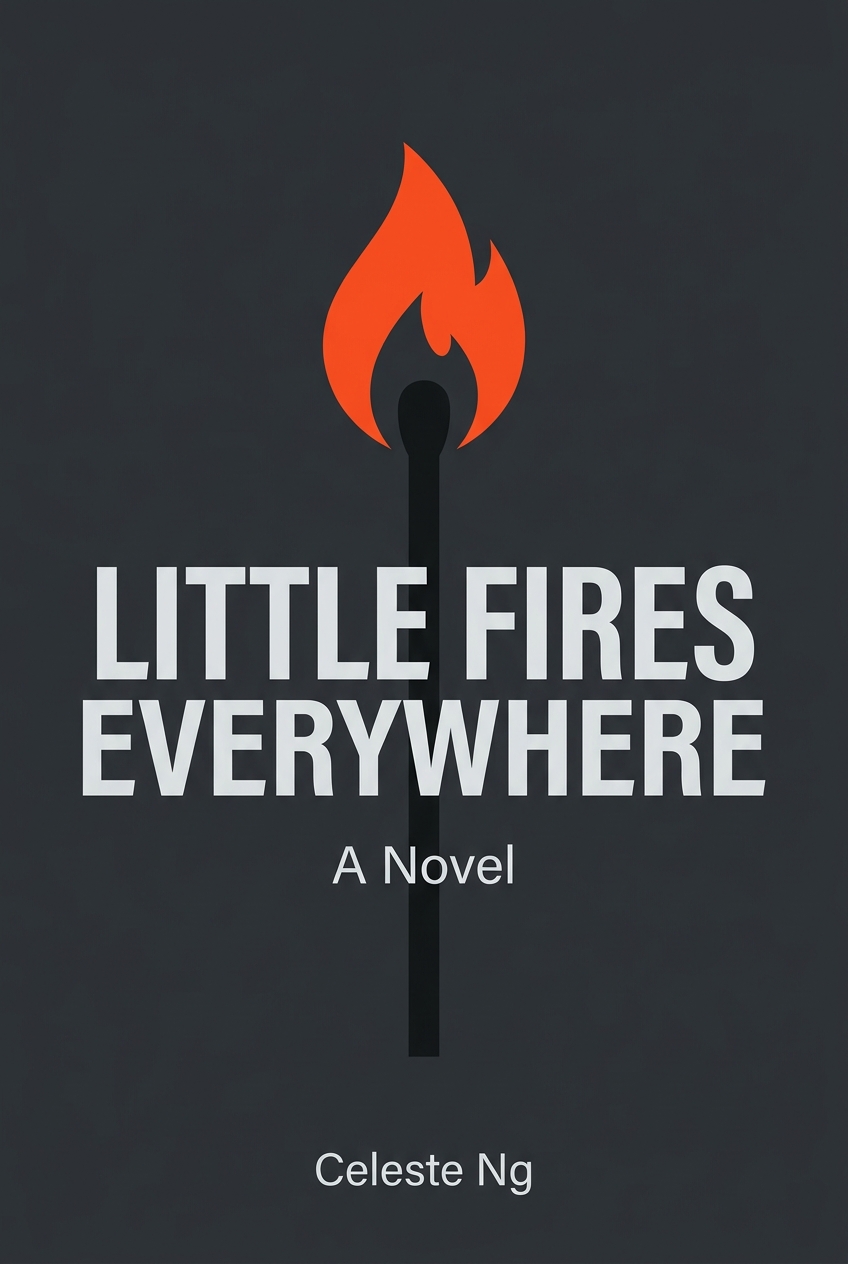
Little Fires Everywhere
A Novel
What's it about
Have you ever wondered what secrets lie behind your neighbors' perfect lives? In the meticulously planned community of Shaker Heights, two families—the wealthy Richardsons and the enigmatic artist Mia with her daughter Pearl—find their lives intertwined, leading to a devastating fire that exposes everyone's hidden truths. You'll discover how the seemingly perfect Richardson family unravels when they clash with Mia's non-conformist lifestyle. As a contentious custody battle over an abandoned baby divides the town, you’ll see how closely held secrets about motherhood, identity, and the dangerous belief that following the rules can prevent disaster are all brought to light.
Meet the author
Celeste Ng is the acclaimed author of the New York Times bestseller Little Fires Everywhere, which has been translated into over thirty languages and adapted into a hit television series. Drawing on her own upbringing in Shaker Heights, Ohio—the setting for the novel—Ng masterfully explores the complex dynamics of motherhood, secrets, and class. Her keen observations of suburban life and its hidden tensions give her work a profound and resonant authenticity that has captivated readers worldwide.
What's it about
Have you ever wondered what secrets lie behind your neighbors' perfect lives? In the meticulously planned community of Shaker Heights, two families—the wealthy Richardsons and the enigmatic artist Mia with her daughter Pearl—find their lives intertwined, leading to a devastating fire that exposes everyone's hidden truths. You'll discover how the seemingly perfect Richardson family unravels when they clash with Mia's non-conformist lifestyle. As a contentious custody battle over an abandoned baby divides the town, you’ll see how closely held secrets about motherhood, identity, and the dangerous belief that following the rules can prevent disaster are all brought to light.
Meet the author
Celeste Ng is the acclaimed author of the New York Times bestseller Little Fires Everywhere, which has been translated into over thirty languages and adapted into a hit television series. Drawing on her own upbringing in Shaker Heights, Ohio—the setting for the novel—Ng masterfully explores the complex dynamics of motherhood, secrets, and class. Her keen observations of suburban life and its hidden tensions give her work a profound and resonant authenticity that has captivated readers worldwide.
The Script
You've reached the end of the free preview.