A Random Walk Down Wall Street
The Best Investment Guide That Money Can Buy
What's it about
Tired of trying to outsmart the stock market and losing? Discover the time-tested, surprisingly simple strategy for building long-term wealth that outperforms most high-priced experts. This guide reveals why trying to pick winning stocks is often a fool's game and what you should do instead. You'll learn how to navigate bubbles, fads, and financial jargon with confidence. Malkiel's classic "random walk" theory will show you how to harness the market's power through low-cost index funds, diversify your portfolio like a pro, and create a personalized investment plan that works for your age and risk tolerance. Stop gambling and start investing intelligently.
Meet the author
Burton G. Malkiel is a renowned Princeton University economics professor and a former member of the President's Council of Economic Advisers, establishing him as a leading voice in finance. His distinguished career, combining academic rigor with high-level Wall Street experience as a corporate director, provided the unique perspective to write his investing classic. Malkiel’s mission was to distill complex financial concepts into a clear, accessible guide to help ordinary individuals build long-term wealth and navigate the market with confidence.
What's it about
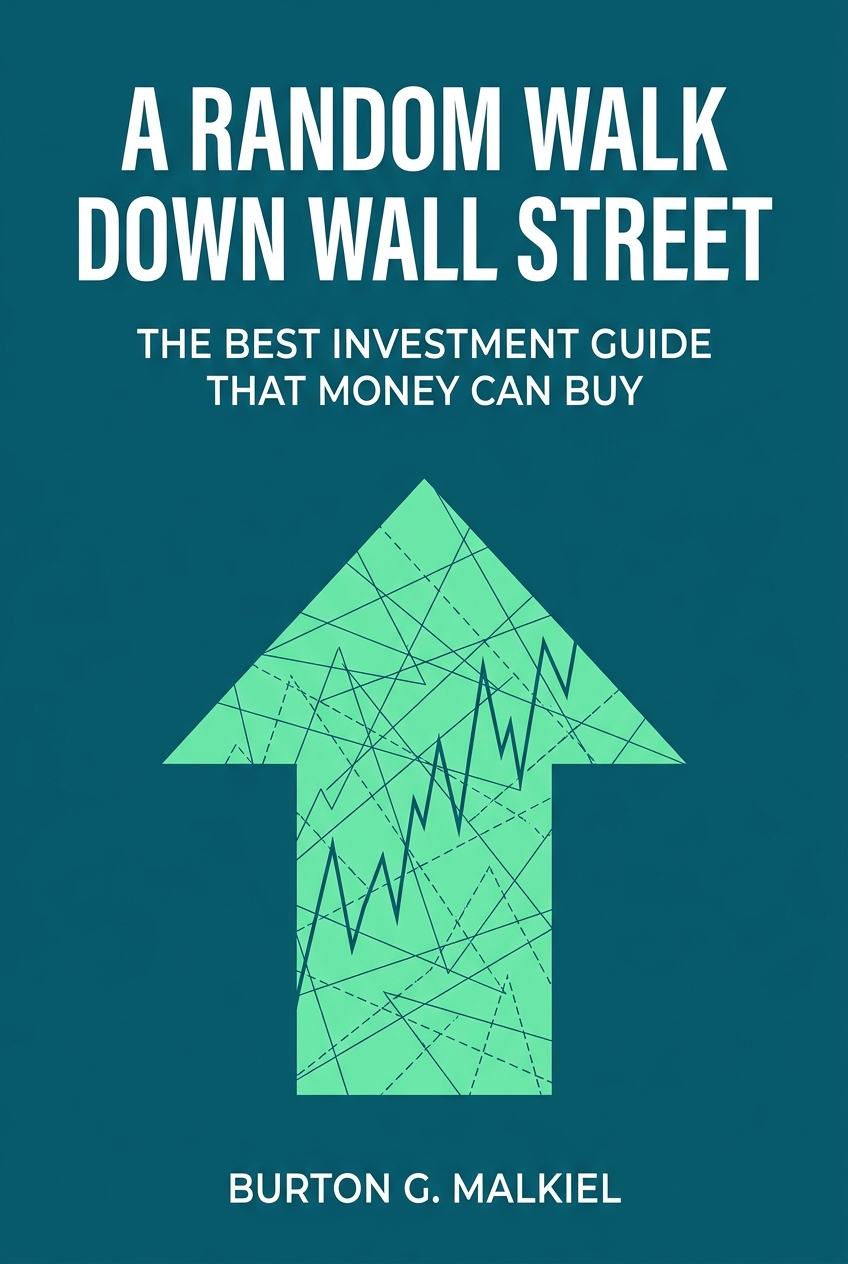
Tired of trying to outsmart the stock market and losing? Discover the time-tested, surprisingly simple strategy for building long-term wealth that outperforms most high-priced experts. This guide reveals why trying to pick winning stocks is often a fool's game and what you should do instead. You'll learn how to navigate bubbles, fads, and financial jargon with confidence. Malkiel's classic "random walk" theory will show you how to harness the market's power through low-cost index funds, diversify your portfolio like a pro, and create a personalized investment plan that works for your age and risk tolerance. Stop gambling and start investing intelligently.
Meet the author
Burton G. Malkiel is a renowned Princeton University economics professor and a former member of the President's Council of Economic Advisers, establishing him as a leading voice in finance. His distinguished career, combining academic rigor with high-level Wall Street experience as a corporate director, provided the unique perspective to write his investing classic. Malkiel’s mission was to distill complex financial concepts into a clear, accessible guide to help ordinary individuals build long-term wealth and navigate the market with confidence.
The Script
You've reached the end of the free preview.