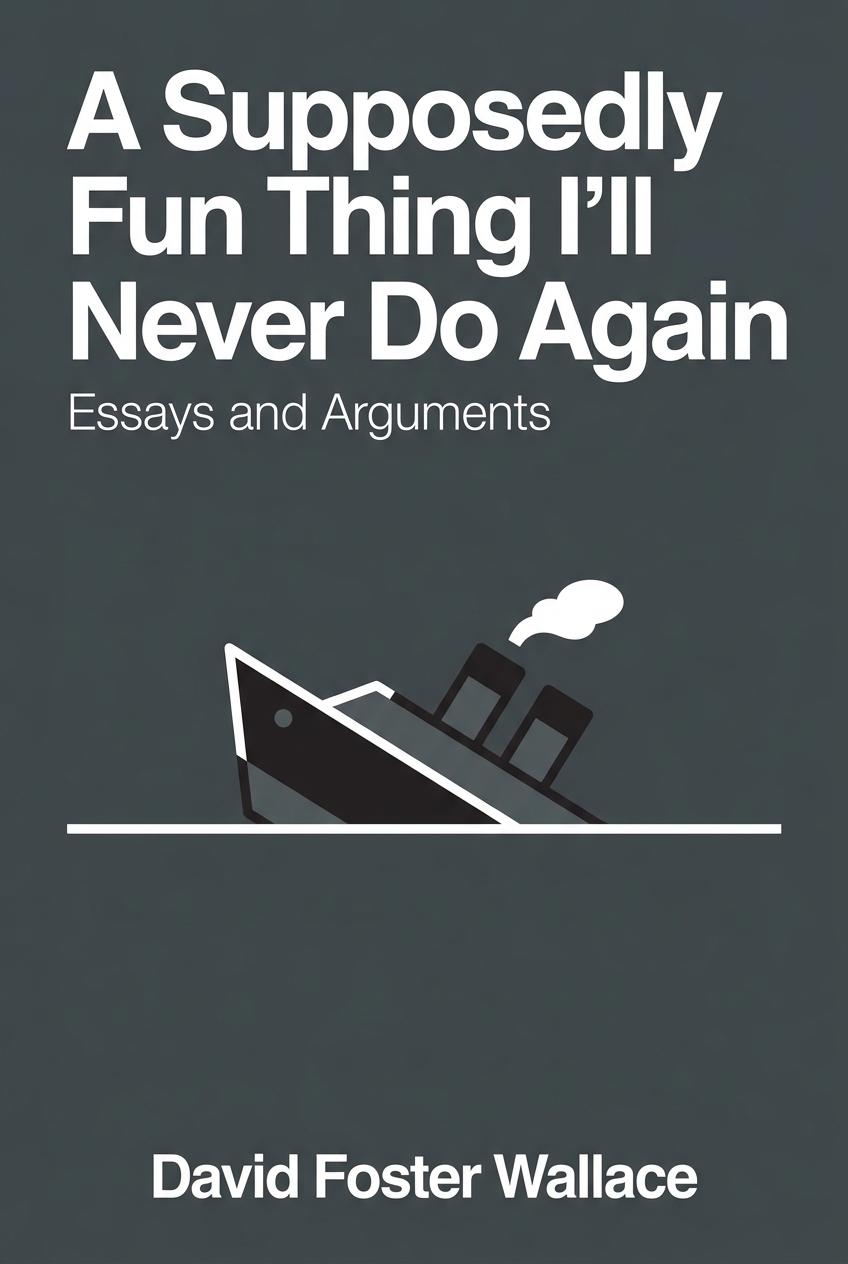
A Supposedly Fun Thing I'll Never Do Again
Essays and Arguments
What's it about
Ever feel like modern life is a bizarre, overwhelming, and secretly hilarious spectacle? Get ready to see the world through the eyes of a master observer who finds the profound in the mundane, from a luxury cruise to the Illinois State Fair. You'll explore David Foster Wallace's brilliant and painfully funny essays. Discover his unique talent for dissecting American culture, consumerism, and our own desperate search for sincerity. This collection isn't just entertainment; it's a guide to thinking more deeply about the supposedly fun things we do.
Meet the author
Hailed as one of the most influential and innovative writers of his generation, David Foster Wallace was a MacArthur Fellow and a finalist for the Pulitzer Prize. His unparalleled intellect and distinctive voice emerged from a background in philosophy and a relentless curiosity about the paradoxes of modern American life. Wallace’s signature blend of high-minded analysis and pop-culture obsession allowed him to transform everyday experiences, from state fairs to luxury cruises, into profound, hilarious, and unforgettable explorations of what it means to be human.
Opens the App Store to download Voxbrief

The Script
Think of two young chefs working side-by-side in a vast, gleaming culinary school kitchen. Before them sit identical baskets of exquisite, almost surreal ingredients: iridescent fish, vegetables of impossible color, spices flown in from continents away. One chef, following a complex recipe to the letter, meticulously plates a dish of flawless, architectural beauty. It is technically perfect, a testament to precision and control. The other chef, using the same ingredients, creates something... different. It’s slightly messier, the sauce has bled a little, but it has a vibrant, chaotic energy. It smells overwhelmingly of life. The first dish is an achievement, a conquest of ingredients. The second is an experience, a conversation with them. The first is what you are supposed to enjoy; the second is what you might actually remember.
This gap between engineered perfection and authentic, messy experience is the space one writer found himself in when he was sent on a luxury Caribbean cruise. David Foster Wallace, a novelist and essayist known for his sprawling sentences and hyper-observant, almost painfully analytical mind, accepted an assignment from Harper's Magazine to document a seven-night trip aboard a cruise ship he ironically dubbed the Nadir. He was supposed to be reporting on the pinnacle of pampered leisure, a floating paradise designed for maximum pleasure. Instead, Wallace’s journey became an exploration into the very nature of fun itself, and the strange despair that can surface when you’re forced to have it. The resulting essay is a hilarious and profound investigation into the American obsession with escaping boredom, and the unsettling discovery that sometimes the most fun you can have is deciding you’ll never do something like that again.
Module 1: The Performance of Perfection
We are all performers now. Whether it's on social media, in the office, or even on vacation, we are constantly curating an image of ourselves. Wallace dives deep into this phenomenon, showing how the pressure to appear flawless, happy, and "natural" creates a toxic cultural feedback loop.
In the title essay, Wallace boards a 7-Night Caribbean Luxury Cruise, an environment engineered for maximum pleasure. Yet he finds himself spiraling into a unique form of despair. The ship's crew, with their "Professional Smiles" that never reach their eyes, are masters of a terrifying performance. Their relentless, fanatical service is a corporate mandate, enforced by clipboards and the "Hellenic terror" of their Greek officers. This creates an atmosphere where everything is an imitation. The wood-grain panels aren't wood. The grass at the Illinois State Fair is a plastic mat. Even the sky, after he reads a promotional essay, feels like a literary cliché. The relentless pursuit of a perfect, managed experience often destroys the possibility of authentic enjoyment.
Wallace argues this bleeds into our personal lives. He observes fellow passengers on the cruise who meticulously critique every meal, not for pleasure, but as a performance of discernment. This critical consumerism is a way of asserting control in a world where you’re supposed to passively receive fun. The takeaway for us is clear. When we optimize every moment for a perfect outcome, we often miss the experience itself. The pressure to have the "best" vacation, the "most" productive day, or the "perfect" family photo can become a source of profound anxiety. Wallace suggests that true connection happens in the unscripted, imperfect moments, not the ones we stage for an audience.
So what's the move? Recognize that the curated perfection you see in others is a performance. Wallace felt "boviscopophobia," the fear of being seen as just another cow in the herd of American tourists. He tried to distinguish himself, only to realize that this act of distinguishing himself was its own deeply American performance. By acknowledging the performance, both in ourselves and others, we can lower the stakes. It allows us to stop comparing our messy, real lives to someone else's highlight reel. It gives us permission to be human.