All Books
Self-Growth
Business & Career
Health & Wellness
Society & Culture
Money & Finance
Relationships
Science & Tech
Fiction
Topics
Blog
Download on the App Store

Apples Never Fall

15 minLiane Moriarty, Caroline Lee

What's it about

What happens when the picture-perfect family you've built starts to crumble? Meet the Delaneys—tennis royalty with a thriving academy, four adult children, and a seemingly idyllic life. But when their matriarch, Joy, vanishes, you'll see just how fragile even the strongest bonds can be. This gripping story peels back the layers of a seemingly happy marriage and family, exposing the long-buried secrets, rivalries, and resentments that fester beneath the surface. As the police investigation deepens and suspicion falls on Joy's husband, you'll be left questioning everything you thought you knew about love, loyalty, and the people closest to you.

Meet the author

Liane Moriarty is the Australian novelist and 1 New York Times bestselling author of nine novels, including Big Little Lies and Nine Perfect Strangers, that have sold over twenty million copies worldwide. With her signature blend of domestic drama, suspense, and sharp wit, Moriarty masterfully peels back the layers of suburban family life. Her unique ability to find the dark and humorous truths in ordinary situations allows her to create compulsively readable stories that explore the secrets we keep.
Listen Now
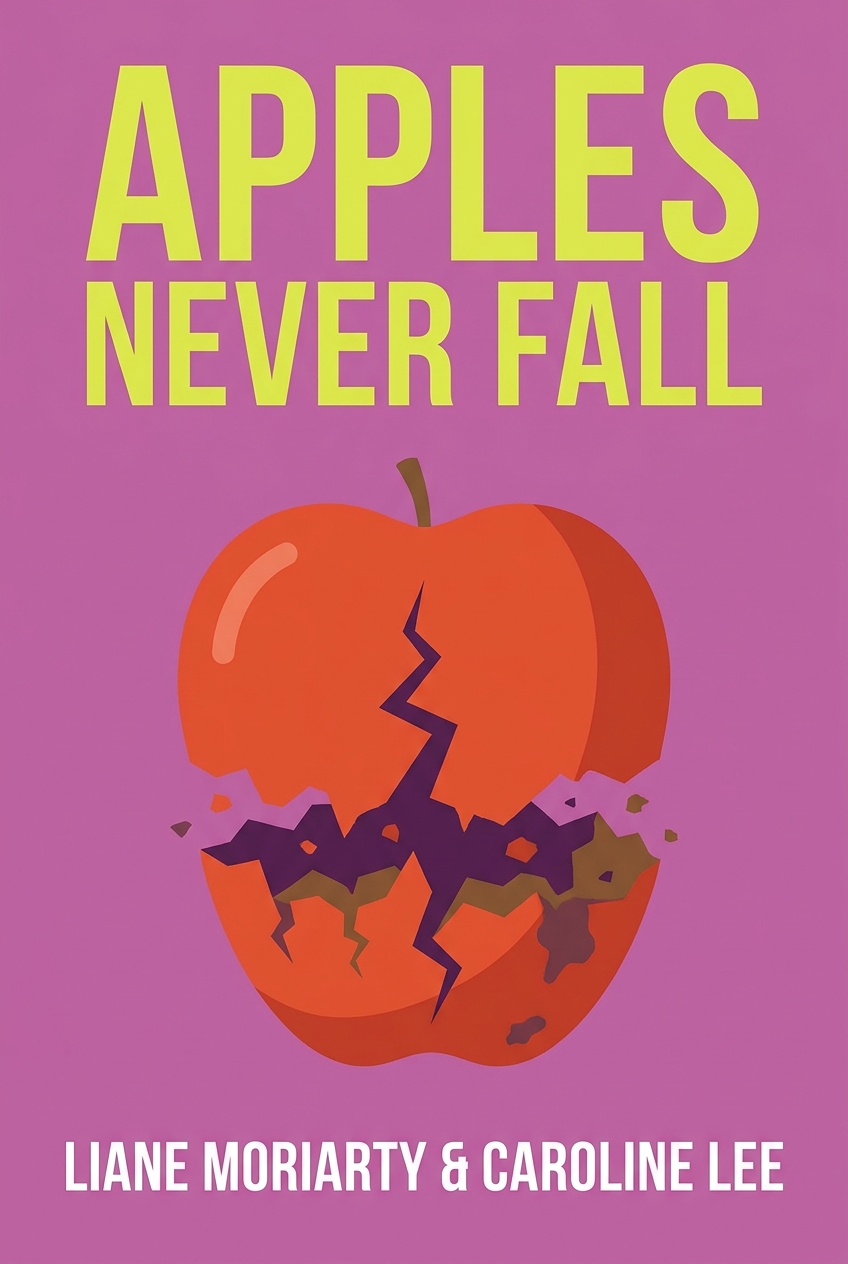
Apples Never Fall book cover

The Script

Think of the last time you saw a seemingly perfect family. The kind you see at a restaurant, all smiles and easy laughter, or the ones whose holiday photos clog your social media feed with coordinated outfits and sun-drenched happiness. There’s an effortless rhythm to them, a shared language of inside jokes and knowing glances. From the outside, their life looks like a beautifully constructed dollhouse, each piece perfectly placed, each room bathed in a warm, inviting light. But what happens if you gently tap on one of those miniature walls? Does it reveal a hairline crack? What happens if an outsider, a total stranger, walks up and knocks on the front door of that dollhouse, and the family, against their better judgment, lets her in? Suddenly, the carefully arranged furniture is nudged out of place. The warm light flickers. The silent, unspoken agreements that hold the entire structure together begin to groan under a new, unpredictable weight, and the whole perfect construction threatens to collapse.

The pressure points inside these seemingly perfect families—the hidden resentments, the sibling rivalries, and the secrets buried under decades of shared history—are the very territory Liane Moriarty has built a career exploring. An Australian author known for her sharp and empathetic observations of suburban life, Moriarty excels at peeling back the veneer of domestic tranquility to reveal the messy, complicated, and often darkly funny truths underneath. Her novels, including blockbusters like Big Little Lies and Nine Perfect Strangers, are born from a fascination with what happens when ordinary people are placed under extraordinary pressure. With Apples Never Fall, Moriarty turns her lens on the Delaney family, tennis royalty in their community, whose perfect facade shatters when their matriarch, Joy, vanishes, leaving behind only a cryptic text message and a house full of secrets.

Module 1: The Facade of Perfection

The first thing we learn about the Delaney family is how the world sees them. They are a local institution. Stan and Joy ran the town’s most successful tennis academy for decades. Their four children were all junior tennis stars. To any outsider, they are the definition of a happy, enviably contented family. But Moriarty immediately shows us this is a carefully constructed illusion.

The story begins with the four adult Delaney children meeting in a café. Their mother, Joy, is missing. This crisis forces them to look at their family history with what Moriarty calls "fresh, frightened eyes." The perfect family narrative is often a fragile defense mechanism. This is the first core insight. The Delaneys have a story they tell the world, and a story they tell themselves. Both are incomplete. The children debate whether their father, Stan, could have hurt their mother. One daughter insists he never would. A son jokes that police always suspect the husband. This single conversation reveals that even within the family, there is no shared reality. Each sibling holds a different version of their parents' marriage.

From this foundation, we see how a crisis acts as a truth serum. A sudden disruption forces the re-evaluation of long-held beliefs. The children are no longer just living their lives; they are now detectives examining their own past. They dissect their parents' arguments, question their father's alibi, and recall a mysterious houseguest named Savannah who appeared months earlier. Things they once ignored now seem like vital clues. The disappearance forces them to question everything they thought they knew. A simple detail, like Joy’s phone being left behind, becomes a sinister piece of evidence.

But here’s the thing: their investigation is flawed. Because individual perspectives on shared history are fundamentally unreliable. Each sibling remembers their childhood differently. They have conflicting memories of their parents' fights and affections. One child recalls a father who was gentle and patient. Another remembers a man prone to silent, intimidating moods. Moriarty makes it clear that family memory is a collection of personal, emotional, and often contradictory stories. This is a powerful concept for anyone in a leadership position. It reminds us that even when a team shares an experience, each member processes it through their own unique filter. To get to the truth, you have to gather all the stories, not just the one that seems most convenient.

Read More