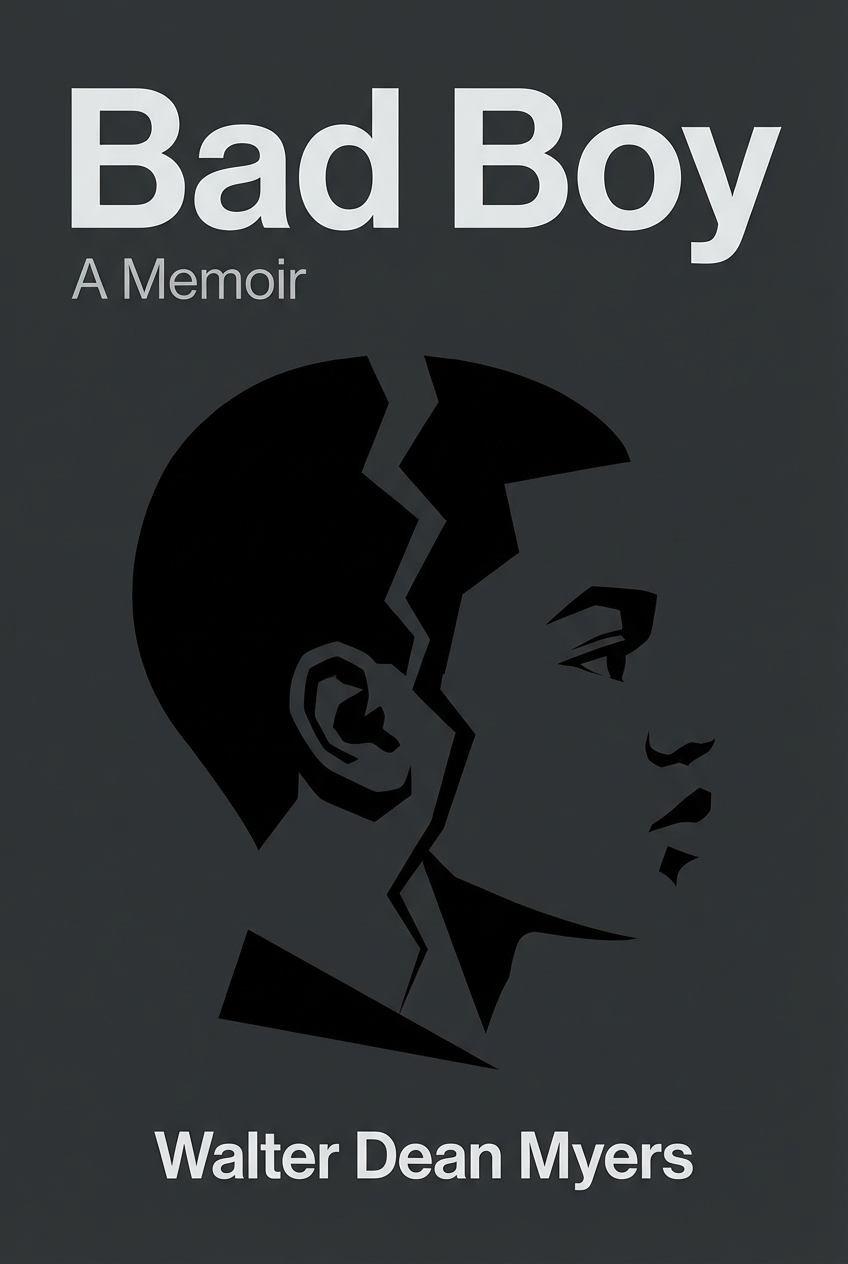
Bad Boy
A Memoir
What's it about
Ever felt like you're living a double life, torn between who you are and who you're expected to be? Discover how a boy from Harlem navigated the streets and the classroom, struggling with a world that couldn't see his true potential. This is the story of finding your voice when everyone tries to silence it. You'll learn how Walter Dean Myers used his love for reading as an escape and his fists as a defense. Uncover the pivotal moments and the influential people that helped him transform from a so-called "bad boy" into a celebrated author. His journey reveals how embracing your identity, even the messy parts, is the key to unlocking your own unique path to success.
Meet the author
Walter Dean Myers was a celebrated and groundbreaking author, serving as the National Ambassador for Young People's Literature and winning multiple Coretta Scott King Awards. Growing up in Harlem, he navigated a world of challenges, including a speech impediment and trouble in school, yet found his voice through reading and writing. His own life as a "bad boy" who discovered a love for literature directly inspired this powerful memoir, offering an authentic perspective on identity, struggle, and the redemptive power of words.
Opens the App Store to download Voxbrief

The Script
Two brothers stand at a corner store, each holding a nickel for a comic book. For one, the nickel is a simple transaction, a key to unlock a few minutes of colorful adventure before dinner. For the other, the nickel is a puzzle piece. It buys entry into a world with its own rules, a world where he fits better than he does on the streets of Harlem. In that world, he is a reader. He’s smart. The comic is a confirmation of a secret identity, a self he nurtures in the quiet moments between the world’s noisy expectations.
This gap—between the boy who loves words and the one who uses his fists—is the space Walter Dean Myers lived in. He understood that a person can be two things at once: the troublemaker the world sees and the thoughtful soul they miss. His memoir, Bad Boy, was an act of reconciliation, an effort to fuse those two halves of himself on the page. Myers, who would become a celebrated author and National Ambassador for Young People's Literature, wrote the book to show the boy he was that his love for stories was the very thing that would save him.
Module 1: The Two Worlds of Walter Myers
Walter Dean Myers grew up living a double life. On the outside, he was a tough kid from Harlem. He was tall, athletic, and quick to fight. This was the identity the world saw and, in many ways, expected. But inside, another life was unfolding. This was a secret life, one filled with books, poetry, and a profound love for language. The central tension of his youth was the struggle to navigate these two conflicting worlds.
This brings us to a crucial insight. You must often hide your true passions to survive social expectations. For young Walter, reading wasn't a celebrated skill among his peers. It was seen as something boys just didn't do. He was teased for it. So, he started hiding his library books in a brown paper bag. He built a secret collection of comic books under his bed, becoming the "comic-book king" in private while pretending he didn't care for them in public. His love for writing poems was an even deeper secret. This created a split. He had a "rough voice" for the streets and sports. And he had a hidden voice for the vocabulary of literature.
This leads to another key idea. Mentors can give you permission to embrace your hidden self. While Walter hid his intellectual side from his friends, certain teachers saw his potential. One teacher, Mrs. Conway, confiscated a comic book but replaced it with a book of Norwegian fairy tales. This small act ignited a lifelong passion. Later, a teacher named Mr. Lasher confronted Walter about his fighting. He told him he was too bright to waste his potential. He even came to Walter's home to speak with his parents. Most importantly, another teacher, Mrs. Finley, introduced him to sonnets. She saw past the disruptive student and spoke to the budding poet. She gave him copies of Shakespeare. Her whisper in a moment of crisis, "don't stop writing," became his lifeline. These teachers validated his secret identity. They told him it was okay to be the person he was afraid to show the world.
And here's the thing. Your environment shapes your definition of success. In Walter’s Harlem, success for a Black man was limited. You could be an athlete, an entertainer, or a churchgoer. Newspapers celebrated Joe Louis and Jackie Robinson. But the world of literature seemed distant and white. The writers he studied were dead English poets. He had never even read a book by a Black author. This created a profound sense of alienation. He wanted to be a writer, but he had no role models who looked like him. He felt his dream was impossible. He feared his only future was taking the A train downtown to clean up after white people, just like his parents. This internal conflict defined his adolescence. He was caught between the world he knew and the world he discovered in books.
Module 2: The Speech Impediment and the Cycle of Violence
One of the most defining struggles of Myers's youth was his speech impediment. He couldn't pronounce words clearly. To his own ears, he sounded fine. But to his teachers and classmates, his speech was a problem. This single issue created a devastating ripple effect throughout his childhood. It shaped his school experience, his self-perception, and his relationship with violence.
This reveals a powerful lesson. Unaddressed needs often drive failure. Walter was academically gifted. He was reading at a second-grade level when he started first grade. But his teacher, Mrs. Dworkin, argued against skipping him. She knew his underdeveloped speech would make him a target in a less nurturing environment. She was right. The moment he moved up, the teasing began. A classmate mocked him, chanting "Dabba! Dabba! Dabba!" This triggered Walter's first violent outburst. He hit the boy. This became a pattern. His frustration with being misunderstood or mocked would boil over into physical aggression.
From this foundation, we see how a vicious cycle begins. Frustration, when unheard, often turns into aggression. Walter's speech problem overshadowed everything. Teachers focused on his mispronunciations more than his sharp mind. He felt constantly corrected and undervalued. His go-to response was to lash out. He describes his first instinct when teased: first to yell, then to punch. This behavior earned him a reputation. He was the "bad boy." He collected poor conduct marks, which guaranteed a beating at home. It didn't matter if he was excelling in reading or spelling. A red mark in conduct meant the strap. His academic potential was completely derailed by this cycle of misunderstanding, frustration, and punishment.
But flip the coin. Punishment is not always perceived as its sender intends. When Walter was sent to the principal's office, he was curious. He found the office interesting. He liked the principal, Mrs. Flynn, because she treated him with respect even while disciplining him. His punishment was often writing sentences hundreds of time. For Walter, the challenge was the logistics of the task. How could he fit the long sentence on one line? How could he use a ruler to make all the "I"s perfectly straight? This reveals a child's mind trying to make sense of a world of adult rules. He was a bright, frustrated kid trying to navigate a system that couldn't hear what he was trying to say.