Before We Were Free
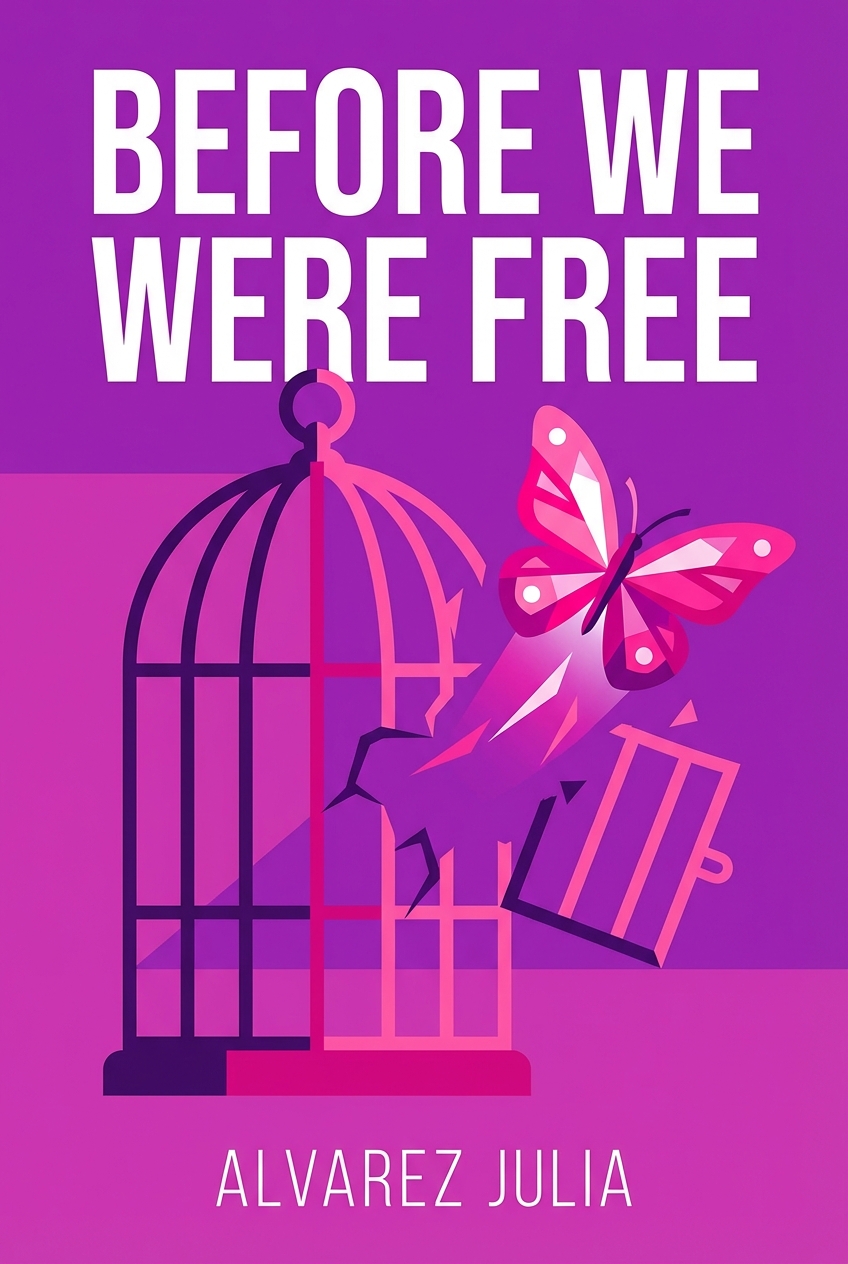
What's it about
Ever wondered how you'd find your voice when the world tries to silence you? Discover the incredible strength it takes to fight for freedom, even when it means risking everything you love. This story reveals how one young girl's world is turned upside down by political turmoil and the fight for justice. You'll follow Anita de la Torre's gripping journey in the Dominican Republic under a brutal dictatorship. Through her eyes, you'll witness the power of family, the cost of secrets, and the courage required to stand up against oppression. Learn how an ordinary girl navigates extraordinary circumstances and finds her own path to liberation, proving that even in the darkest times, hope can inspire true bravery.
Meet the author
Julia Alvarez is a critically acclaimed Dominican-American poet, novelist, and essayist whose work often explores her experiences with cultural identity and assimilation. Having fled the Dominican Republic with her family as a child to escape the Trujillo dictatorship, Alvarez draws directly from her own life to give voice to the political turmoil and personal sacrifices detailed in Before We Were Free. Her unique perspective provides an authentic and deeply human window into the struggles for freedom and the complexities of bicultural life.
The Script
Imagine a world where your backyard is a fortress, not a playground. Where the walls of your own home have ears, listening for a word spoken out of turn. This is a place where a knock on the door is a silent question: who will disappear tonight? For a child growing up in such a world, life becomes a series of riddles. Why does your mother burn the pages of her diary in the sink? Why do your uncles vanish into the night, their names suddenly becoming poison on everyone's lips? A child's mind, built for games of hide-and-seek, must learn a more dangerous version of the game, one where the stakes are being erased entirely. The family car, once a symbol of freedom and Sunday drives, becomes a cage on wheels, its trunk a potential hiding place from the secret police.
This chilling game of hide-and-seek was the reality for the family of Julia Alvarez. Though she and her immediate family escaped the Dominican Republic just before the assassination of the dictator Rafael Trujillo, the cousins, aunts, and uncles they left behind were deeply involved in the underground plot to end his reign. Alvarez grew up in the United States haunted by the silence surrounding what her family had endured—the stories that were too dangerous to tell and the relatives who paid the ultimate price. "Before We Were Free" is her attempt to give a voice to that silence, to piece together the fragmented whispers and chilling realities of her family's past through the eyes of a young girl, Anita, who is forced to understand the cost of freedom before she even understands what it means to be free.
Module 1: The Psychology of Repression
Living under a dictatorship is a psychological state. It creates a pervasive atmosphere of fear that seeps into every corner of life, straining family dynamics and silencing open discussion. For a child like the protagonist, Anita, this climate is deeply confusing. The adults around her are in a constant state of unexplained worry. Her father, Papi, once a source of encouragement, now silences her questions with the chilling phrase, "Children should be seen, not heard."
This brings us to the first critical insight. Under oppression, fear becomes the operating system of daily life. It’s a low-grade, constant hum of anxiety. The sudden, secretive departure of classmates and family members becomes a terrifying norm. When the school principal enters the classroom, the students fall silent. They remember the last time he came. A classmate, Tomasito Morales, left and never returned. His father had met an unspecified tragedy. This constant disappearance of people creates a world of ghosts and unspoken truths. Anita’s family avoids her questions about her missing uncle, Tío Toni, leaving her to grapple with a fear she can't name.
Moving forward, this constant tension forces a difficult choice. Families must enforce strict self-censorship to survive. Mami, Anita's mother, explicitly warns her daughters not to discuss the secret police raid on their home. She uses a stark proverb: "No flies fly into a closed mouth." The danger of loose talk is absolute. This caution extends even within their own home. When a new maid, Lorena, is hired, Mami instructs Anita to be careful what she says. The home, once a sanctuary, is now a potential site of betrayal. Even phone calls with family abroad are monitored. Mami constantly reminds Anita to "mind what she says," reinforcing the idea that no communication is ever truly private.
So what happens when you can't speak freely? You develop a coded language to navigate danger. This is one of the most fascinating aspects of survival. Adults begin speaking in whispers and metaphors. Papi refers to politically targeted women as "butterflies" who had an "accident." He uses double-entendres to communicate with Mr. Washburn, an American diplomat. When Washburn asks about "bugs," he means both listening devices and the secret police agents themselves. Papi’s reply, "Still biting," is a grim confirmation. This coded language is a lifeline. For a child like Anita, it only deepens the mystery and the fear. She is an outsider to the secret language that governs her own survival.