All Books
Self-Growth
Business & Career
Health & Wellness
Society & Culture
Money & Finance
Relationships
Science & Tech
Fiction
Topics
Blog
Download on the App Store

BORN SURVIVORS

15 minWendy Holden

What's it about

Could you survive the unthinkable? Uncover the astonishing true story of three women who concealed their pregnancies from the Nazis and gave birth in the final days of the Holocaust. Their courage and resilience offer a profound lesson in the power of hope against impossible odds. Discover the harrowing choices these mothers made to protect their unborn children in the squalor of concentration camps. You'll learn how their secret network of support and sheer force of will led to three miraculous births, embodying the ultimate triumph of life over death.

Meet the author

Wendy Holden is an award-winning British journalist and the internationally bestselling author of more than thirty books, renowned for her compelling narrative nonfiction. Her unique ability to give voice to extraordinary real-life stories led her to painstakingly research and document the incredible history behind Born Survivors. Through extensive interviews with the survivors and their families, she pieced together a powerful and inspiring testament to the strength of the human spirit in the darkest of times.
Listen Now

Opens the App Store to download Voxbrief

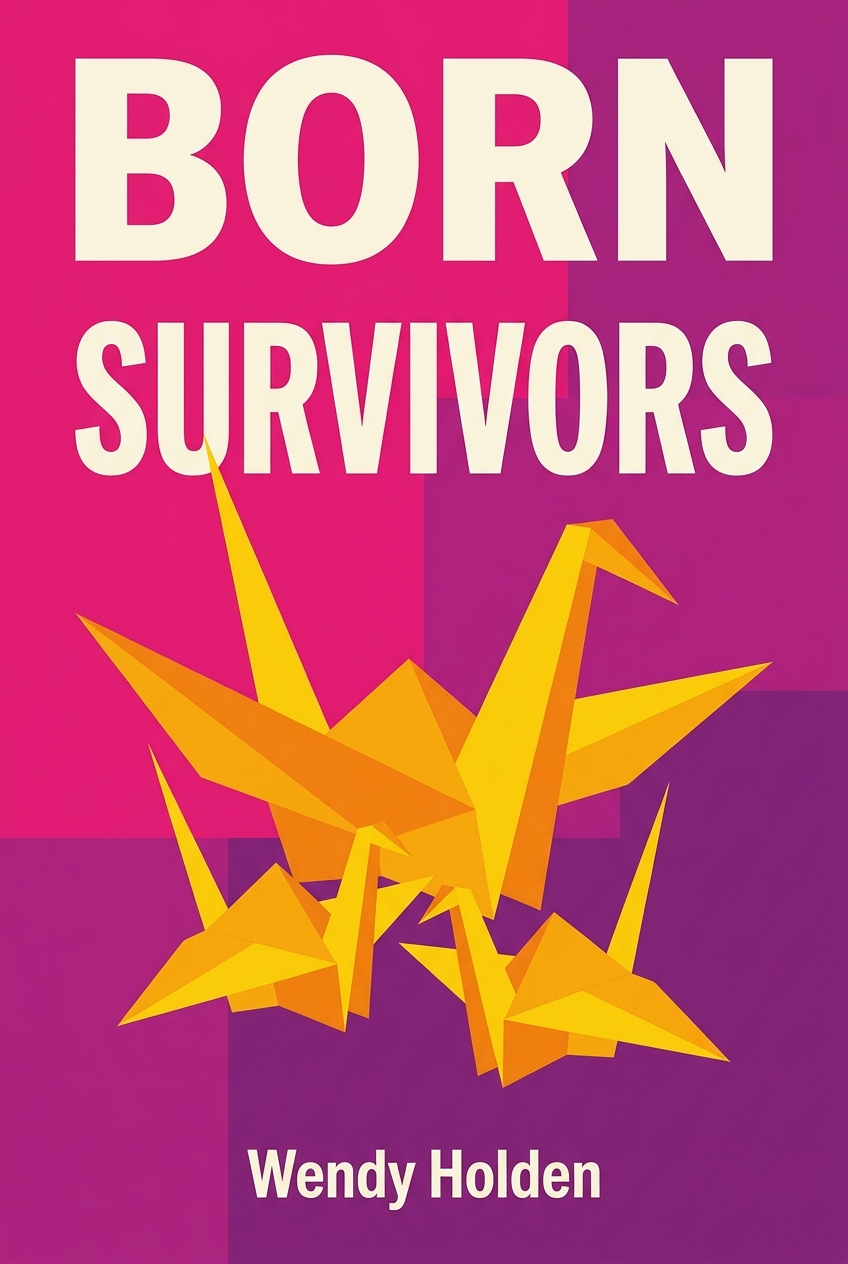
BORN SURVIVORS book cover

The Script

In a hospital maternity ward, two new mothers lie in adjacent beds. Both have just endured unimaginable physical trials to bring their children into the world. Both are exhausted, but their gazes are fixed on the small, sleeping infants beside them. For one mother, the journey ends here. Her family waits outside, flowers and balloons in hand. Her home is ready, the nursery painted, the future a clear path of first steps and first words. For the other mother, this moment of quiet is a fragile beginning. She has no home to return to, no family waiting. The world outside the hospital walls is a landscape of ash and ruin. Her survival, and her baby’s, was a statistical impossibility. Now, with nothing but the clothes on her back and a child in her arms, she must begin the impossible all over again.

This is the lived reality of three women whose stories form the heart of this book. In the final, desperate days of World War II, Priska, Rachel, and Anka were each pregnant, each starving, each prisoners in the Mauthausen concentration camp. They had lost everything but were determined to hold onto the new lives they carried. Their survival, and the survival of their babies, is a story so miraculous it seems like fiction. Author and journalist Wendy Holden first encountered a fragment of this history by chance, a single sentence in an old book that mentioned a baby born in a concentration camp. That one sentence sparked a years-long global investigation to uncover the full story, track down the survivors, and piece together the memories of three mothers and their children, all born against all odds in the heart of the Holocaust.

Module 1: The Machinery of Dehumanization

The Nazi regime’s power was built on a systematic process of erasure. It started with the slow, deliberate stripping away of identity.

First, the Nazis dismantled social standing to isolate their victims. In places like Czechoslovakia, this began subtly. A non-Jewish professor stops calling on a Jewish student. Neighbors who once offered a respectful greeting now look away. These small cuts were followed by codified exclusion. The Nuremberg Laws stripped Jews of citizenship. They were banned from professions, their businesses confiscated. Curfews were imposed. Their food was rationed. Finally, they were forced to wear the yellow Star of David, a public mark of otherness. This gradual erosion of rights made the unthinkable seem normal, conditioning both victims and bystanders for what was to come.

From there, the process accelerated. The journey to the camps was a calculated ordeal designed to break the human spirit. Deportation was swift and brutal. Families were given minutes to pack a single suitcase before being herded into ghettos or transit camps. The trip to Auschwitz was made in suffocating cattle cars. Eighty to one hundred people were crammed into a single wagon. There was no food, no water, no sanitation for days. The air was unbreathable. The dead were simply thrown from the train at stops along the way. This journey was the first stage of physical and psychological warfare.

Upon arrival, the final stage of dehumanization began. The camp induction process systematically erased individuality. At Auschwitz-Birkenau, prisoners were met with violent shouting and beatings. Families were torn apart on the arrival ramp. Men were sent one way, women and children another. Then came the stripping. Prisoners were forced into nudity. All personal possessions were confiscated, from wedding rings to family photos. All body hair was shaved. This was to make everyone look the same, to make them unrecognizable even to each other. Their names were replaced with tattooed numbers. They were no longer people. They were Häftlinge. Prisoners.

Read More