All Books
Self-Growth
Business & Career
Health & Wellness
Society & Culture
Money & Finance
Relationships
Science & Tech
Fiction
Topics
Blog
Download on the App Store

Borrow My Heart

14 minKasie West

What's it about

Ever wished you could just borrow someone else's life for a little while? Imagine stepping into a world where you're not just you anymore, but part of a picture-perfect family. Get ready to find out if faking it is the first step to making it real. When Wren's heart gets broken, she agrees to a wild proposal: pretend to be the girlfriend of a charming stranger named Asher. You'll follow their journey through a summer of fake dates and real feelings, discovering how a borrowed romance can lead to unexpected truths about love, family, and finding yourself when you least expect it.

Meet the author

With over two million books sold, Kasie West is a bestselling author celebrated for her heartwarming and witty young adult romances that consistently capture the complexities of first love. A true romantic at heart, she draws inspiration from her own life and the world around her, crafting relatable characters and swoon-worthy stories. Her novels, including the beloved Borrow My Heart, offer readers a delightful escape into the hopeful and often humorous journey of finding connection and navigating the beautiful mess of being a teenager.
Listen Now

Opens the App Store to download Voxbrief

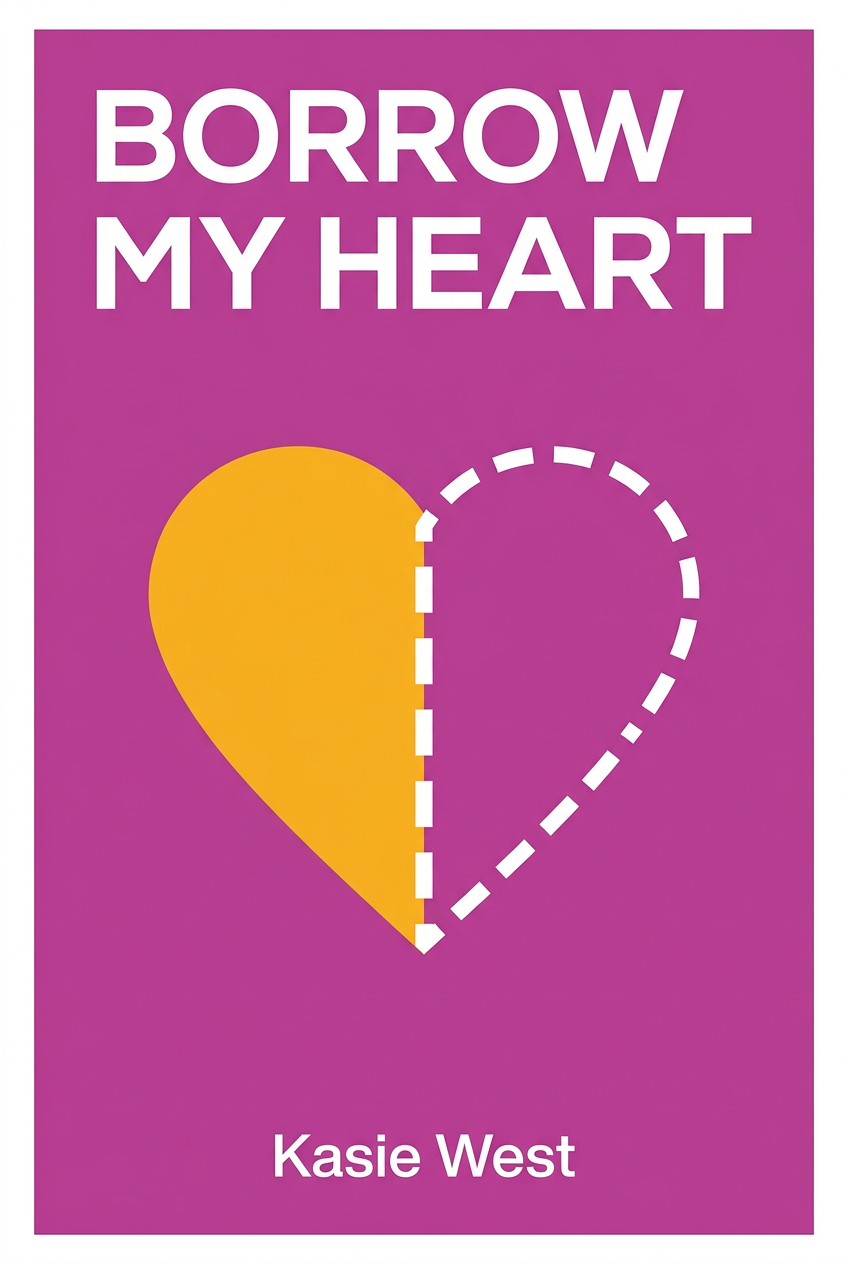
Borrow My Heart book cover

The Script

The rental agreement is a simple, typed document. It lists the duration—three months—the fee, and the basic expectations. A second document, a slim paperback, details the role itself: a script of memories, inside jokes, and shared history for a life that never happened. The goal is to perform a perfect relationship, to sell a story so convincing that no one questions its authenticity. But there's a problem with playing a part for so long. The lines on the page start to feel like your own. The fake laughter begins to sound real, the staged glances linger a moment too long, and the heart, which was never part of the contract, starts to follow a script of its own. Suddenly, the most terrifying thing is realizing the performance has become the most genuine thing in your life.

This is the dilemma at the center of Kasie West’s work. She has a unique talent for finding the humor and heartache in the space between who we pretend to be and who we really are. In "Borrow My Heart," West wanted to explore this idea in its most literal form. She was fascinated by the concept of hiring a complete stranger to embody a fictional character you created, only to find yourself falling for the actor playing the part. As a prolific author of young adult romance, West draws from the charming, awkward, and sometimes mortifying moments of teenage life to craft stories that feel both delightfully escapist and emotionally true, examining what happens when the roles we play for others begin to reshape our own hearts.

Module 1: The Architecture of Self-Protection

We all have strategies for navigating the world. Some of us plan every detail. Others go with the flow. The protagonist, Wren, is a planner. She lives by a strict set of personal rules, especially when it comes to dating. This is a survival mechanism.

The book's first insight is that we build rule-based systems to manage emotional risk. Wren's rules are born from past trauma, specifically the emotional instability caused by her mother's abandonment. She has rules like: "Never date a guy you just met," and requires knowing someone for six months before even considering a relationship. These are firewalls designed to prevent history from repeating itself. For a professional, this mirrors the project management frameworks we use to de-risk a new venture. Wren is de-risking her heart. The problem arises when a person who breaks all the rules, like the impulsive and charming Asher, appears to be a good person. This forces a critical question: is your system protecting you or just isolating you?

This leads to a related idea. Protective rules often create a conflict between your planned self and your authentic self. Wren likes her life planned. It runs better that way. Yet, she makes a split-second, impulsive decision to pretend to be "Gemma," an online catfish, to save Asher from public humiliation. This act violates her core operating principle of control. And here's the thing. This impulsive act feels more authentic to her in the moment than her carefully constructed life. It's a reaction driven by empathy, a core human value. The lesson here is that our most rigid plans can sometimes suffocate our most genuine impulses. It’s a call to audit our own personal "rules." Are they serving their original purpose, or have they become a cage?

Finally, the book reveals a crucial truth about these systems. The more rigid your personal rules, the more you fear losing control. Wren's central rule is, "Never date a guy who makes you feel out of control." Asher, with his spontaneity and charisma, constantly triggers this fear. When he hugs her, she feels herself "melt" and immediately panics. Her internal monologue is a battle. She feels a genuine connection, but her programming screams "danger." This is the paradox of control. The tighter you grip, the more threatening any deviation feels. For anyone in a leadership role, this is a familiar dynamic. We create processes for predictability. But true innovation and connection often happen in the unpredictable spaces between our plans. Wren’s journey is a case study in learning to tolerate, and even embrace, that lack of control.

Module 2: The Deception Dilemma

We've explored why Wren builds walls. Now, let's look at what happens when she steps outside them. Her decision to impersonate "Gemma" kicks off a cascade of consequences, revealing deep truths about honesty and identity.

First, a well-intentioned lie creates immediate and compounding mental overhead. Wren’s initial act was to save Asher from embarrassment. But to maintain the lie, she has to think constantly. She invents a story about her roses dying to explain why she doesn't have the one "Gemma" promised. She has to dodge questions about her online life. The cognitive load is immense. She notes, "This was too much thinking for summer vacation." This is a powerful metaphor for any inauthentic performance, whether in our personal lives or at work. Pretending to be someone you're not, or to know something you don't, consumes energy that could be spent on genuine connection or productive work. The lie becomes a full-time job.

Building on that idea, the narrative shows that deception poisons the well of genuine connection, even when feelings are real. Wren starts to actually like Asher. She enjoys his humor and feels a real comfort in his presence. But she's trapped. She thinks, "He didn't know me. He knew Gemma." Any compliment he gives feels hollow because it's directed at a fictional person. This creates a painful internal split. She craves the connection but knows it's built on a fraudulent foundation. It highlights a key principle: you cannot build something real on a lie. The authenticity of the feeling doesn't validate the dishonesty of the situation. Sooner or later, the foundation will crumble.

But flip the coin. The book also suggests that true connection can sometimes be found in spite of the initial pretense. Wren and Asher bond over a shared annoyance with the name of the animal shelter, "Petsacular." They riff on better names, a moment of pure, unscripted intellectual chemistry. His hugs feel more real to her than any she's had before. These moments are authentic. They exist outside the lie. This introduces a fascinating nuance. While the deception is corrosive, it still allows for real sparks of connection. It's a reminder that human chemistry is complex. It can sometimes find a way to flourish even in the most compromised soil. The challenge, as Wren discovers, is figuring out if those sparks are enough to survive the eventual explosion when the truth comes out.

Read More