All BooksSelf-GrowthBusiness & CareerHealth & WellnessSociety & CultureMoney & FinanceRelationshipsScience & TechFiction
Download on the App Store

The Guncle

12 minSteven Rowley

What's it about

How do you find joy and rebuild your life after a devastating loss? For Patrick, a once-famous sitcom star, the answer arrives unexpectedly when he becomes the temporary guardian of his young niece and nephew. Can he step up when his family needs him most? You'll discover how Patrick navigates his own grief while trying to care for two heartbroken children. This heartwarming story explores the messy, hilarious, and ultimately healing power of family. Learn how unconventional love can mend broken hearts and create a new definition of home, one cocktail and Guncle Rule at a time.

Meet the author

Steven Rowley is the New York Times bestselling author of five novels, including The Guncle, which is currently in development as a major motion picture. A former screenwriter, Rowley masterfully blends humor and heart, drawing from his own life experiences to explore profound themes of family, grief, and healing. His work is celebrated for its wit and emotional depth, offering readers stories that are both deeply personal and universally relatable, solidifying his status as a beloved contemporary voice in fiction.
Listen Now
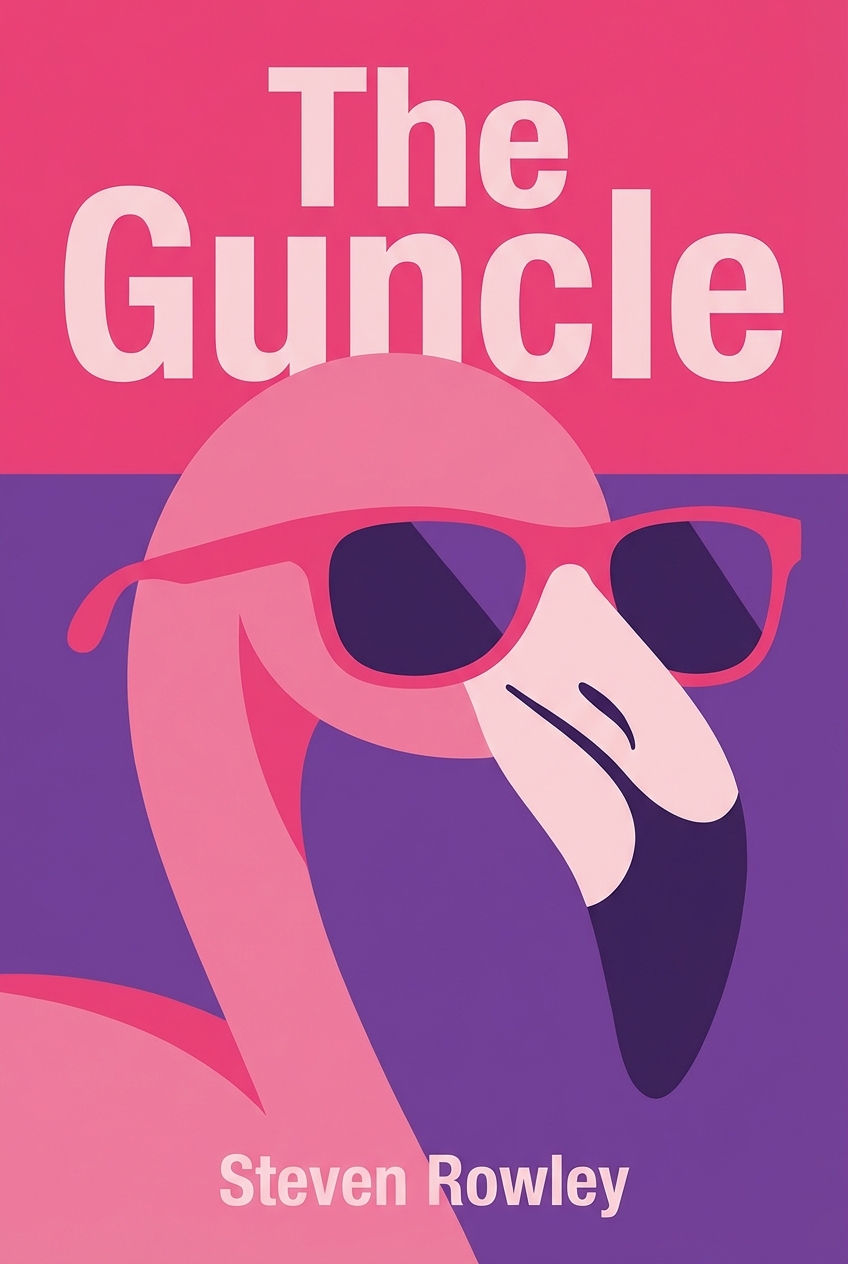
The Guncle book cover

The Script

Think of the person in your life who feels like a human holiday. They are the one you call when your world has gone gray, because they live in vibrant, unapologetic color. Their home is a stage set, their pronouncements are legendary, and their advice, while often impractical, is always unforgettable. They are the designated curator of joy, the keeper of the family’s most outrageous stories, and the one person who can make you laugh so hard you forget, for a moment, why you were crying. They exist slightly outside the gravitational pull of everyday responsibility, which makes them the perfect escape.

But what happens when that escape becomes the only refuge? What happens when the person who lives for curtain calls and cocktail hours is suddenly thrust into the unscripted, 24/7 reality of parenthood? This is the very real situation that inspired author Steven Rowley to write The Guncle. After experiencing a profound personal loss, Rowley found himself grappling with grief, but he also found himself thinking about the unique role of the gay uncle—the 'Guncle'—in a family structure. He saw this figure as a vital, if unconventional, source of wisdom and resilience. Rowley, known for his ability to blend heartfelt emotion with sharp, observational humor in novels like Lily and the Octopus, wanted to explore what happens when the fun uncle is forced to become the functional one, discovering that the performance of a lifetime happens in the quiet, messy, and unexpectedly beautiful moments of caring for the people you love.

Module 1: Grief Is a Team Sport, Not a Solo Mission

Grief is often framed as a solitary journey. We're told to process it, to move through its stages. But "The Guncle" argues this model is incomplete. The story's protagonist, Patrick, is a former sitcom star living as a recluse in Palm Springs. He's still reeling from the death of his partner, Joe, years earlier. When his sister-in-law, Sara, dies and his brother, Greg, enters rehab, Patrick is forced to take in his nine-year-old niece, Maisie, and six-year-old nephew, Grant. His immediate reaction is to manage their grief as a project, separate from his own. He buys them workbooks on loss and hides them, planning to vet the material alone. He wants to fix their sadness from a safe distance.

This approach fails immediately. The children’s grief is chaotic, unpredictable, and deeply intertwined with his own. One evening, Patrick finds himself in the hot tub with the kids. He deliberately starts a conversation about their mom. "I was wondering if either of you were missing your mom tonight," he says, "because I know I was." This is a pivotal shift. He stops trying to manage their grief and starts sharing it. Here's the first key insight: Vulnerability is a prerequisite for collective healing. By admitting his own sadness, Patrick opens a space for Maisie and Grant to share theirs. They don't just talk about Sara; Patrick tells them stories of her vibrant, funny, pre-mom life in New York City. He makes her real for them, beyond the simple fact of her absence.

This leads to a powerful realization for Patrick. He had been hoarding his memories of Joe, believing the pain kept the memory sharp. He tells the kids that grief can feel like a loved one is being erased, but then reframes it. He compares the lingering memories to the Milky Way—a beautiful, shimmering smudge left behind. What's the takeaway here? Storytelling transforms abstract loss into a shared, living legacy. It’s about integrating the memory of the person into the ongoing story of the family. For anyone leading a team or a family, this is a profound lesson. When crisis hits, don't isolate the problem. Create a space for shared narrative. Talk about the "before" to make sense of the "after."

Read More