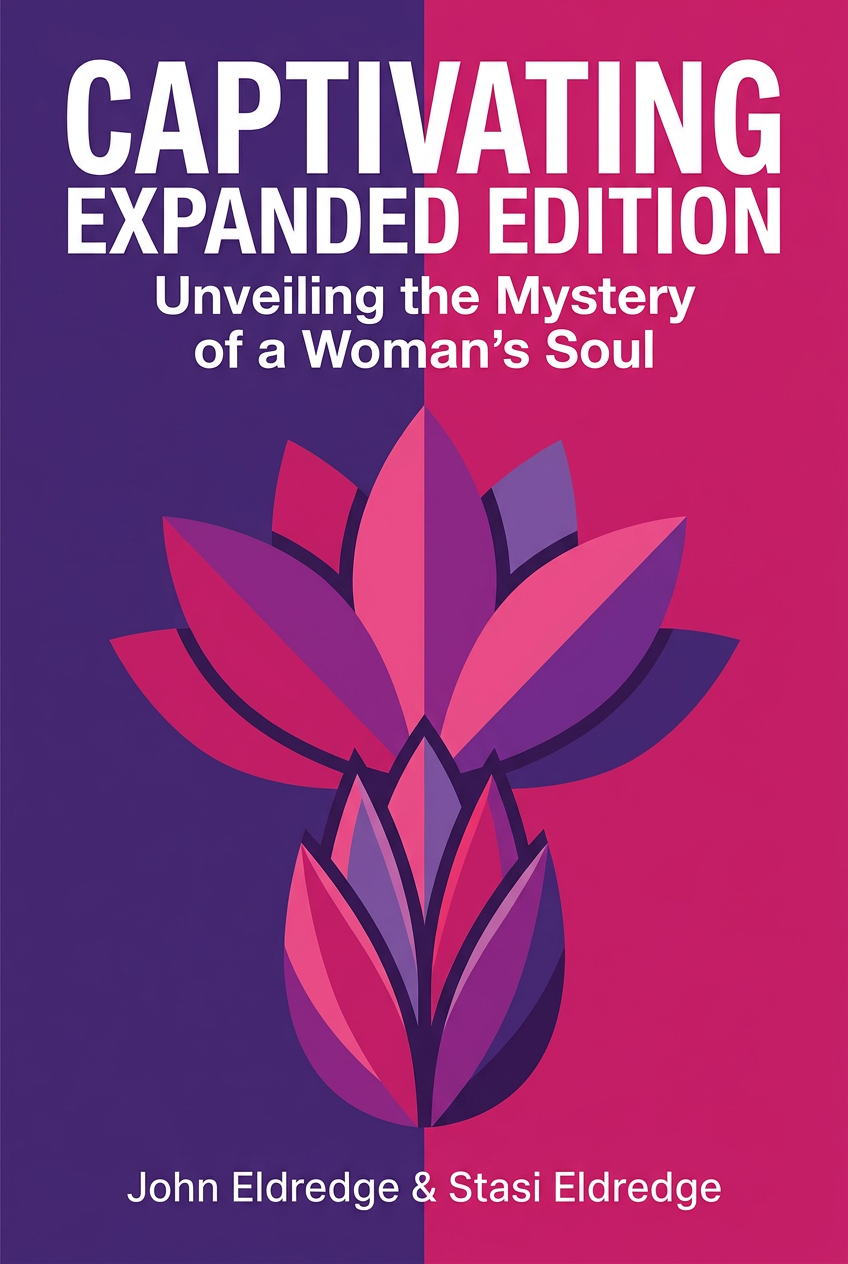
Captivating Expanded Edition
Unveiling the Mystery of a Woman's Soul
What's it about
Do you ever feel like you've lost touch with the vibrant, adventurous woman you were meant to be? Discover the secret to reclaiming your feminine heart and learn how to heal your deepest wounds so you can step into the life of beauty and strength God intended for you. Based on the bestseller by John and Stasi Eldredge, this summary unveils the three core desires every woman holds and reveals how they point to your true purpose. You'll gain practical wisdom for navigating relationships, overcoming past hurts, and embracing your irreplaceable role in God's grand story.
Meet the author
John and Stasi Eldredge are the New York Times bestselling authors and founders of Ransomed Heart, a ministry devoted to helping people discover the heart of God. Through their decades of ministry, counseling, and writing, they have guided millions in understanding their true identity and purpose. Their combined experience in theology, counseling, and leading women's ministries provides the profound, life-changing insights that have made Captivating a worldwide phenomenon, inviting women everywhere to embrace the story God is telling through their lives.
Opens the App Store to download Voxbrief

The Script
Imagine two identical wedding invitations arrive in the mail. They are for the same couple, the same ceremony, the same reception. The cardstock is thick and creamy, the script elegant. One invitation goes to a beloved, lifelong friend of the bride. For her, the invitation is a source of joy, a promise of shared celebration. It’s a culmination of a story she has been a part of for years. The other invitation goes to a distant cousin of the groom, someone who feels obligated to attend but harbors a quiet resentment over a forgotten family slight. For her, the invitation feels like a summons, a heavy weight of expectation and social duty. The object is identical, but the experience is profoundly different. One represents a relationship of intimacy and delight; the other, a performance of sterile obligation.
For many women, this is how the invitation from God to be a woman has come to feel—like a summons to a role they must perform, a list of duties to fulfill, rather than an invitation into a grand and beautiful story. They feel the weight of expectation but have lost the sense of the intimate relationship behind it. This gap, this ache for something more than just the script, is what drove John and Stasi Eldredge to explore the heart of a woman. John, a bestselling author and counselor known for his work on masculinity, found himself surrounded by women—his wife, friends, colleagues—who were asking these deep questions. Together with his wife, Stasi, they began a journey of listening, counseling, and writing to help women rediscover the glorious, fierce, and tender story God had intended for them all along.
Module 1: The Three Core Desires of the Feminine Heart
Many women feel a quiet sense of disappointment with their lives. The days are filled with duties and demands, but the romance and adventure they once dreamed of feel distant. This leads to a central dilemma. Women feel unseen by those closest to them. They feel unsought, as if no one has the passion to discover the person deep inside. And they feel uncertain about what it even means to be a woman. The authors argue this is the result of suppressing three core, God-given desires.
First, every woman has a core desire to be romanced. This is a deep longing to be seen, known, and passionately pursued. Think of the stories that captivate us. Films like Sense and Sensibility or Braveheart feature heroines who are fought for and cherished. This desire is written into the feminine heart from childhood. Little girls dream of being the beauty rescued by a hero. Stasi Eldredge shares how her husband, John, romanced her with letters, poetry, and hand-carved gifts. These were messages that said, "I see you. I know you. I choose you." This desire is a reflection of a God who is himself a great Romancer, pursuing the hearts of his people.
Building on that idea, the authors introduce a second, equally powerful longing. A woman longs for an irreplaceable role in a great adventure. She wants to be a vital partner in a story bigger than herself. This is a fierce, valiant part of the feminine heart. Stasi recalls a canoe trip where her strength and skill were essential for her family's safety. In that moment, she was needed. She felt like "Sacagawea, Indian Princess of the West." This desire is why women are inspired by figures like the nurses at Pearl Harbor or biblical heroines like Esther. Their courage and action were indispensable. This desire reveals that women were created to be what the Old Testament calls an ezer kenegdo. This Hebrew phrase, often translated as "helper," more accurately means a "lifesaving ally." A woman is a powerful partner in the grand mission of life.
And here's the thing. These desires culminate in a third, foundational longing. Every woman desires to possess and unveil a beauty that is captivating. This is about an inner beauty, a radiance of spirit that is worth discovering, though it can include the physical. From a young age, little girls twirl in skirts, intuitively asking with their eyes, "Am I lovely?" This desire doesn't fade with age. It's the reason women take such delight in dressing up for a special occasion, celebrating each other's beauty. But the deepest expression of this is a captivating spirit. Think of Maria in The Sound of Music. Her true beauty was the life, joy, and courage that flowed from her heart. This beauty is a woman’s essence. It speaks. It invites. It nourishes. It is a core aspect of her design, reflecting the very beauty of God.
Module 2: The Wound and the Question
If these desires for romance, adventure, and beauty are so central, why do so many women feel they are unfulfilled? The authors trace the answer back to a core wound and a haunting question that shapes a woman's life. This is an archetypal struggle that plays out in every woman's heart.
The journey begins with a foundational question that echoes from childhood. Every woman is haunted by the question, "Am I lovely?" This is the deep, relational longing to be seen as captivating and desirable. It's the feminine counterpart to the masculine question, "Do I have what it takes?" Stasi recalls standing on a coffee table at age five, singing with all her might to capture her father's attention. She was asking the question. As adults, this question persists, often hidden beneath layers of insecurity. The nervous habit of applying lipstick before a party is a subconscious attempt to create a perfect exterior, a shield against the fear of being truly seen and found lacking. This question, when left unanswered or answered negatively, creates a deep vulnerability.
So what happens next? This vulnerability is exploited by what the authors call "The Fall." They interpret the story of Eve in Genesis 3 as an archetype for the modern woman's struggle. Eve was tempted with the idea that God was holding out on her. She chose to take control rather than trust. And crucially, Adam, who was right there with her, did nothing. He was passive. He didn't fight for her. This, the authors argue, is the archetypal wound women experience over and over: a man who won't fight for her, who checks out, who leaves her alone.
This leads to a critical insight. A woman's deepest fear is abandonment. This fear is the direct consequence of the wound. If she cannot trust God to provide and cannot trust man to protect, she is left utterly alone. This fear of being discovered in her imperfection and then left to face life alone is what drives so many dysfunctional behaviors. It is the fear of a "death of the heart."
Consequently, women develop coping mechanisms to manage this fear. In response to her core fear, a woman adopts one of two masks: controlling or hiding. The Controlling Woman decides she can't trust anyone, so she must manage everything. Her strength becomes sharp-edged and uninviting. Think of Annie MacLean in The Horse Whisperer, a woman who micromanages every detail of a crisis. She feels safe, but she pushes away the very love and help she needs. On the other side is the Hiding Woman. She is so convinced she is not worth pursuing that she makes herself invisible. She hides behind frumpy clothes like Toula in My Big Fat Greek Wedding or retreats into a quiet, desolate life. Both masks are attempts to prevent abandonment. One by controlling relationships, the other by avoiding them altogether. But both ultimately leave a woman feeling isolated and inauthentic.