All Books
Self-Growth
Business & Career
Health & Wellness
Society & Culture
Money & Finance
Relationships
Science & Tech
Fiction
Topics
Blog
Download on the App Store

Cherries - A Vietnam War Novel

15 minJohn Podlaski

What's it about

Ever wonder what it was truly like for a brand-new soldier in the Vietnam War? Get ready to step into the boots of a "cherry" and experience the chaos, fear, and unexpected brotherhood of the jungle through the eyes of a rookie thrust into combat. You'll join nineteen-year-old John Kowalski from basic training to the front lines, feeling his every nerve-wracking moment. Discover how inexperienced soldiers navigated ambushes, learned to trust their instincts over orders, and forged unbreakable bonds in the face of death, all while fighting a war they barely understood.

Meet the author

John Podlaski is a decorated US Army combat veteran who served with the 1st Infantry Division and the 101st Airborne Division in Vietnam. This firsthand experience provides the unshakeable authenticity for his award-winning novel, Cherries. After returning home, Podlaski earned two college degrees and enjoyed a successful corporate career, but felt compelled to write. He now dedicates his time to sharing the stories of his fellow soldiers, ensuring their sacrifices and experiences are never forgotten.
Listen Now

Opens the App Store to download Voxbrief

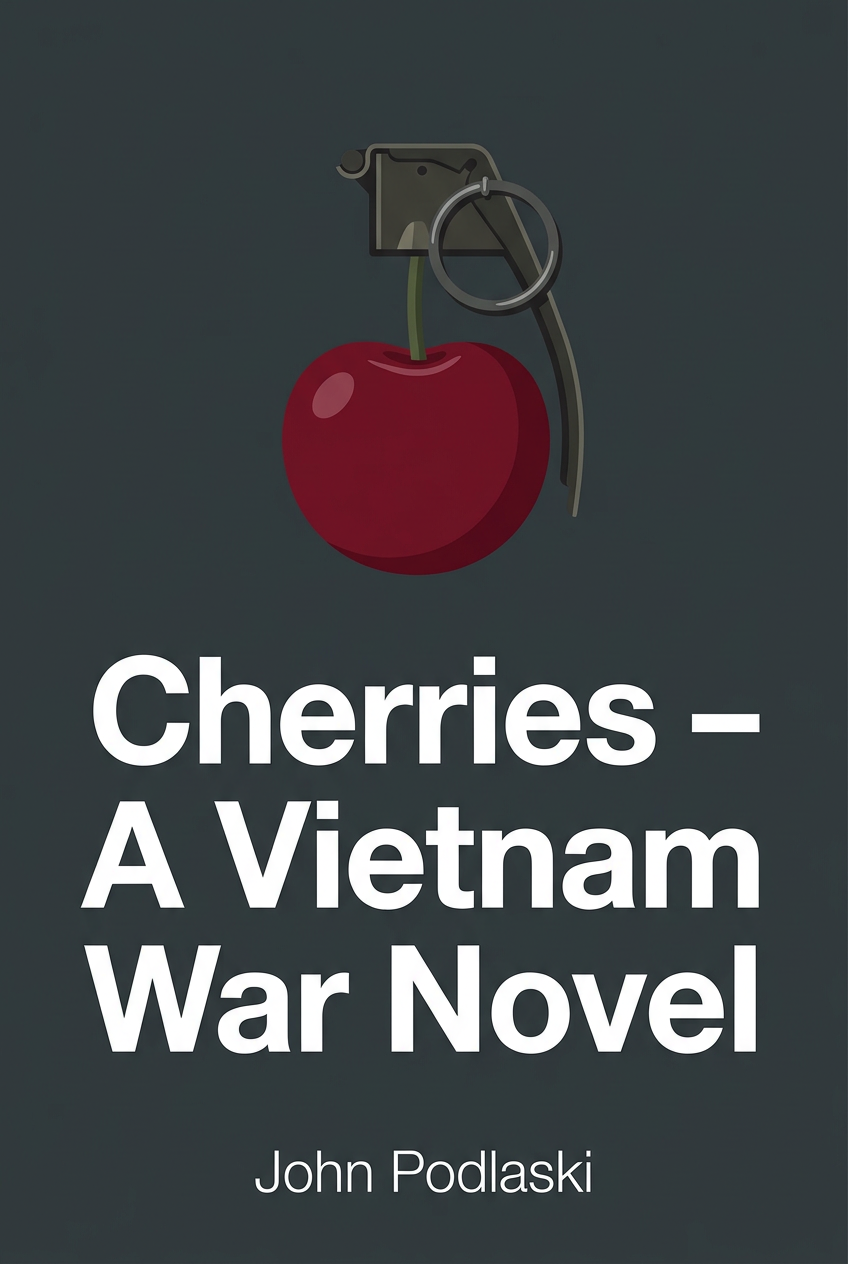
Cherries - A Vietnam War Novel book cover

The Script

The M16 rifle felt impossibly light in his hands—a black plastic toy compared to the familiar heft of the wooden-stocked M14 he’d trained with. Around him, other new arrivals clutched the same weapon, its alien feel a stark announcement that they were no longer in the States. The air, thick and sweet with the smell of red clay and diesel, was another. He was a ‘cherry,’ a new guy, fresh in-country and utterly clueless. The veterans, the ones with the thousand-yard stares and faded jungle fatigues, called them FNGs: Fucking New Guys. They were walking targets, liabilities who didn’t know the difference between the pop of a friendly mortar and the crack of a Viet Cong rifle. Survival was about the unlearning they had to do, and fast.

The world of the FNG—that disorienting, terrifying plunge into the Vietnam War—is a reality John Podlaski knows firsthand. He arrived in Vietnam in 1970 as a ‘cherry’ himself, serving with the U.S. Army's 1st and 101st Airborne Divisions. For thirty years after his return, the memories remained locked away, a private history too heavy to share. But seeing his own sons reach the age he was when he went to war compelled him to write. He wanted to capture the minute-by-minute reality of the grunt on the ground: the fear, the absurdity, the unexpected humor, and the fierce bonds forged in the jungle. 'Cherries' was born from that need to finally tell the story he and so many others had lived, a story of boys becoming men in the most brutal of classrooms.

Module 1: The Shock of Arrival

The journey into a war zone isn't a gradual slide. It's a violent collision of worlds. New soldiers, called "Cherries" for their inexperience, are thrown from the familiar into the profoundly alien. This module unpacks that initial shock and the immediate lessons it teaches.

The first lesson is that your environment is an immediate and relentless adversary. When the protagonist, John, steps off the plane in Vietnam, the first shock isn't gunfire. It’s the environment itself. The 97-degree heat and 100% humidity hit him like a physical blow. It makes breathing difficult. The landscape, beautiful from the air, becomes a crowded, chaotic scene on the ground. This immediate sensory overload is the first step in a brutal adaptation process. The environment is an active force you must learn to survive.

From there, you learn that institutional process strips away individuality to enforce control. Upon arrival, military authority asserts itself instantly and impersonally. Soldiers are herded onto buses with barred windows, making them feel like prisoners. A major delivers a blunt warning. Discard any contraband now or face serious jail time at a place called Long Binh Jail. This is a stark reminder that they are no longer individuals with choices. They are assets being processed by a system. This bureaucratic stripping of identity is a necessary, if dehumanizing, step in forging a cohesive military unit.

But it’s not all cold and impersonal. And here's the thing. Personal bonds become a critical lifeline in the face of uncertainty. Amid the chaos and institutional processing, John reunites with his friend Bill. Their shared jokes and stories offer a small pocket of comfort and belonging. These friendships, forged in the shared stress of training, become the primary support system. They are the human connection that makes the impersonal nature of military life bearable. These bonds are a functional requirement for psychological survival.

Finally, the new arrivals quickly realize that survival depends on mastering non-intuitive, life-saving skills. In-country training is a deadly serious education. Instructors stress that you must be able to disassemble and reassemble your M-16 rifle blindfolded. Why? Because most firefights happen at night. A jammed weapon in the dark is a death sentence. Soldiers practice until it becomes muscle memory. They learn to identify enemy weapons by their sound. An instructor fires an AK-47 over their heads to sear the sound into their minds. He tells them their lives depend on knowing the difference between friendly and enemy fire. This is where theory ends and brutal practicality begins.

Module 2: The Two Worlds of a Soldier

Once in-country, a soldier's life splits into two starkly different realities. There is the "rear," the relatively secure base camps. And there is "the bush," the hostile jungle where combat happens. This module explores the surreal contrast between these two worlds and the psychological whiplash it creates.

The first thing you notice is that base camps create a surreal bubble of civilian life inside a war zone. When John and Bill arrive at the 90th Replacement Battalion, they find a place with a swimming pool, a movie theater, and a bar with slot machines and live bands. It resembles a recreation center more than a military base. This "Alice's Restaurant" atmosphere offers a bizarre, peaceful respite. It’s a pocket of normalcy designed to keep morale high. But it also creates a jarring cognitive dissonance. It's a temporary illusion of safety that makes the eventual return to the field even more shocking.

Inside this bubble, a new dynamic emerges. Veterans establish a clear hierarchy, and new soldiers must adapt to it. The Cherries, with their clean uniforms and naive curiosity, stand out. They are observed, sometimes mocked, by the weathered veterans. This is the start of a critical knowledge transfer. John is immediately mentored by a veteran named Junior. Junior teaches him the unwritten rules of survival. He forces John to discard his air mattress because it’s too noisy. He tells him to remove his underwear to prevent chafing and infection. These are commands based on hard-won experience.

And it doesn't stop there. This mentorship reveals a surprising truth. Pragmatic survival often supersedes social and racial tensions. Junior, who is Black, initially confronts John, who is white, with a hostile attitude, using slang to create distance. But he later explains it's mostly an "image thing." In the bush, he says, "We watch over our own, regardless of color... We have to depend on one another." Their shared hometown of Detroit becomes a bridge. The initial tension dissolves into a pragmatic, life-saving mentorship. In a high-stakes environment, mutual dependence becomes the ultimate currency.

However, even in the relative safety of the base, the threat of war is a constant psychological presence. One night, an air raid siren blares, sending the new soldiers scrambling in panic. It turns out to be a drill. A veteran explains it's a frequent test, a psychological reminder that they are, in fact, at war. Rumors also circulate constantly. The men hear that certain divisions are taking heavy losses and need replacements. This constant undercurrent of danger, real or perceived, ensures that no one ever truly relaxes. The bubble of safety is fragile, and everyone knows it.

Read More