All Books
Self-Growth
Business & Career
Health & Wellness
Society & Culture
Money & Finance
Relationships
Science & Tech
Fiction
Topics
Blog
Download on the App Store

Code Name Hélène

A Novel

17 minAriel Lawhon

What's it about

Could you transform your life into a weapon for justice? This gripping World War II story is based on the real-life exploits of Nancy Wake, an Australian socialite turned special agent. Discover how she became one of the Gestapo's most wanted, leading thousands of soldiers in the French Resistance and risking everything for freedom. You'll learn how Wake, known by code names like "Hélène," used her charm, wit, and fierce determination to outsmart her enemies at every turn. Follow her incredible journey from high-society parties to the front lines of espionage and sabotage, and uncover the courage it took to become a legendary—and decorated—war heroine.

Meet the author

Ariel Lawhon is a critically acclaimed, New York Times bestselling author of historical fiction whose work has been translated into numerous languages around the world. A lifelong history enthusiast, Lawhon meticulously researches real-life heroines whose incredible stories have been lost to time, a passion that led her to uncover the audacious life of Nancy Wake. She masterfully resurrects these forgotten figures, giving them the voice and the powerful narrative they have always deserved, as exemplified in Code Name Hélène.
Listen Now

Opens the App Store to download Voxbrief

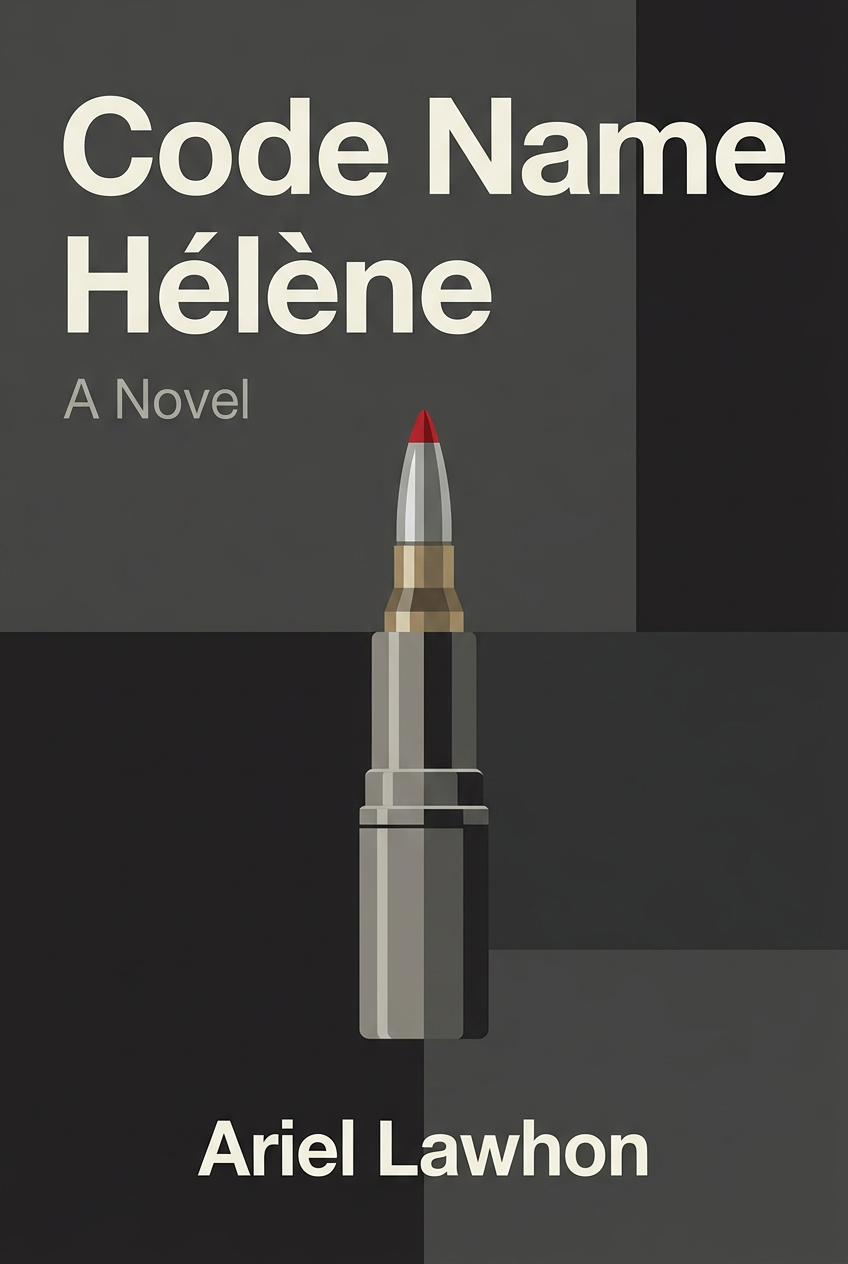
Code Name Hélène book cover

The Script

In the underground world of espionage and resistance, a name is more than an identifier; it’s a tool. It can be a disguise, a weapon, or a shield. Consider the difference between a name stitched onto a uniform, a public declaration of allegiance and identity, and a name scribbled on a clandestine document, a temporary asset to be used and discarded. One is a statement of fact, a piece of a larger, official record. The other is a whisper, a fiction created for a specific purpose, designed to unlock a door, pass a checkpoint, or deliver a message. The uniform name belongs to a soldier in an army. The whispered name belongs to a spy, an operative whose very existence depends on the careful management of multiple, often contradictory, identities. What happens when one person must inhabit both roles at once, when the public hero and the secret agent are the same woman, each identity pulling her in a different direction?

The life of Nancy Wake was a masterclass in this very conflict. She was a decorated war hero, a public figure celebrated by Allied governments. She was also Hélène, Lucienne, and a dozen other names, a phantom who moved through occupied France, a leader in the Maquis so feared by the Gestapo that they put a five-million-franc price on her head. For author Ariel Lawhon, a writer fascinated by the hidden lives of historical women, Nancy Wake’s story was a puzzle of conflicting identities. Lawhon found herself piecing together the celebrated socialite, the devoted wife, the ruthless operative, and the compassionate leader, seeing one extraordinary individual navigating the brutal necessities of war by deploying every facet of her identity as a strategic weapon.

Module 1: The Power of Identity as a Weapon

Our first module explores how identity becomes a fluid, strategic tool in high-stakes environments. The protagonist, known by many names, shows us that who you are is less important than who you need to be in the moment.

The story opens with our hero, code-named Hélène, parachuting into occupied France. She is a member of the British Special Operations Executive, the SOE. Her mission is to organize, arm, and lead the local French Resistance, known as the Maquis. This is where we see our first core insight. Your identity must be an ever-shifting asset adapted to the mission at hand. Hélène herself states it plainly. Her identity changes based on what the situation demands. She has real names. She has fabricated names for forged documents. She has code names like Hélène, and even temporary handles like "Witch" for a single flight. This fluidity is a survival mechanism and a core principle of operational security.

This constant shifting of identity leads to a second crucial practice. Master the art of the convincing performance to navigate hostile territory. Hélène adopts a persona. When confronted at a checkpoint, she is Lucienne Carlier, a secretary from Marseille. Her clothes are too nice for a secretary. The guard is suspicious. So she improvises. She hints she’s a mistress on her way to meet a lover. She gives a flirtatious glance. The guard, now working with a stereotype he understands, lets her pass. She uses his own biases against him. The performance was more powerful than the papers in her hand.

But what happens when the performance isn't enough? What about the details you can't fake? This brings us to a fascinating point about institutional preparation. The SOE understood that deep authenticity, down to the smallest physical detail, is non-negotiable for survival. They taught agents to be French. They had to hold their cutlery like the French. They had to answer the phone like the French. The training was incredibly granular. Lawhon notes one stunning example. British dentists used lead fillings. French dentists used gold. An agent with the wrong fillings could be exposed in a single, unguarded moment. So, the SOE replaced their agents' fillings. This was about deep, cellular-level assimilation.

Finally, Lawhon shows us that the most powerful identity is the one built on your own terms. Nancy Wake, the real woman, was known for her sharp tongue and love of red lipstick. These were part of her leadership persona. Use personal trademarks to build a memorable, authoritative presence. Hélène applies red lipstick before a dangerous parachute jump, calling it "putting on my armor." Later, before a tense negotiation with a rival Resistance leader, she does the same. She explains that when men see a warrior, they prepare for a fight. But when they see a woman in lipstick, they are disarmed. They underestimate her. And in that moment of miscalculation, she gains the upper hand. Her lipstick was a weapon.

Module 2: The Unconventional Leader's Playbook

We've seen how Hélène uses identity. Now let's move to our second module: how she leads. Her environment is pure chaos. She has no formal rank, no established army. She leads through sheer force of will, pragmatism, and a playbook that would make a military academy instructor faint.

Her first challenge is earning respect. She is a woman in a world of hardened, suspicious men. They are farmers, mechanics, and factory workers who fled forced labor. They are not professional soldiers. This is where we find a key insight into her leadership style. Establish authority through decisive, and sometimes shocking, action. When a new recruit harasses her, Hélène puts a knife to his throat and another to his groin. She makes him repeat, "Madame is not to be touched." The message is brutally clear and spreads like wildfire. She commands respect.

Next, Hélène understands that in a guerrilla war, resources are everything. Her primary value to the Maquis is her connection to London. She is the one who can call for airdrops of weapons, money, and supplies. This gives her immense leverage. Control the flow of resources to enforce standards and command loyalty. One Resistance leader, Gaspard, is arrogant and reckless. His men are ill-disciplined. Hélène refuses to supply him. In a tense confrontation, she lays out her terms. Organize your men. Prepare escape routes. Accept my authority. She tells him plainly, "It comes from me or it does not come at all." He is forced to comply. Her control of the supply chain becomes her mechanism for enforcing strategic discipline.

But her leadership isn't just about threats and leverage. It’s also about moral clarity. She discovers that some of Gaspard’s men have raped two civilian women. Hélène is disgusted. This brings us to a powerful principle. Uphold a strict moral code to prevent your own side from becoming the enemy. She tells Gaspard that this act makes them "as evil as" the Nazis. She orders the five perpetrators to be executed by a firing squad. When one of her own men expresses discomfort at killing a fellow Frenchman, she offers to do it herself. She understands that without a clear moral line, the Resistance would lose its purpose and the support of the people. It’s a gut-wrenching decision, but it solidifies her role as not just a commander, but a moral leader.

Finally, Hélène’s leadership is defined by her absolute pragmatism. She faces constant political infighting. A colonel arrives from the Free French forces, trying to absorb her network into his own command. She refuses. Her mission is to fight Germans. Remain ruthlessly focused on the primary objective and avoid mission-derailing distractions. She tells her closest partner, Hubert, that the ground war has become political, and she refuses to get drawn into "that nonsense." She devises a plan to leave with her best men and join a more effective fighting group elsewhere. This focus on the mission, above ego and politics, is the cornerstone of her effectiveness.

Read More