All Books
Self-Growth
Business & Career
Health & Wellness
Society & Culture
Money & Finance
Relationships
Science & Tech
Fiction
Topics
Blog
Download on the App Store

Codependent No More

How to Stop Controlling Others and Start Caring for Yourself (Revised and Updated)

12 minMelody Beattie

What's it about

Do you feel responsible for everyone else's happiness but your own? This summary of Melody Beattie's groundbreaking classic, Codependent No More, offers you a path to break free from the cycle of controlling others and start prioritizing your own well-being. You'll learn to identify the key signs of codependency, understand its roots, and discover practical strategies for setting boundaries, detaching with love, and reclaiming your life. Uncover the tools to stop caretaking and start caring for the most important person in your life: you.

Meet the author

Melody Beattie is one of the most beloved and influential self-help authors of our time, having sold millions of books and helped generations of readers. Her groundbreaking work, Codependent No More, was born from her own painful experiences with addiction, loss, and the overwhelming desire to fix others. Through her journey of survival and recovery, Beattie discovered the profound, life-changing wisdom she now shares, offering a path for others to find their own freedom, healing, and self-care.
Listen Now

Opens the App Store to download Voxbrief

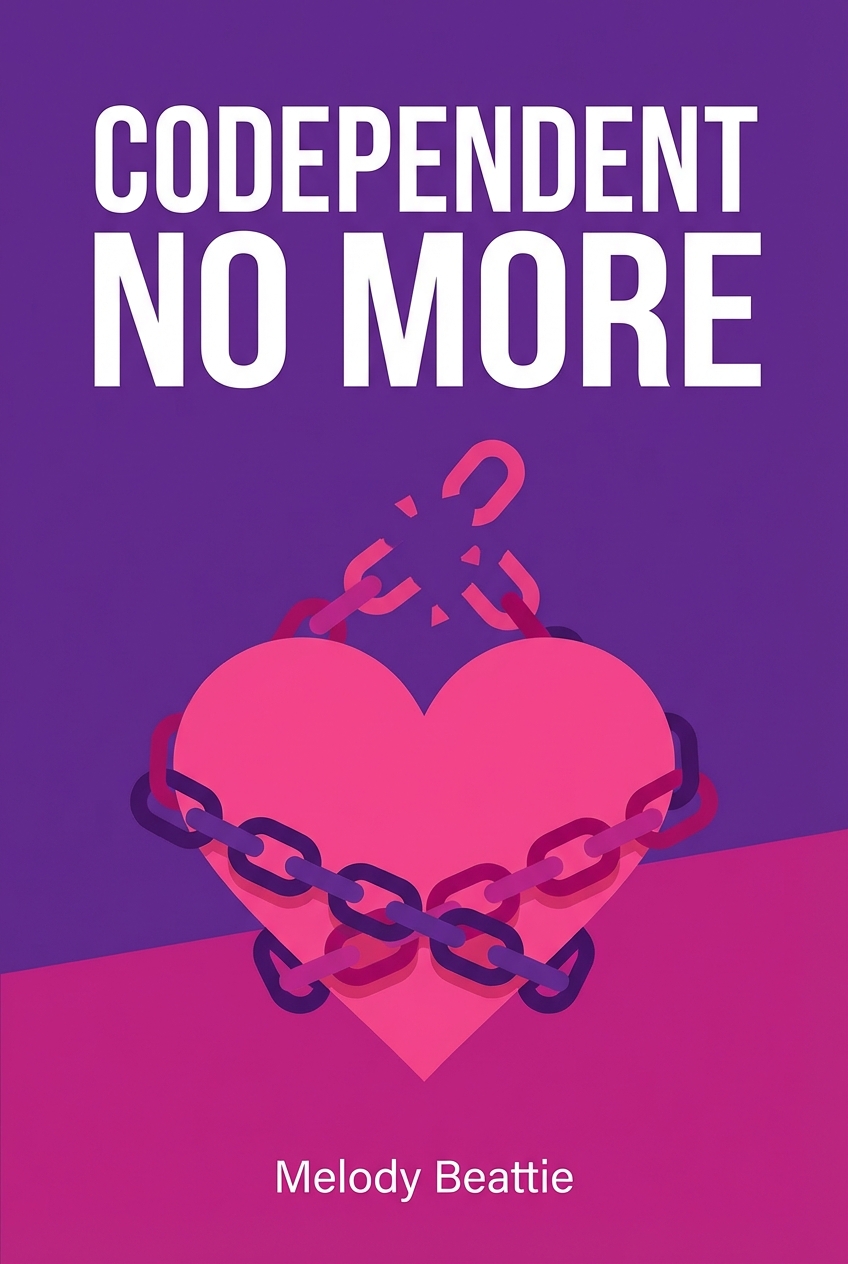
Codependent No More book cover

The Script

The volunteer at the animal shelter spends her weekends bathing matted dogs and coaxing terrified cats from the backs of their cages. She tells friends it’s because she loves animals, but the truth is heavier. She feels a compulsive need to fix what is broken, to soothe what is scared, to be the sole reason a desperate creature finally feels safe. Her own needs—for rest, for joy, for a quiet afternoon—are always secondary. She pours herself out until she is empty, believing her value is measured by how much she can give to those who cannot give back. She is a rescuer, but she is also drowning, pulled under by the weight of a love that demands her own sacrifice.

This feeling—this powerful, draining impulse to manage, fix, and control the lives of others at the expense of one's own—is a quiet epidemic. It was a pattern Melody Beattie knew intimately, not from a textbook, but from the inside of her own life. After a decade tangled in addiction, loss, and the consuming chaos of others' problems, she found herself in recovery, not just from substance abuse, but from a lifetime of caretaking. As a journalist, she began documenting the stories she heard in support groups, weaving them with her own raw experiences. She was trying to name the unnamed pain that she and so many others felt, creating a lifeline for those who, like her, had been loving someone else to death.

Module 1: The Anatomy of a Codependent

So, what does codependency actually look like? It's a much broader pattern of behavior and thinking that can show up anywhere. The core of it is a profound loss of self.

At its heart, codependency is an obsessive focus on another person’s life, problems, and behavior. You might know every detail of your partner's struggles but be completely disconnected from your own feelings. You can list everything they should do, but you can't identify what you need or want. This obsession is a full-time mental job that consumes your energy, leaving you with nothing for your own life. Beattie gives the example of a woman who could recount her husband's every drink and misdeed but drew a blank when asked about her own day or how she felt. Her reality was defined entirely by his actions.

This leads to the next critical insight. Codependent behaviors are survival tactics that have become self-destructive. Think about it. If you live in a chaotic environment, trying to control things feels like a logical response. If honesty is met with rage, manipulation might seem like the only way to get your needs met. Beattie explains that behaviors like nagging, snooping, or making threats are desperate attempts to create order in a world that feels completely out of control. The problem is, these tactics don't work. And worse, they trap you. Maria, a woman in the book, quit her job and isolated herself to monitor her husband's drinking. She thought she was controlling him, but in reality, his addiction was controlling her.

And here's the thing. This intense focus on others creates a paradoxical dependency. Codependents appear strong but feel helpless. On the outside, you might be the responsible one, the caretaker, the person everyone relies on. You're the tower of strength. But internally, you feel powerless. Your emotional state is entirely tied to the other person's moods and choices. Patricia, an adult child of an alcoholic, dedicated her life to her family, abandoning her career and hobbies. She was the rock everyone leaned on, but she confessed she was "falling apart" inside. Her sense of self had completely eroded. She was living for everyone but herself.

Finally, Beattie identifies a painful, repeating pattern at the center of these dynamics. Codependents get trapped in the "Karpman Drama Triangle," cycling between three roles: Rescuer, Persecutor, and Victim. It starts with a rescue. You do something you don't want to do, driven by guilt or a need to feel indispensable. Maybe you cover for a coworker who missed a deadline or constantly lend money to a friend who is bad with finances. Soon, resentment builds. You become the Persecutor, angry that your "help" isn't appreciated or that the person isn't changing. And finally, you land in the Victim role, feeling used, helpless, and full of self-pity. You've created your own misery by being self-abandoning.

Module 2: The Art of Detachment

We've explored the problem. Now, let's turn to the solution. Beattie argues that the first and most crucial step in recovery is learning to detach. This is a word that can feel cold, but in this context, it's an act of profound self-preservation and love.

Detachment means releasing your mental and emotional grip on people and problems you cannot control. It's the conscious choice to stop the obsession, the worry, and the endless attempts to manage another person's life. Think of it this way: worry is wasted energy. It doesn't change the outcome. It only depletes your ability to live your own life. Detachment is redirecting that energy back to the one person you can change: yourself. Beattie shares the story of a late-night call from a stranger, a woman consumed with her husband's behavior. Instead of getting drawn into the drama, Beattie models detachment by asking, "What do you need to do to take care of yourself?" This simple question shifts the focus from the unsolvable problem of another person to the solvable one of self-care.

Building on that idea, you have to realize that you are not a puppet. You can choose not to react to external chaos. Codependents often live in a state of constant reaction. Someone's bad mood ruins your day. A critical comment sends you into a spiral of self-doubt. You've been conditioned to believe you must react. But you don't. Recovery involves creating a space between a trigger and your response. In that space lies your freedom. Beattie suggests a practical process: when you feel that familiar pull of anxiety or anger, pause. Do nothing. Go for a walk, breathe deeply, or call a trusted friend. Make a decision only when you've regained your inner peace. You can learn to hold your own emotional note, even when the rest of the chorus is off-key.

This brings us to a hard truth about control. The more you try to control others, the more you become controlled by them. Your life becomes a series of reactions to their choices. You wait by the phone. You check their location. You cancel your plans because you're worried about what they might do. Your freedom is gone. The illusion of control is a powerful one, but it's just that—an illusion. People will do what they're going to do. The only true control you have is over your own actions and your own peace of mind. The Al-Anon slogan captures this perfectly: you didn't cause it, you can't control it, and you can't cure it. Accepting this is liberating. It allows you to drop the rope in the tug-of-war and walk away.

So here's what that means in practice. Detachment empowers others by allowing them to face their own consequences. When you rescue someone, you are sending a subtle message: "You are not capable of handling this." You rob them of the opportunity to learn and grow. When you stop rescuing, the other person is forced to confront the reality of their own choices. This might be painful for them. They might get angry. But it's also the only way they can find their own motivation to change. Your recovery can be the catalyst for theirs, because you stopped getting in the way of them fixing themselves.

Read More