All Books
Self-Growth
Business & Career
Health & Wellness
Society & Culture
Money & Finance
Relationships
Science & Tech
Fiction
Topics
Blog
Download on the App Store

Cursed Boys and Broken Hearts

11 minAdam Sass

What's it about

Ever been ghosted right after a perfect first date? Imagine if that wasn't just bad luck, but an actual curse. This summary shows you how one boy fights back against a magical hex that dooms every relationship he starts, turning his romantic life into a disaster zone. Learn how to break free from your own dating curses, magical or not. You'll discover how to spot toxic patterns, reclaim your confidence after a heartbreak, and team up with your friends to turn romantic ruin into a powerful quest for self-love and a real, lasting connection.

Meet the author

Adam Sass is an award-winning author whose debut, Surrender Your Sons, was named a Best Book of 2020 by Kirkus Reviews and a Best YA Book of the year by Entertainment Weekly. His expertise in crafting thrilling, heartfelt stories for queer teens comes from his own experiences as a gay man and his background in screenwriting and musical theatre. Sass infuses his work with the drama, humor, and authenticity that have become his signature, creating unforgettable characters and worlds for his readers.
Listen Now

Opens the App Store to download Voxbrief

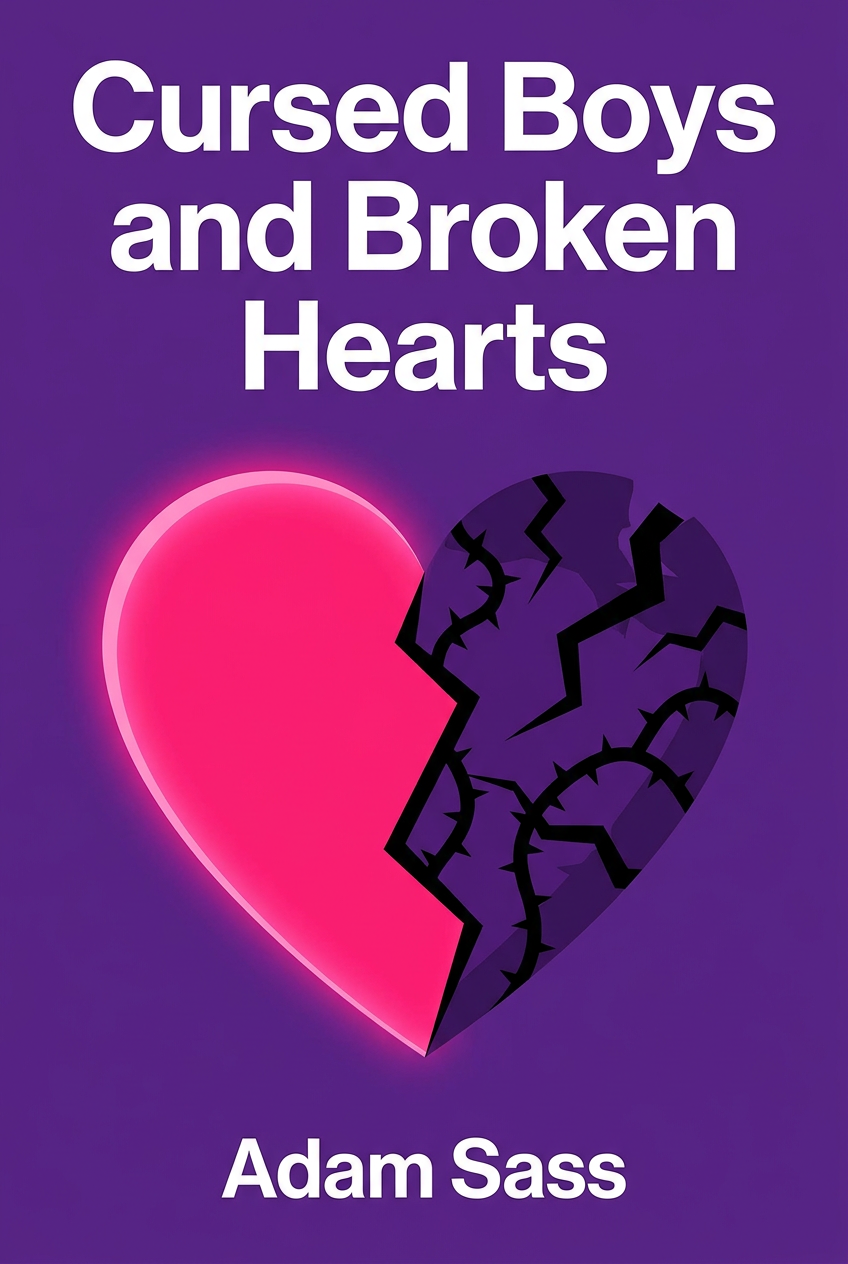
Cursed Boys and Broken Hearts book cover

The Script

There’s a unique, quiet tragedy that unfolds at the edge of every high school dance floor. Under the spinning disco ball, you see the couples—the ones who seem to have been handed a script for their lives, their steps perfectly in sync. But just beyond the light, in the shadows, are the wallflowers. They aren’t just sitting out a dance; they’re watching a performance of a life they feel excluded from. For them, the evening is a confirmation of a deeply felt, unspoken fear: that they’re not just unchosen, but fundamentally un-choosable. The music swells, the couples laugh, and the wallflower feels the gap between themself and the world widen into a chasm, wondering if they’ll ever learn the steps to a song everyone else seems to already know by heart.

This feeling—of being on the outside looking in at a celebration you’re told you should want—is precisely what author Adam Sass wanted to dismantle. Having grown up queer in a small town, he was intimately familiar with the role of the outsider at the party, particularly when it came to traditional high school milestones like prom. He noticed that queer characters in fiction were often relegated to the sidelines, serving as the witty best friend but rarely getting to be the romantic hero. Sass wrote "Cursed Boys and Broken Hearts" to give those wallflowers their own epic love story, flipping the script so the boy who feels like a sidekick finally gets to be the star of his own romantic comedy.

Module 1: The Anatomy of a Curse

Our protagonist, Grant Rossi, is spiraling. After a brutal breakup, he sees himself as a "cursed boy," a "beast" destined for loneliness. This is a deep dive into how heartbreak rewires our self-perception. Grant is a talented fashion designer, but his creative spark is gone. He believes his ex didn't just leave; he stole Grant's passion along with his heart. This is the first powerful insight. A profound personal loss can poison your professional identity. Grant can't separate the pain of the breakup from his ability to create. His work feels tainted by the memory of his ex.

So what happens next? Grant’s self-loathing becomes a physical state. He describes his "wretched sad boy fragrance" and lack of energy to even wash his clothes. He has defaced a photo of himself, scratching out his own happy face because he can't stand the memory of a joy he now believes was a lie. This leads to a critical realization. Your internal narrative dictates your reality. Grant has built a story where he is the villain. He is the "Training Boyfriend," the one guys date right before they find their true love. By believing this narrative, he makes it real. He isolates himself, pushes people away, and acts in ways that confirm his own worst fears.

This self-imposed curse is a powerful shield. It protects him from vulnerability. If every relationship is doomed from the start, there's no risk in trying. This is a trap many of us fall into. We use past failures to justify future inaction. And here's the thing. The belief in a "curse" is often a way to avoid personal agency. It’s easier for Grant to blame a supernatural force or a family myth than to confront his own patterns of self-sabotage, his fear of being abandoned, and his role in the breakdown of his relationships. His journey begins when he is forced to confront this. He must unpack whether he is truly cursed, or if he is the one holding the pen that writes his own miserable fate.

Module 2: The Geography of Pain and Healing

Now, let's move to the second module and explore how physical space shapes our emotional state. Grant flees his life in Chicago. He’s trying to escape the memories haunting every street corner. The train where he met his ex. The sandwich shop from their first date. He believes he can find a "fresh start" by relocating to his family's B&B, Vero Roseto. A place untouched by his romantic failures. This brings us to a key concept. Emotional trauma physically taints familiar locations. We've all felt this. A song you can't listen to anymore. A restaurant you avoid. Grant's impulse is to run, seeking a neutral ground where he can heal.

But what happens when he gets there? Vero Roseto is not the pristine sanctuary he remembers. The family business is dying. The gardens are overgrown. The buildings are in disrepair. The physical decay of the estate becomes a perfect mirror for his own internal state. This is a powerful parallel. External environments often reflect our internal emotional landscape. Grant initially rejects the place, saying, "I don’t think it would help me to be around something that’s dying." He sees his own hopelessness reflected in the crumbling facade of his family home.

However, this shared brokenness creates an unexpected opportunity. The basement of Vero Roseto, a place of childhood mischief and authentic self-expression, becomes his sanctuary. It's a space that was always a bit "ugly" and "beastly," just like he feels. And here’s where the shift happens. Rebuilding a physical space is a powerful tool for rebuilding your own life. Grant, along with his estranged childhood best friend Ben, is tasked with saving the B&B. The act of clearing debris, repairing structures, and designing the upcoming Rose Festival forces him to engage with the present. He can't stay lost in his head when there's a deck to be built. This practical, tangible work becomes a form of therapy. It gives him a renewed sense of purpose and agency, proving that sometimes, the only way to fix what's broken inside is to start by fixing something outside.

Read More