All BooksSelf-GrowthBusiness & CareerHealth & WellnessSociety & CultureMoney & FinanceRelationshipsScience & TechFiction
Download on the App Store

Invisible Monsters

12 minChuck Palahniuk

What's it about

Ever feel like you're invisible unless you're perfect? What if shedding your identity was the only way to truly be seen? This is your guide to dismantling the persona you've built and discovering the shocking, liberating power of starting over from nothing. You'll learn why we chase beauty and fame, and how these pursuits can trap you in a life that isn't your own. Uncover the radical freedom that comes from destroying your past, embracing anonymity, and reinventing yourself moment by moment on your own terms.

Meet the author

Chuck Palahniuk is the award-winning author of the generation-defining novel Fight Club, renowned for his transgressive fiction that challenges societal norms and explores dark, satirical themes. A former diesel mechanic and hospice volunteer, Palahniuk draws from his experiences with fringe communities and the human condition to craft his uniquely visceral and unforgettable narratives. His minimalist style and shocking plot twists, honed through his involvement with a writing group, give his work like Invisible Monsters its signature, unsettling power.
Listen Now
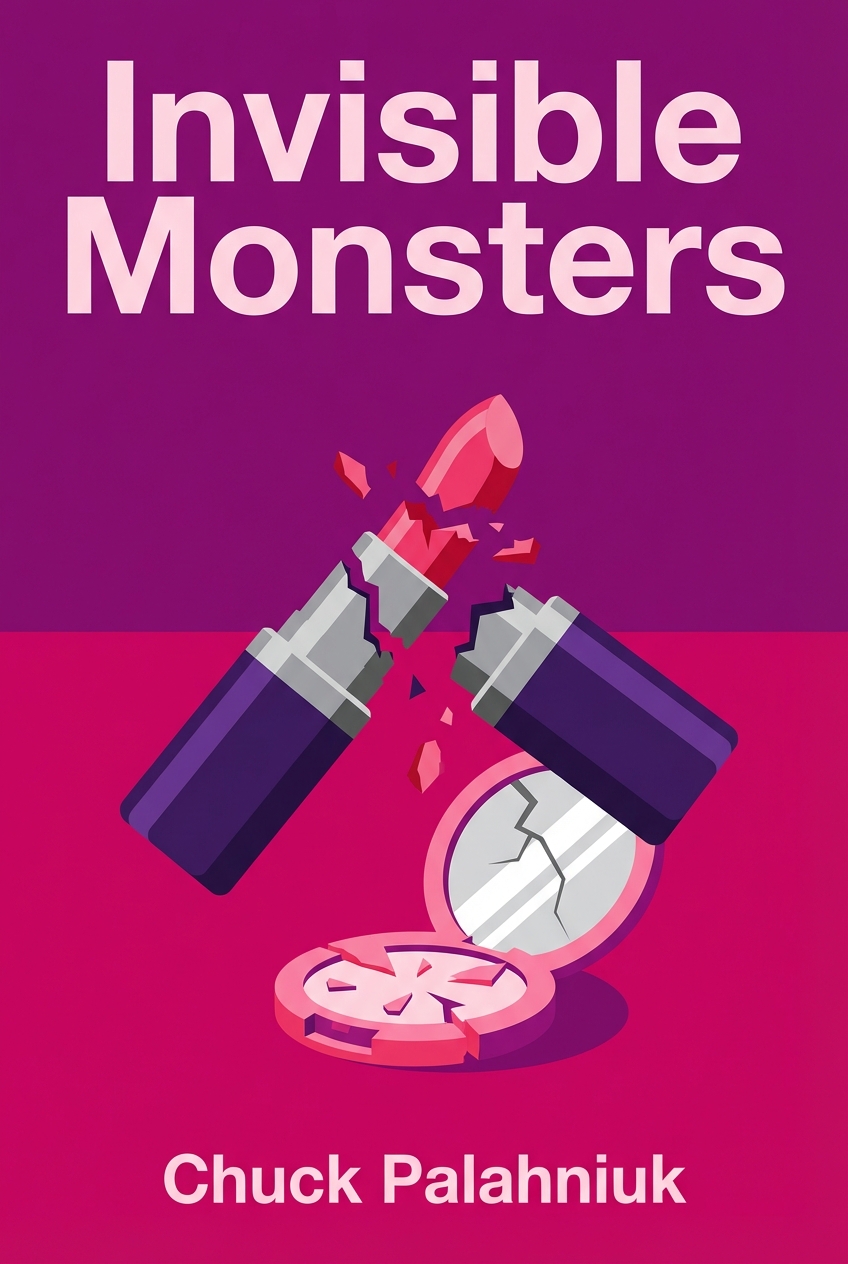
Invisible Monsters book cover

The Script

We treat identity as an anchor, a fixed point of reference in a chaotic world. But what if it’s actually a costume, and the real crisis is the horrifying realization that there was never a 'self' to lose in the first place? This is about discovering the mask is all there is. We are taught that self-discovery is a process of excavation, of digging down to find a solid, authentic core. The truly unsettling idea is that this excavation reveals nothing but an empty stage. The more desperately we try to define ourselves—through beauty, tragedy, or rebellion—the more we are simply switching out one flimsy set of props for another, performing for an audience that may not even exist.

This profound sense of identity as a terrifyingly blank canvas is precisely what haunted Chuck Palahniuk in the mid-1990s. While working as a diesel mechanic by day, he spent his nights volunteering in hospices and participating in support groups, immersing himself in worlds where people's carefully constructed identities were stripped away by crisis. He saw how storytelling became a tool for radical reinvention—a way to erase one life and write another into existence. Frustrated by the publishing industry's rejection of his other work, which they deemed too dark, Palahniuk decided to write something even more disturbing and unpublishable as an act of defiance. The result was "Invisible Monsters," a narrative born from the observation that the most extreme acts of self-destruction are often just desperate, misguided attempts at creation.

Module 1: Identity as a Commodity

The novel opens with a brutal, visceral scene: a wedding in flames, a character bleeding out, and a narrator whose face has been shot off. This is an immediate immersion into the book's central argument: identity is a product. It's something we build, sell, and consume. The narrator, a former fashion model, reflects that everyone around her is a construct. Their looks, their personalities, their very essence can be traced back to a commercial or a magazine spread. This leads to a chilling insight: we are all interchangeable products, easily replaced. Killing someone, she muses, is like burning a book or erasing a computer disk. It’s just deleting a copy. This commodification extends to our bodies. The characters treat pharmaceuticals like groceries, raiding medicine cabinets for painkillers and hormones. They see bodies as projects to be altered through surgery, with procedures like vaginoplasty and rib removal discussed as casually as buying a new accessory.

This creates a world where authenticity is irrelevant. What matters is the performance. A key character, Brandy Alexander, is a testament to this idea. She's a meticulously crafted persona, a self-proclaimed princess who has surgically and stylistically reinvented herself. She teaches the narrator a critical lesson: concealment and mystery are sources of power. Brandy forces the disfigured narrator to wear veils, creating intrigue. The veil becomes "lingerie for your face," a tool that transforms the narrator from a victim into an enigma. By hiding your true self, you control how others perceive you. You become the great unknown, and that mystery generates desire and influence.

And here’s the thing, this performance is for ourselves. The characters feel most real when they have an audience. The narrator and her friend Evie stage dramatic, confessional scenes in department store display rooms. They invent tragic backstories to elicit attention from strangers. Why? Because, as Evie says, "I don't feel real enough unless people are watching." In this world, an audience validates existence and amplifies emotion. Private life becomes a public spectacle, and honesty becomes easier with a crowd. The characters are trapped in what the book calls a "reality loop," constantly watching themselves on monitors, obsessed with their own image. This is a sharp critique of a media culture that encourages us to curate our lives for consumption, turning us into both the performers and the audience of our own stories.

Read More