All Books
Self-Growth
Business & Career
Health & Wellness
Society & Culture
Money & Finance
Relationships
Science & Tech
Fiction
Topics
Blog
Download on the App Store

Flowers

16 minCarolyne Roehm

What's it about

Do you dream of creating stunning floral arrangements but feel intimidated by the process? Imagine transforming simple blooms from your garden or local market into breathtaking displays that look professionally designed. This guide unlocks the secrets to making that vision a reality, one stem at a time. Learn from master stylist Carolyne Roehm as she demystifies the art of flower arranging. You'll discover her practical techniques for selecting the right vases, conditioning flowers for longevity, and balancing color and texture. Get ready to gain the confidence and skills to fill your home with beautiful, personal floral creations for any season or occasion.

Meet the author

Carolyne Roehm is a celebrated lifestyle icon and former fashion designer whose work for Oscar de la Renta established her as a preeminent voice in American style. Turning her legendary eye for color, proportion, and beauty from the runway to the garden, Roehm has spent decades cultivating and documenting her own magnificent flowers. Her passion for horticulture, combined with her unparalleled design expertise, provides the foundation for her stunning and instructive approach to floral arranging and appreciation.
Listen Now

Opens the App Store to download Voxbrief

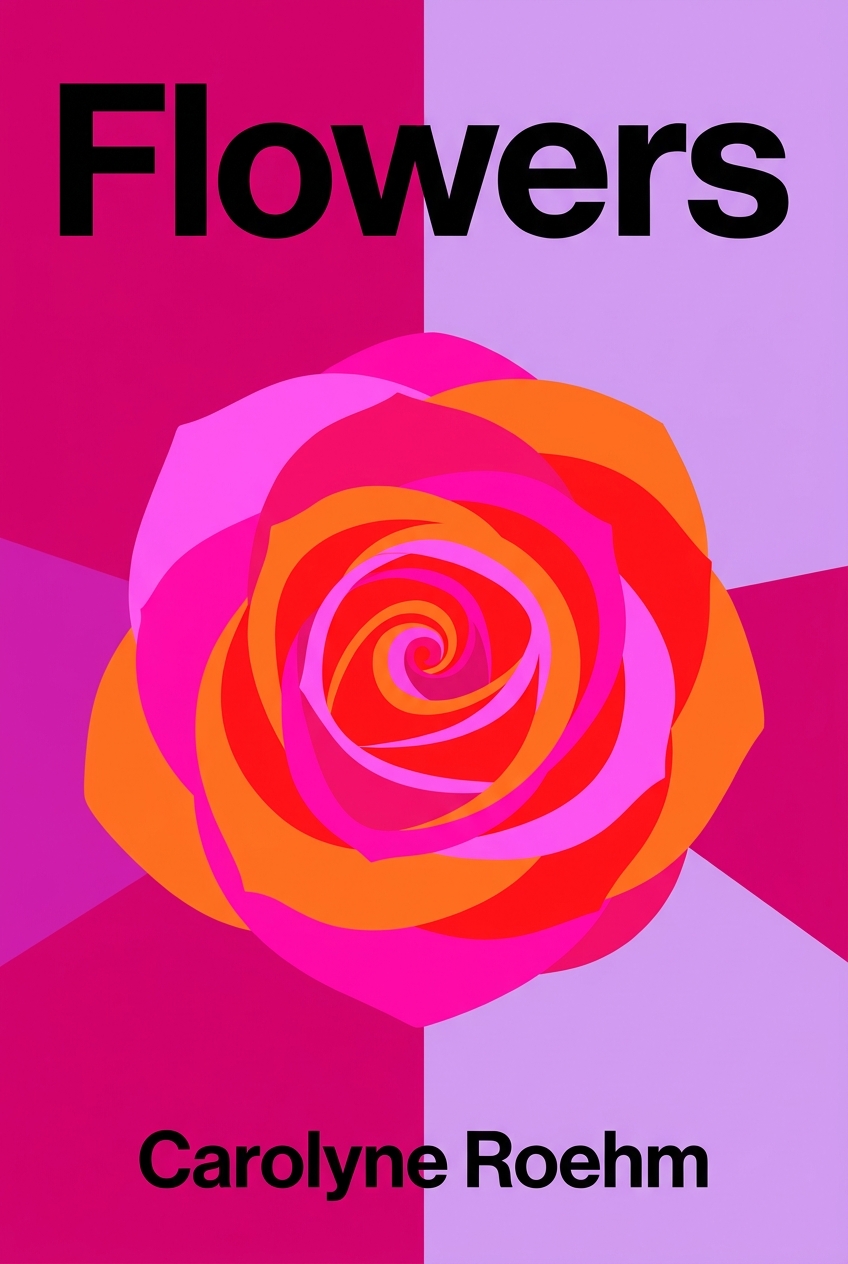
Flowers book cover

The Script

In the sprawling gardens of a grand estate, two groundskeepers are given the same task: prepare the rose bushes for the annual summer gala. The first, a young apprentice armed with the latest horticultural shears and a botanical chart, meticulously prunes each bush according to textbook diagrams. He removes any branch that deviates from the ideal form, striving for a uniform, perfect presentation. His work is precise, efficient, and technically flawless. The second, the estate’s long-serving head gardener, walks the same rows with a weathered pair of secateurs and a quiet, observant eye. He pauses at each bush, not just seeing its form, but sensing its history—the way a particular branch bends toward the morning sun, the resilience in a stem that survived a late frost. He makes fewer cuts, sometimes leaving a 'flawed' or asymmetric branch because he knows it will produce the most fragrant bloom. When the gala arrives, the apprentice's roses are beautiful in their uniformity, a testament to control. But it is the head gardener's roses—varied, character-filled, and breathtakingly alive—that guests gather around, their arrangements telling a story of sun, soil, and season.

This intuitive, story-driven approach to beauty is the lifeblood of Carolyne Roehm's work. After a storied career as a high-fashion designer for Oscar de la Renta and with her own label, Roehm retreated from the relentless pace of the fashion world to her historic Connecticut home, Weatherstone. There, surrounded by acres of gardens she personally cultivated, she found a different kind of design language—one dictated by the natural, fleeting artistry of flowers. This book, "Flowers," is an intimate invitation into her world, born from a desire to capture the ephemeral beauty she spent years cultivating and to share the profound joy found in arranging the imperfect, living art from her own garden.

Module 1: The Drive for More—Intelligence, Acceptance, and the Human Condition

The story begins with a simple, powerful desire. Charlie Gordon, a man with an I.Q. of 68, wants one thing: "I want to be smart." This is a burning need tied to his very sense of self-worth.

The scientists, Dr. Strauss and Professor Nemur, see this drive as a key asset. They are looking for a human subject for a radical new surgery. An operation that could triple a person's intelligence. They've already succeeded with a mouse named Algernon. Now they need a human volunteer. Professor Nemur is hesitant. He worries about the risks. The experiment might fail. It could even leave the subject worse off. But Dr. Strauss argues that Charlie is the perfect candidate precisely because of his motivation. Motivation is the critical catalyst for transformation. Charlie's "tremendus motor-vation to lern" makes him unique. He isn't just willing; he is desperate. This desperation fuels his courage to undergo a procedure no one fully understands.

This brings us to a core tension in the book. Charlie believes intelligence is the key to social connection. He sees his coworkers at the bakery, Joe and Frank, talking and laughing. He wants to join in. He thinks, "If your smart you can have lots of frends to talk to and you never get lonley." For him, intelligence is a practical tool for escaping isolation. But here's the thing. His "friends" are already laughing at him, not with him. They use his name as a verb—to "pull a Charlie Gordon" means to do something stupid. Charlie doesn't understand this cruelty yet. He only sees the surface-level camaraderie and yearns for it.

This introduces the second key idea: Initial perceptions of intelligence are often comparative and flawed. Charlie's first real benchmark for smarts is Algernon, the lab mouse. He races Algernon in a maze puzzle and loses every single time. He is astonished, writing, "I dint know mice were so smart." This experience is humbling. It recalibrates his understanding. Intelligence is a measurable, functional skill he currently lacks.

And it doesn't stop there. The tools used to measure him are just as alienating. The famous Rorschach test, which he calls the "raw shok test," is a source of deep frustration. He sees only inkblots, not the hidden pictures the tester wants him to find. He concludes he failed the test. The entire process of psychological evaluation feels like a trick. The tests are designed by and for a neurotypical world he can't yet access. Standardized tests can alienate the very minds they seek to measure. This creates a gap between the objective data the scientists collect and Charlie's subjective, lived experience of his own mind. He is a subject in an experiment, an object to be measured, but his humanity is already being overlooked.

Read More