All Books
Self-Growth
Business & Career
Health & Wellness
Society & Culture
Money & Finance
Relationships
Science & Tech
Fiction
Topics
Blog
Download on the App Store

Focused

13 minAlyson Gerber

What's it about

Do you ever feel like your brain is a browser with way too many tabs open? If you're constantly battling distraction and struggling to keep up, you're not alone. Discover how one girl's journey to understand her own restless mind can unlock the secrets to finally taking control of your focus. Learn to recognize the signs of ADHD and find practical strategies for managing your attention, not just in school but in all parts of your life. This story provides a powerful roadmap for turning your unique brain into your greatest strength, helping you build confidence, improve relationships, and achieve your goals.

Meet the author

Alyson Gerber is the critically acclaimed author of books for young readers that explore learning disabilities and mental health, drawing directly from her own experiences with ADHD. Growing up, Alyson felt defined by her challenges in school, which inspired her to write stories that help kids feel seen and understood. Her work empowers young readers by showing them they are not alone and that their unique brains are a source of strength.
Listen Now
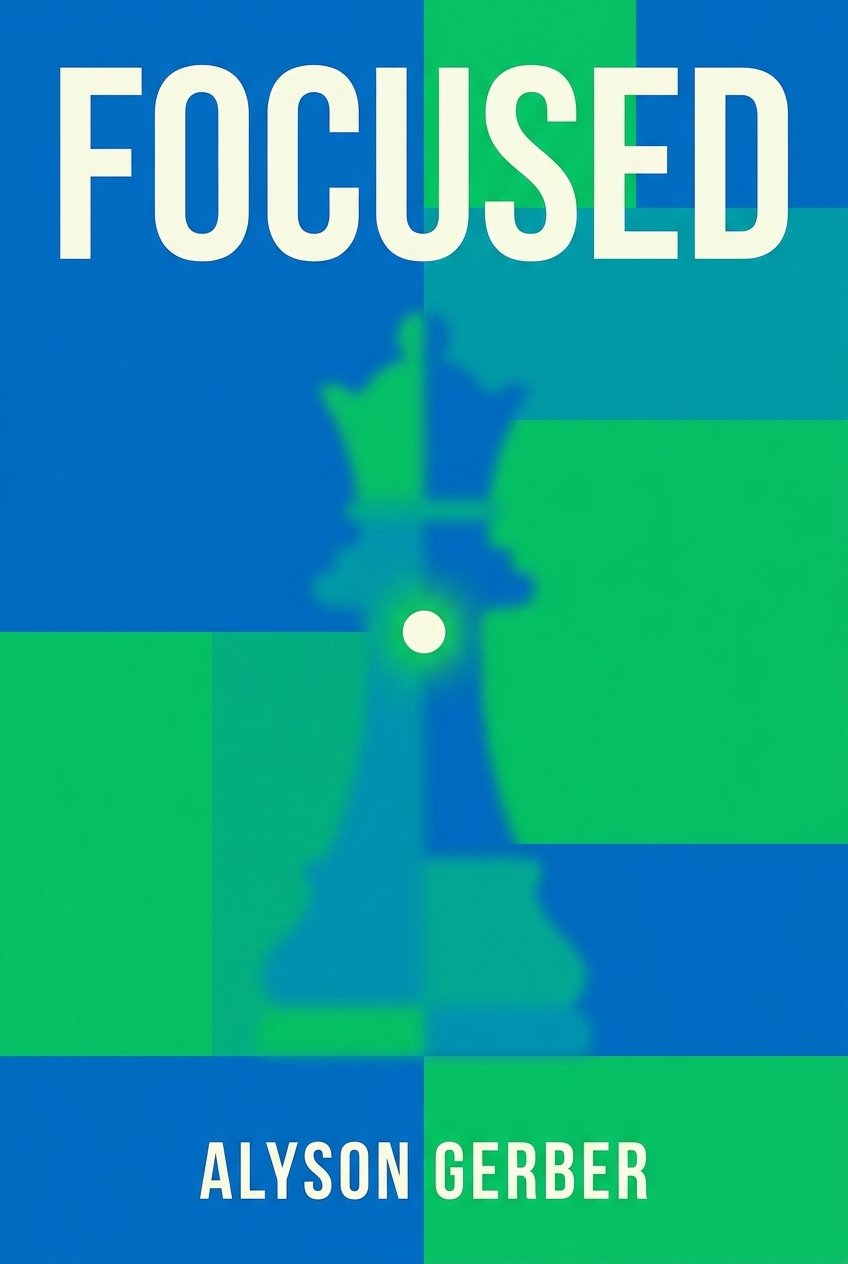
Focused book cover

The Script

In a middle school classroom, two students are given the same set of instructions for a creative writing assignment. The teacher asks them to build a world on paper. One student immediately begins to sketch out characters, her pen flying as she invents names, places, and histories. Her page fills with a sprawling, vibrant universe, ideas branching off in every direction like a firework display. The other student stares at the blank sheet. Her mind is just as active, but the ideas don't form lines; they collide. A character's name sparks a memory of a cartoon, which reminds her of a song, which makes her think about what's for lunch. Her world is just as rich, but it's a swirling vortex of color and noise inside her head, impossible to pin down and organize on the page. Her brain is simply running a different kind of race, one with hurdles that no one else can see.

This feeling of a brain at war with itself is a reality author Alyson Gerber knew intimately. Growing up, she was the student who desperately wanted to succeed but constantly felt like she was falling short, her focus scattering like dandelion seeds in the wind. She struggled through school, always feeling like she was trying twice as hard for half the results. It wasn't until her own child was diagnosed with ADHD that Gerber finally found the name for the invisible struggle that had defined so much of her own life. She wrote "Focused" to give a voice to that experience, creating the story she needed to read as a child—a story that shows young readers they are simply wired differently, and that understanding your own mind is the first step toward harnessing its unique power.

Module 1: The Deep Work Hypothesis — Your New Superpower

The central argument of the book is what Newport calls the Deep Work Hypothesis. It’s a simple but powerful idea with two parts. First, the ability to perform deep work is becoming increasingly rare. Second, this same ability is becoming increasingly valuable in our economy. This growing gap between rarity and value creates a massive opportunity for those who are willing to cultivate it.

Think about the modern knowledge worker. A 2012 McKinsey study found that the average employee spends over 60% of their week on electronic communication and internet searching. Nearly 30% is just email. This leaves very little time for the focused, cognitively demanding effort that truly moves the needle. This is the world of shallow work—tasks that are easy to replicate and create little new value.

So, here's the first key insight. The modern workplace is optimized for shallow, distracting activities. Open offices, instant messaging, and a culture of constant connectivity create what Newport calls a "metric black hole." It’s hard to measure the negative impact of distraction, so companies don’t. Instead, they reward "busyness as a proxy for productivity." Answering emails at 10 PM looks like dedication, even if it's just low-value activity. This culture of visible busyness actively pushes out the quiet, focused effort required for breakthrough thinking.

This leads to the core opportunity. Those who can systematically cultivate deep work will thrive professionally. As automation and outsourcing handle more routine tasks, the new economy rewards three types of people. First are the high-skilled workers who can creatively use complex machines, like data analyst Nate Silver. Second are the "superstars," the absolute best in their field, like programmer David Heinemeier Hansson. Third are the owners with capital to invest. For most of us, the path to joining the first two groups depends on two core abilities: the ability to quickly master hard things and the ability to produce at an elite level.

And here’s the thing. Both of these abilities depend on deep work. Learning a complex new skill requires intense, uninterrupted focus. Neurologically, this process of deliberate practice strengthens specific neural circuits through myelination. Distraction breaks this process. Likewise, producing high-quality work requires sustained concentration. Newport introduces the concept of attention residue, which is the idea that when you switch tasks, part of your attention stays stuck on the previous one. Deep work minimizes this residue, allowing you to operate at your cognitive peak. The takeaway is clear. In a world drowning in shallows, depth is a superpower.

Read More