All Books
Self-Growth
Business & Career
Health & Wellness
Society & Culture
Money & Finance
Relationships
Science & Tech
Fiction
Topics
Blog
Download on the App Store

Fox and Furious

A Novel

18 minRita Mae Brown

What's it about

Ever wonder if your pets know more than they let on? In the charming Virginia countryside, a murder mystery is afoot, and the only witnesses might be the four-legged kind. Get ready to join a mystery where the clues are sniffed out by a clever pack of dogs and cats. You'll follow "Sister" Jane Arnold, the 70-something master of the Jefferson Hunt Club, as she and her animal companions investigate the suspicious death of a despised local. Uncover how a community's hidden tensions and long-buried secrets are brought to light, all through the unique perspective of the talking animals who see and hear everything. This isn't just a whodunnit; it's a tail-wagging, purr-fectly clever tale of animal instinct and human folly.

Meet the author

Rita Mae Brown is the bestselling author of the groundbreaking novel Rubyfruit Jungle and the beloved Mrs. Murphy mystery series, which has captivated readers for over three decades. An Emmy-nominated screenwriter and a master of foxhunting, she brings her deep, firsthand knowledge of Virginia's hunt country and its four-legged inhabitants to her wildly popular "Sister" Jane Arnold novels. Her unique combination of literary acclaim and equestrian expertise provides an authentic, thrilling glimpse into a world she knows intimately.
Listen Now
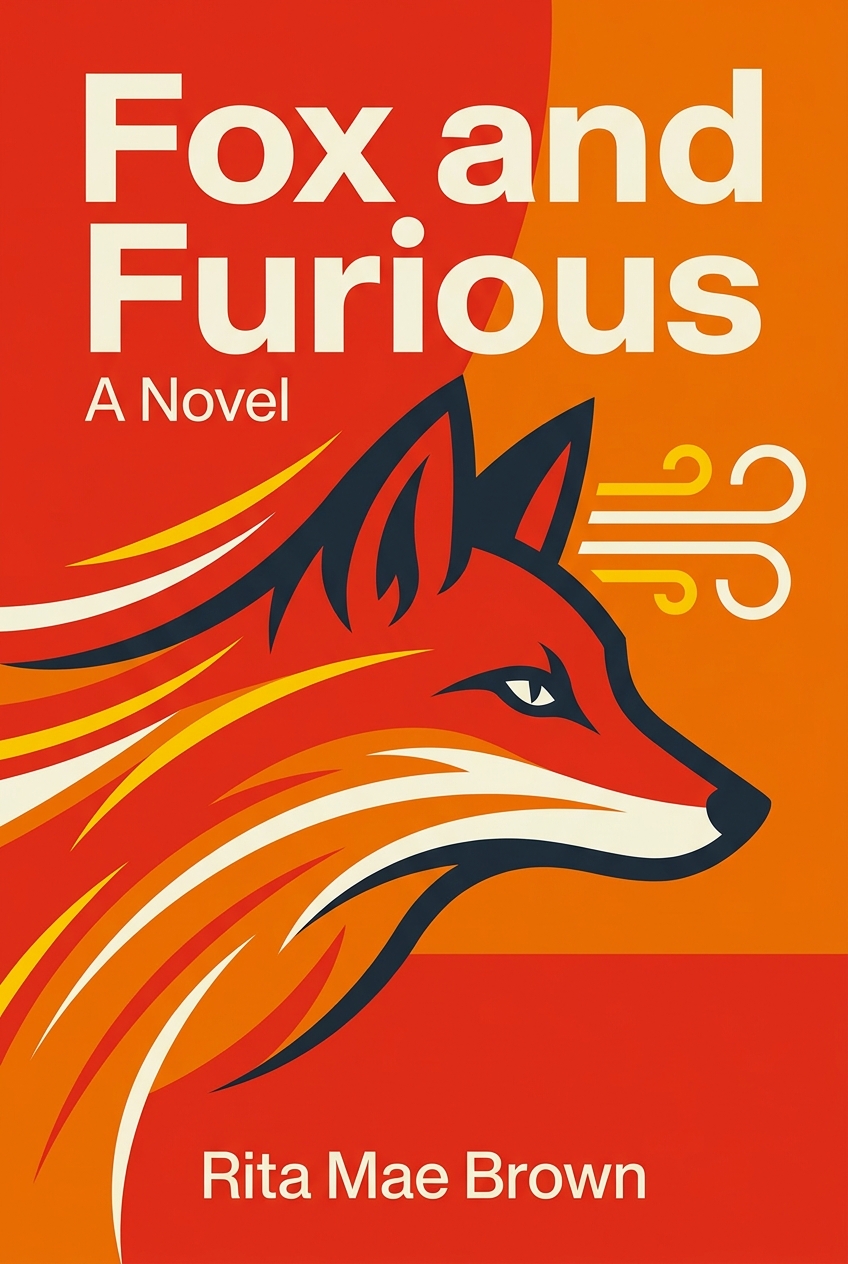
Fox and Furious book cover

The Script

At the edge of a frost-tipped Virginia field, a pack of hounds holds its breath, a mosaic of muscle and instinct waiting for a single, silent signal. Their world is one of ancient rules and immediate sensations: the scent of damp earth, the distant rustle of their quarry, the low thrum of a horse's whinny. To the casual observer, it's a scene of controlled chaos, a sport. But to the participants—human and animal alike—it’s a complex social drama playing out at speed. The lead hound is navigating pack politics, managing the ambitions of the younger dogs, and communicating in a language of yips and body-leans that her human counterparts can only guess at. The fox, far from being a simple victim, is a trickster playing a game on his home turf, using his deep knowledge of the land to outwit a force a hundred times his size.

This is a conversation. It’s a world where the lines between instinct and intellect, human and animal, blur into a shared, visceral story. Capturing this vibrant, unspoken dialogue is the life's work of Rita Mae Brown. As a Master of the Foxhounds of Oak Ridge Hunt for over a decade, Brown hasn't just observed this world from a distance; she has lived it from the saddle, in the kennels, and across the rolling hills of her native Virginia. Her 'Sister' Jane Arnold mystery series was born from a desire to translate the rich, hidden narratives she witnessed daily—the subtle hierarchies, the silent understandings, and the profound wisdom of the animals who are the central narrators of the drama. She writes from a place of deep respect and firsthand experience, giving voice to the creatures who see the human world with a clarity we often lack.

Module 1: The Hunt as a Social Operating System

The world of "Fox and Furious" revolves around the Jefferson Hunt. It’s a complex social structure where personal lives, history, and community roles are completely intertwined. Think of it as a living network, built on generations of shared experience.

The book makes it clear: Loyalty and shared history are the foundation of this community’s culture. Sister Jane Arnold, the Master of Foxhounds, has led the hunt for decades. Her leadership is a role fused with her personal life and history in the community. Her marriage to Gray Lorillard further cements this blend of the personal and the professional. The hunt is filled with these connections. For instance, the affair between Aunt Daniella Laprade and another member's grandfather decades ago still subtly shapes social dynamics today. The past is an active participant in the present. This tight-knit structure provides stability. But it also means that when conflicts arise, they reverberate through the entire network.

This leads to another key insight. The hunt serves as a cultural primer for understanding Virginia's social fabric. It’s a gateway for newcomers. When the county sheriff, an outsider from Ohio, wants to understand the local culture, Sister Jane’s advice is simple: learn to hunt. She tells him, "It’s the easiest way to understand Virginia." Why? Because the hunt is a microcosm of the region's values, hierarchies, and unspoken rules. Participation is a form of assimilation. We see this with Kasmir Barbhaiya, born in India and educated in England, who "fit right in" because he embraced the hunting tradition. But flip the coin. For the "nouveau riche" Crawford Howard, learning the hunt's etiquette was a difficult rite of passage, proving that social acceptance here must be earned through cultural fluency, not just wealth.

So what happens next? The structure of the hunt itself reinforces this social order. The hunt is governed by a strict hierarchy and specialized roles. It’s a formal system with a clear chain of command. At the top is the Master of Foxhounds, or MFH, like Sister Jane. She has the ultimate authority. Below her is the huntsman, who handles the hounds, and the whippers-in, who assist. Each role has specific responsibilities. This hierarchy is reinforced through a specialized language. Terms like "gone away" when a fox breaks cover, or "check" when hounds lose the scent, are precise commands that manage the hunt’s flow and ensure safety. Membership and status are also formalized. The Master alone can award "colors," the distinctive trim on collars or coats that signifies honor and full membership. It's a visual representation of one's place in the hierarchy.

Finally, and this is fascinating, animals are treated as integral members of the community with distinct personalities. They are characters with their own agency and relationships. The cast list includes not just humans but also J. Edgar Hoover, a box turtle, and Golliwog, a cat. Their interactions are noted as part of the farm's social life. Even the hounds are seen as individuals. "Strike hounds" are those who are best at finding a scent, while "tail hounds" are those who follow at the rear. These distinctions recognize their unique abilities and roles within the pack. This perspective elevates the entire ecosystem, showing a world where the connection between humans, animals, and the land is deep and respected.

Read More