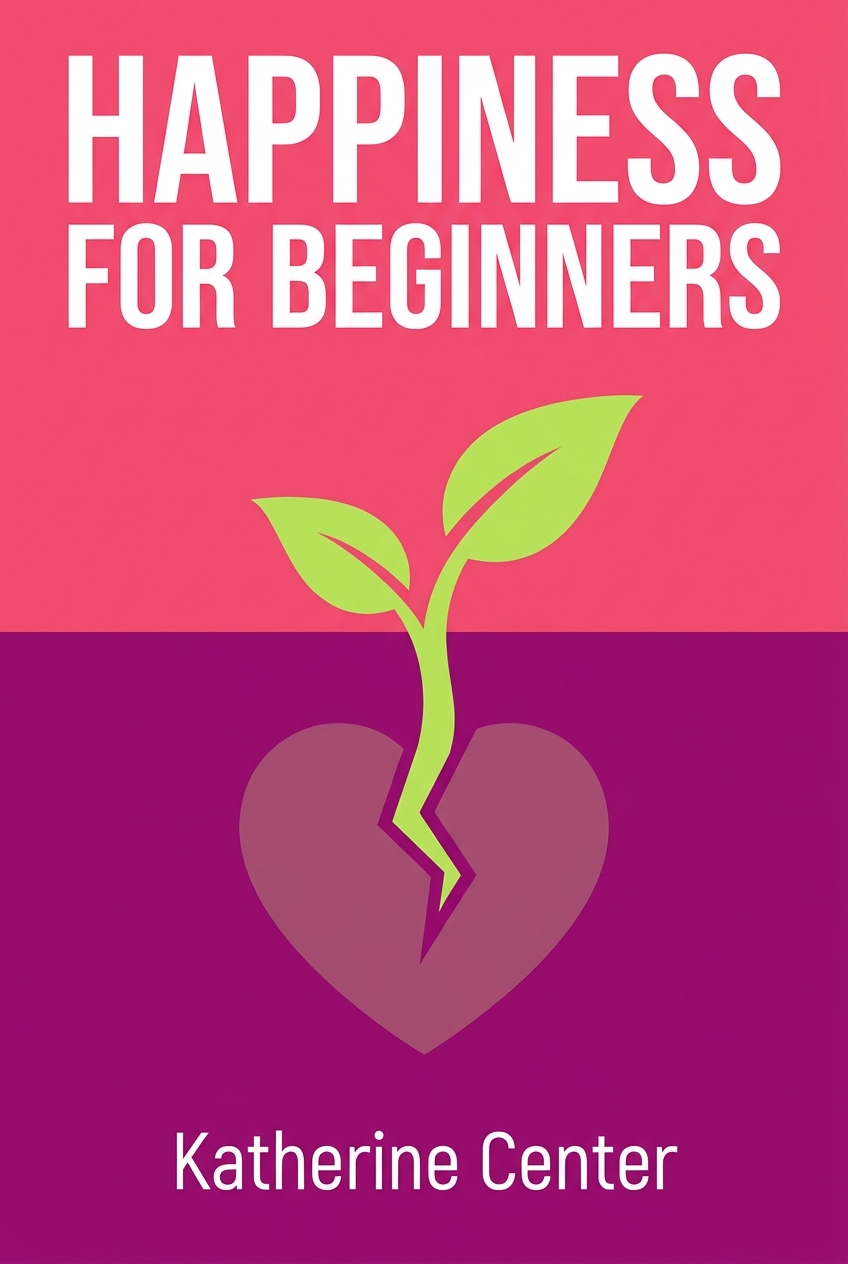
Happiness for Beginners
What's it about
Ready to stop waiting for happiness and start actively creating it? This summary of Katherine Center’s beloved novel shows you how one woman’s wild journey to reinvent herself can be your roadmap to finding joy, even when life feels like it's falling apart. Discover the powerful lessons Helen Carpenter learns on a grueling survivalist course after a messy divorce. You’ll uncover practical insights on embracing discomfort, the surprising strength found in vulnerability, and how to build resilience one small, brave step at a time. It’s your guide to finding happiness right where you are.
Meet the author
Katherine Center is a New York Times bestselling author whose novels, often called "hope-fiction," have been featured in People, USA Today, and Vanity Fair. A lifelong student of happiness, she was inspired to write this story after taking a wilderness survival course that challenged her both physically and emotionally. Center writes about love, resilience, and finding joy in unexpected places, drawing from her own belief that life is a privilege and even the hardest parts can lead to something beautiful.
Opens the App Store to download Voxbrief

The Script
Imagine you're trying to learn a new language, but instead of flashcards and grammar books, your instructor hands you a single, cryptic symbol and leaves the room. You can study it, turn it over, trace its lines, but without the key—the Rosetta Stone that connects the symbol to its meaning—it remains gibberish. This is how many of us approach major life changes. We feel the ache for something new, the desire to be a different, happier person, but we're left staring at the abstract symbol of 'happiness' with no practical steps to get there. We try new hobbies, new cities, new relationships, hoping one will magically unlock the code. But what if the process involves learning to read the language of yourself, even when it's uncomfortable, messy, and written in a dialect you've long forgotten?
Katherine Center found herself staring at that cryptic symbol after her own life took an unexpected turn. A writer known for her stories of resilience and hope, Center faced a personal crisis that made her question everything she thought she knew about finding joy. She realized that the path to happiness was a grueling hike through unfamiliar territory, requiring skills you didn't know you needed. This realization sparked the idea for Happiness for Beginners. She wanted to write a story about earning happiness—about a character who is forced to learn the practical, often painful, language of her own strength and capacity for joy, one difficult step at a time.
Module 1: The Myth of the Controlled Transformation
We often believe personal growth is a solo mission. A project we can manage with careful planning and execution. The protagonist, Helen, embodies this belief. Fresh off a devastating divorce and miscarriage, she designs a transformative experience for herself. She signs up for a famously grueling wilderness survival course in Wyoming. Her goal is simple: to shed her old, broken self and emerge tougher, wiser, and fundamentally "okay."
This brings us to a crucial insight. Your plan for self-reinvention will be immediately disrupted. Helen's vision of a solitary, spiritual journey shatters before it even begins. Her unreliable brother's goofy friend, Jake, announces he’s also on the trip. Her carefully constructed fantasy of a brave adventure with strangers is contaminated. He represents the very life she is trying to escape. This is the first sign that her quest for control is an illusion. The universe doesn't respect her itinerary.
Next, we see how we often misdiagnose the problem. Helen believes her ex-husband is the source of her pain. But she soon realizes the real enemy is the diminished person you became in the relationship. She tells Jake she isn't running from her ex. She's running from "the person I’d become in the wake of our marriage." This is a powerful distinction. The goal is to reclaim a stronger, more authentic version of yourself. For Helen, this is symbolized by her maiden name, Carpenter. She sees taking her ex-husband's name, "Dull," as a "downgrade." Her journey is about getting back to being a Carpenter.
So what do we do when our plans are in chaos and the goalposts shift? We create tangible symbols to anchor us. Helen’s strategy is to use concrete goals and physical talismans to navigate abstract emotional pain. She creates a bulleted list on a piece of old college stationery embossed with her maiden name. The list is a mix of the profound and the absurd: "Find a deeper spiritual connection to nature," "Become awesome," and "Kick the wilderness’s ass." This list becomes her private mission statement. She folds it and keeps it in her bra. It’s a physical reminder of her purpose, a secret anchor in a world of uncertainty. It turns an abstract desire for change into a concrete, actionable quest.
Module 2: The Social Dynamics of Survival
Now, let's move to the second module. The wilderness course begins, and Helen’s feeling of being an outsider intensifies. She's older than the other participants, who seem like a cast from a reality TV show on spring break. She feels isolated and unprepared. And this is where the real work begins.
The first lesson learned is that kindness and competence emerge in unexpected places. Helen, the self-described "weakest link," injures her knee on the first day. While the group's alpha-bully, Mason, mocks the slower hikers, Jake steps in. He reveals he's an EMT. He calmly and expertly tends to her wound. His competence and compassion are a stark contrast to the harsh environment. Later, another participant, Windy, bonds with Helen over a conversation about her difficult dog. These small acts of connection become lifelines. They show that support rarely comes from where you expect it.
Building on that idea, we learn a critical lesson about mindset. Unhappy people and happy people live in the same world. They just focus on different things. Windy introduces Helen to a concept from positive psychology. Happiness is a skill built by consciously practicing gratitude for small, positive moments. She explains that our brains are wired to remember threats and negative events. It’s a survival mechanism. But we can retrain our focus. Windy challenges Helen to name three good things from her day. At first, Helen struggles. But then she identifies genuine moments of appreciation. The warmth of her sleeping bag. A surprisingly good breakfast. The simple pleasure of Windy's company. This is about actively collecting the good. It’s a deliberate practice that rewires your brain to retain more joy.
But flip the coin. Just as small kindnesses can save you, social labels can crush you. The course leader, Beckett, is a young, pimply guide who seems to take a special dislike to Helen. He uses her mistakes as public teaching moments. You must resist being defined by other people's negative labels. Helen becomes "Beckett’s What Not to Do Girl." He criticizes her blisters, her pack, her pace. This public criticism reinforces her role as the incompetent outsider. It's a constant battle not to internalize this narrative. Her journey becomes less about conquering nature and more about surviving the social dynamics of the group.
And it doesn't stop there. Helen's struggle for belonging is amplified by the group's use of nicknames. Flash. Cookie. Heartbreaker. These names are a sign of social integration. A sign that you are known. Helen doesn't get one. She feels invisible. This highlights a fundamental human need: we all want to feel seen and known. Her lack of a nickname becomes a powerful symbol of her isolation. It’s a constant reminder that she is on the outside looking in. This struggle forces her to confront a deeper question: can you find your own worth when the group doesn't seem to see it?