All BooksSelf-GrowthBusiness & CareerHealth & WellnessSociety & CultureMoney & FinanceRelationshipsScience & TechFiction
Download on the App Store

Harlem Rhapsody

14 minVictoria Christopher Murray

What's it about

Have you ever felt trapped between the life you were given and the one you truly desire? Discover how one woman's ambition to escape her past and build a legacy in 1930s Harlem forces her to make choices that could either build her empire or tear her family apart. Follow the journey of Mandy, a determined woman who leverages her beauty, wit, and ruthlessness to climb the social ladder. You'll learn how she navigates a world of jazz, bootlegging, and betrayal, all while grappling with the secrets she keeps and the love she sacrifices. Her story is a powerful lesson in the true cost of ambition.

Meet the author

Victoria Christopher Murray is a New York Times and USA Today bestselling author of over 30 novels, celebrated for her compelling explorations of faith, relationships, and African American life. Her deep connection to and extensive research of the Harlem Renaissance provides the rich, authentic backdrop for Harlem Rhapsody. Murray's passion for uncovering and dramatizing pivotal moments in Black history gives her work a powerful, resonant voice that continues to captivate readers worldwide.
Listen Now
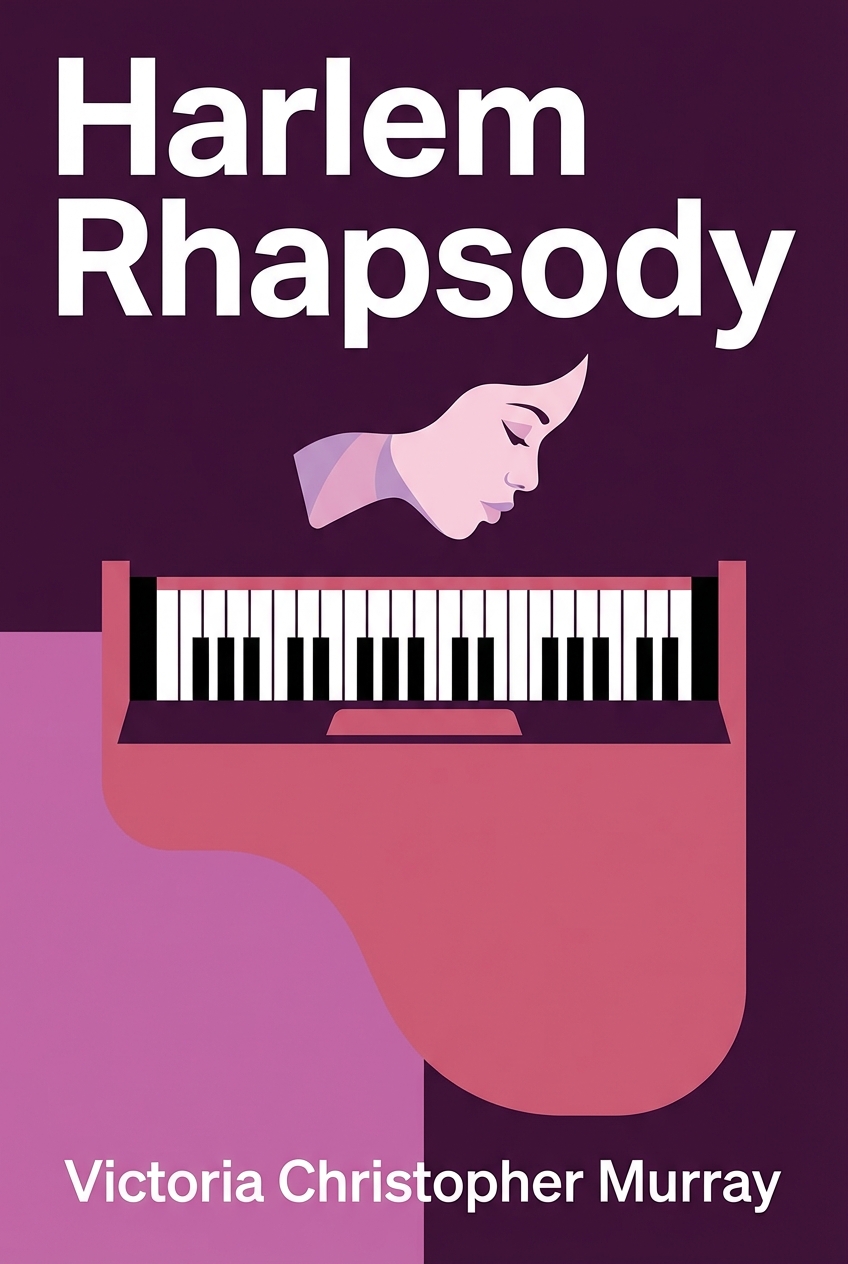
Harlem Rhapsody book cover

The Script

The old woman’s funeral was a quiet affair, a small gathering of neighbors and a few distant relatives who mostly remembered her as the stern, solitary figure she’d become. They whispered about her long life, her ninety-six years spent almost entirely in the same Harlem brownstone. But no one spoke of the man who had bought that house for her, the man whose shadow had stretched across all those decades. They didn’t know that this quiet, unassuming woman had once been a glamorous showgirl, the beautiful and fiercely loyal wife of Jacob, the charismatic king of Harlem’s illegal lottery. They didn’t know the secrets she had kept locked away—secrets of passion, betrayal, and the staggering price of a family’s ambition.

Her grandson, however, knew something was missing. Sorting through her belongings, he finds a hidden stack of journals, bound in cracking leather. Inside, in his grandmother’s elegant script, is the story she never told. It’s a story of her life and of Harlem itself during its most dazzling and dangerous era. It’s the story of a love so powerful it could build a dynasty, and of a lie so profound it could bring it all crashing down. The journals reveal a woman caught between the man she adored and the devastating truth she carried, a truth that could either redeem her family’s legacy or shatter it forever.

This is the world Victoria Christopher Murray invites us into with Harlem Rhapsody. Growing up, Murray was surrounded by the vibrant stories of her own family, stories filled with faith, struggle, and the complex bonds that tie generations together. She became fascinated by the untold histories, the quiet sacrifices, and the powerful secrets that often lie just beneath the surface of a family’s public narrative. As an acclaimed author known for her explorations of faith and relationships within the African American community, Murray wrote this novel to give voice to a woman like the one she imagined—a matriarch whose silent strength and buried truths held the real key to a family’s epic story, proving that the most powerful legacies are often the ones whispered only in private.

Module 1: The Architect of a Movement

We begin in 1919. Jessie Fauset arrives in Harlem, a city buzzing with energy. It’s a symphony of jazz, intellectual debate, and newfound hope for Black Americans. She has just accepted a landmark position. She is the new literary editor for The Crisis, the official magazine of the NAACP. For Jessie, this is a mission. The first insight is clear: Cultural institutions must be built to counter negative stereotypes and shape identity. Jessie sees this firsthand. She reads letters from children who have internalized society's racism, hating their own features because they see no positive reflections of themselves.

This is why W.E.B. Du Bois, her charismatic and powerful boss, tasks her with a special project. They will launch The Brownies' Book, a monthly magazine for Black children. Its mission is explicit: to show them that being "colored is beautiful." It will feature stories of Black doctors, lawyers, and artists. It will teach them their true history. Jessie pours herself into this work. It’s an act of cultural resistance.

But this mission exists in a complicated reality. Jessie's professional life is immediately tangled with a deep personal connection. She and Du Bois are colleagues and lovers, their affair a long-standing secret. This brings us to a critical point. Personal ambition and forbidden romance create a life of conflicting joy and sorrow. Jessie is thrilled by her professional purpose. She feels powerful and fulfilled. Yet, her joy is constantly tempered by the need for secrecy. Her family, particularly her mother and sister, are her anchors. They are immensely proud of her career. But they are also deeply concerned about her involvement with a married man. This tension defines her existence in Harlem.

From this foundation, we see how Jessie becomes a discoverer of talent. One day, a letter arrives from a seventeen-year-old high school graduate. His name is Langston Hughes. He includes his graduation photo. Jessie sees his potential immediately. This is the third core idea: A key function of cultural gatekeepers is to identify and nurture emerging voices. She sees a writer. She publishes his photo and invites him to submit his work. She does the same for a young poet named Countee Cullen. She is building a movement, one writer at a time. She becomes their champion, their mentor, their first believer.

Read More