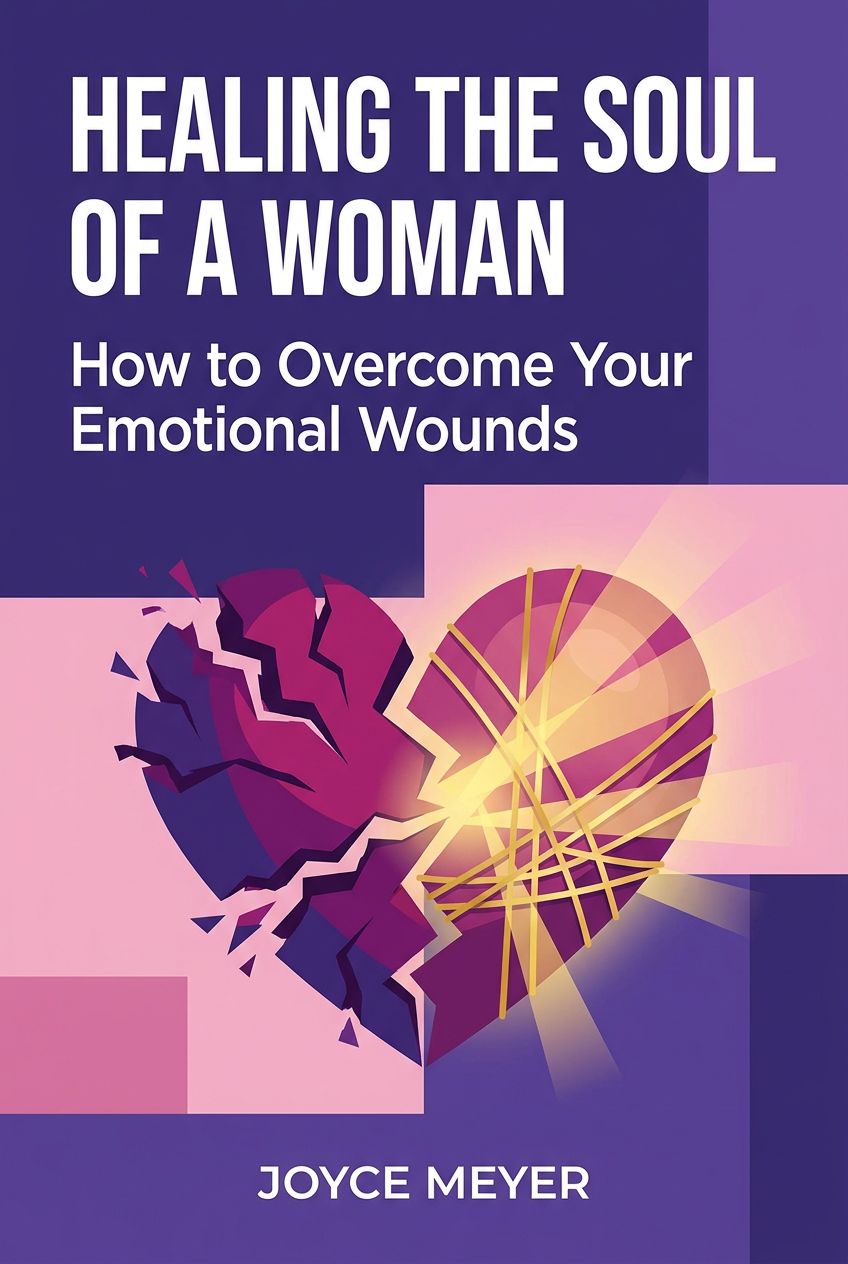
Healing the Soul of a Woman
How to Overcome Your Emotional Wounds
What's it about
Are you ready to break free from the emotional wounds that have held you back for too long? Discover a path to healing and wholeness, empowering you to reclaim your joy, confidence, and purpose. This guide offers a powerful, faith-based roadmap to lasting freedom. Learn how to confront painful memories, overcome destructive thought patterns, and embrace God's unconditional love. Joyce Meyer provides practical steps to help you identify the root of your pain, process your trauma, and move forward. You'll unlock the courage to heal your soul and live the abundant life you were created for.
Meet the author
Joyce Meyer is one of the world's leading practical Bible teachers and a New York Times bestselling author whose books have helped millions find hope. Having overcome a deeply abusive past herself, she draws on her own journey of healing to provide biblical truths and life-changing wisdom. Her profound personal experience with emotional wounds gives her a unique and powerful voice to guide others toward wholeness and restoration through Christ's redemptive love.
Opens the App Store to download Voxbrief

The Script
A life can be like two closets. The first is for guests: everything hangs neatly, sorted by color, with matching hangers and space between each item. This is the closet of public smiles, of 'I'm fine, thanks,' of achievements and anniversaries. It’s the story we tell at parties and post online. Then there's the other closet, the one we keep locked. Inside, it's chaos. A tangle of mismatched clothes, stained fabrics, and broken heirlooms shoved into the dark. It’s the closet of private hurts, of words we wish we could take back, of shame and regrets that we trip over every time we dare to open the door. We spend so much energy keeping that second closet hidden, terrified that if anyone saw the mess, they wouldn't love us anymore. We might not even love ourselves.
The pain of keeping that door shut, of living with that internal disarray, is a weight Joyce Meyer knows intimately. Her own life held a secret closet, crammed with the trauma of profound childhood abuse that cast a long, painful shadow over her adulthood. For years, she struggled with the anger, insecurity, and emotional turmoil that spilled out from it, no matter how hard she tried to keep it contained. This book is the raw, honest chronicle of her own journey from a place of deep woundedness to one of healing and wholeness. As a bestselling author and Bible teacher, Meyer writes from the hard-won authority of someone who didn't just learn about soul-healing, but had to fight for her own.
Module 1: The Wounded Soul and the Promise of Healing
The core premise of the book is straightforward. A wounded soul will poison every aspect of your life. Meyer defines the soul as the mind, will, and emotions. It's the seat of your inner life. She argues that you can have all the material success in the world. You can have the perfect job, the beautiful house, and the admiration of your peers. But if your soul is bleeding from past hurts like abuse, betrayal, or rejection, you will never truly enjoy any of it. The inner pain will always cast a shadow.
This leads to a critical insight. Many people accept a limited life because they don't realize their thinking is flawed. Meyer shares that as a teenager, she just assumed her future was capped. She thought, "I will always have a second-rate life because of what my father did to me." This wasn't a conscious choice to be miserable. It was an unexamined assumption based on her trauma. The book argues that countless women operate under similar self-imposed limitations. They internalize the pain and accept it as their unchangeable reality. Recognizing that this thinking is wrong is the first step toward freedom.
Now, let's turn to the solution presented. The author asserts that God offers complete restoration. From a Christian perspective, this is about a deep, spiritual restoration that makes a person "like new once again." This is contrasted with a life of being minimized, devalued, or used. Instead, the promise is one of unconditional love, infinite worth, peace, and joy. It's a fundamental shift from seeing yourself as a victim to seeing yourself as valued.
However, this isn't a passive process. Here's the thing. Healing is a deliberate journey that requires confronting pain. Meyer is clear that this process can be difficult. It often involves opening up old wounds to clean out the "infection" of bitterness, anger, or shame that is festering inside. She presents a stark choice. You can continue limping through life, just trying to get through each day. Or you can decide you've had enough and commit to doing whatever it takes to be made whole. It’s a conscious decision to pursue transformation over continued suffering.
We've explored the need for healing. Next up, we examine the root causes of women's pain from the book's unique perspective.
Module 2: The Spiritual Conflict and the Power of Attitude
Building on that idea, the book frames the historical mistreatment of women in a spiritual context. It argues that the widespread devaluation of women is a targeted spiritual attack. Meyer traces this back to the biblical creation story and the subsequent "Fall." She points to Genesis 3, where God places enmity between the serpent—representing Satan—and the woman. She interprets this as the root of a spiritual conflict where women have been historically targeted. To support this, she provides stark statistics on gendercide, violence against women, and economic inequality, framing them not just as social problems, but as evidence of this ongoing spiritual battle.
This external battle has profound internal consequences. Many women internalize this devaluation, creating a self-limiting mindset. After centuries of being told they are less than, many women come to believe it. Meyer dislikes the phrase, "I'm just a woman," because she sees it as a symptom of this ingrained belief. It’s a quiet acceptance of a lower status. She shares her own experience of being told women shouldn't teach in church, which caused her to doubt her own calling simply because of her gender. This internal doubt becomes a major barrier to fulfilling one's potential.
So what happens next? The book cautions that the natural response to oppression can sometimes go too far. A wounded soul often develops a hard, self-protective attitude that hinders healing. Meyer is brutally honest about her own past. After her abuse, her attitude became, "No man is ever going to push me around again! I will take care of myself." While this response is understandable, it created a wall of independence that led to isolation and control issues in her relationships. It was a defense mechanism that ultimately prevented true connection and healing.
This brings us to a crucial pivot point in the healing journey. True healing requires a transformed attitude. The book suggests that the solution is to invite God to change that hardened, defensive attitude into one of humility and trust. Meyer defines humility not as weakness, but as "strength under control." It’s the choice to let God fight your battles for you. She admits this is a daily struggle, especially in her marriage. But she trusts that when she submits her own will with a good attitude, God will protect her. The core promise is simple: you always win when God is on your side.
Now that we understand the spiritual and attitudinal dimensions, let's look at the practical tools for recovery.