All Books
Self-Growth
Business & Career
Health & Wellness
Society & Culture
Money & Finance
Relationships
Science & Tech
Fiction
Topics
Blog
Download on the App Store

How to Be a Person

65 Hugely Useful, Super-Important Skills to Learn before You're Grown Up

18 minCatherine Newman

What's it about

Ready to tackle adulthood like a pro? This guide is your secret weapon, packed with 65 essential life skills you need to master before you're grown up. Learn everything from how to handle a kitchen fire to writing a thank-you note that actually sounds like you. Discover step-by-step instructions for hugely useful, super-important tasks. You'll learn practical skills like how to plunge a toilet, sew on a button, and talk to someone new. This isn't just about chores; it's about building the confidence to handle whatever life throws your way.

Meet the author

Catherine Newman is the longtime etiquette columnist for Real Simple magazine and the author of multiple award-winning books for both kids and adults. Drawing on decades of experience answering real-life questions from readers and raising her own two children, she wrote How to Be a Person as a friendly, practical guide to the skills every kid needs. Her work celebrates the messy, wonderful, and essential business of becoming a capable and kind human being.
Listen Now

Opens the App Store to download Voxbrief

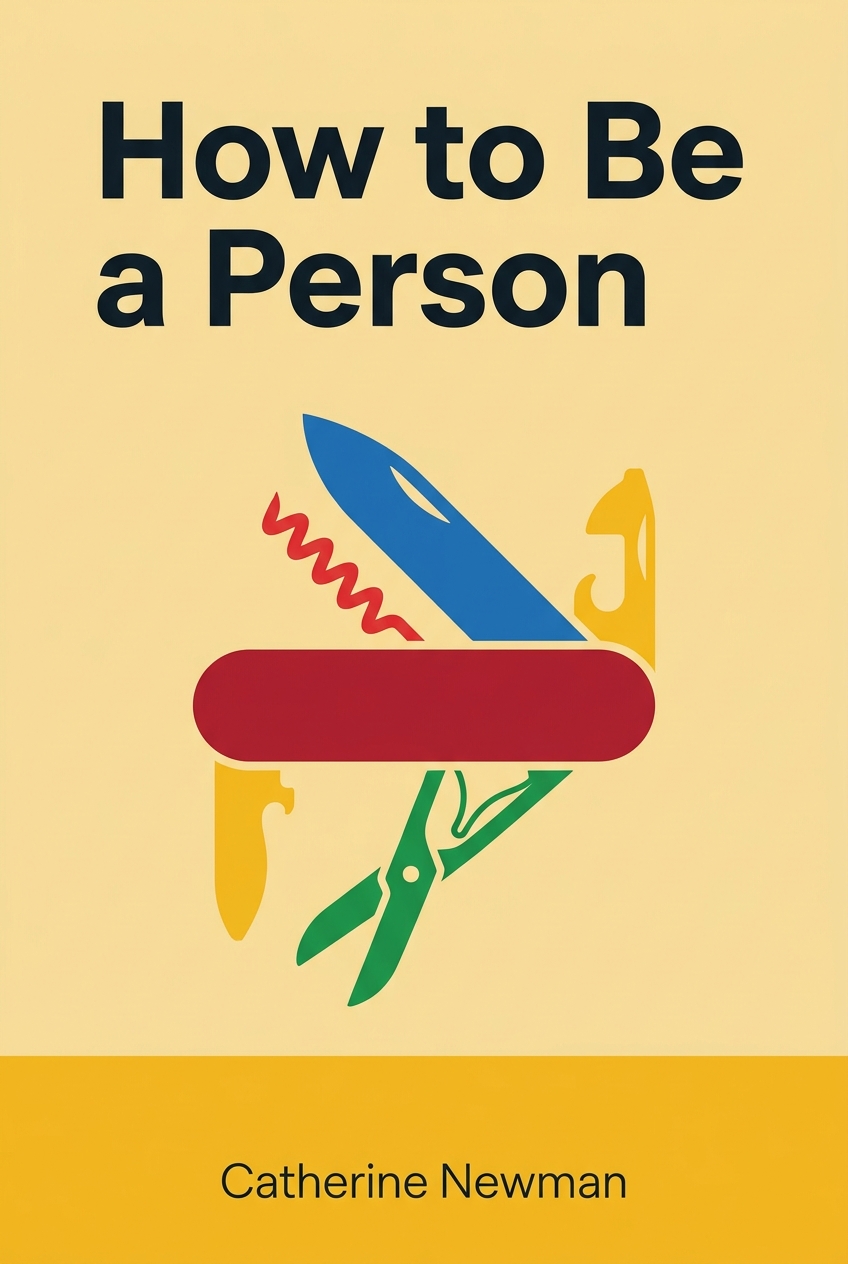
How to Be a Person book cover

The Script

The first time you try to poach an egg, it can feel like a high-stakes betrayal. You follow the directions: a swirl of vinegar, a vortex of simmering water, a gentle crack of the shell. But instead of a perfect, quivering orb, you get a ghostly cloud of white tendrils dissolving into the pot. It’s a small, kitchen-scale disaster, but it feels disproportionately personal. You did everything right, yet the universe—or at least, this small corner of it—refused to cooperate. Life is full of these moments: the flat tire on the way to a job interview, the awkward silence after a heartfelt apology, the bewildering tax form that seems designed to mock you. These are a thousand tiny, frustrating encounters with a world that never handed you a comprehensive guide for how to exist within it.

These are the exact moments that fascinated Catherine Newman. As a long-time advice columnist for publications like Real Simple and the author of numerous books for both adults and children, she noticed a recurring theme in the questions she received. They were often about the small, practical, and sometimes embarrassing gaps in our knowledge. People wanted to know how to write a thank-you note that didn't sound stiff, how to comfort a grieving friend without saying the wrong thing, or yes, how to successfully poach an egg. Newman realized that adulthood arrives without a welcome packet, leaving so many of us to quietly figure things out on our own. She wrote How to Be a Person as the warm, funny, and deeply practical guide she wished she’d had, a collection of sixty-eight essential life skills for navigating the world with a little more grace and a lot less frustration.

Module 1: The Art of Active Care

We often think being there for someone is enough. But presence is passive. Active care is a skill. It’s about anticipating needs and taking small, concrete actions that bring comfort and joy. It’s about the simple, thoughtful things that show you're paying attention.

The book suggests a powerful first step: Master a few simple gestures to comfort the sick or lonely. When a colleague is out with the flu, what do you do? A "get well soon" message is fine. But dropping off a magazine or some ginger ale is better. It's a tangible act of kindness. For older relatives, don't just sit there. Offer to play a game or read aloud. These small offerings transform your presence from a visit into a shared, positive experience. They communicate care far more effectively than words alone.

Building on that idea, the author turns this lens inward. You must learn to create a personal sanctuary for rest. Sleep is something you cultivate. Newman offers practical techniques for this. She suggests creating a "sleepy mugful" of warm milk or chamomile tea. The science might be debated, but the psychological association is powerful. The ritual itself signals to your brain that it's time to wind down. Another technique is using aromatherapy. A bit of lavender oil on a tissue near your pillow can create a calming environment. The core principle is association. You have to train your brain. This means your bed is for sleeping. By keeping your bed a pure sleep space, you strengthen that mental connection.

So what happens next? This principle of active, thoughtful care extends beyond humans. It applies to the living things in your space. Treat pet and plant care as a non-negotiable routine, not an afterthought. A pet’s dependence on you is a serious responsibility. You must honor that dependence with consistent action. Create a visual schedule for feeding, watering, or walks. Do the unpleasant chores, like scooping the litter box, without complaint. It's part of the deal. The same logic applies to houseplants. They have basic needs: sunlight and the right amount of water. The book gives a simple diagnostic tool. Stick your finger into the soil up to the first knuckle. If it’s damp, wait to water. This small, two-second check prevents the most common plant-killer: overwatering. These routines are small acts of stewardship. They build discipline and mindfulness.

From this foundation, we see how these skills come together in social situations. Whether you're a guest or a host, the goal is the same: make people feel comfortable and welcome. When you are a guest, your job is to be gracious and adaptable. Introduce yourself to everyone. When offered a choice, make one. Don't say "I don't care." It puts the burden back on your host. If you spill something, apologize, and immediately offer to clean it up. It shows you respect their home. But flip the coin. When you are the host, your role is to be inclusive. As a host, you must actively create a welcoming environment. Introduce your guest to your family. Offer them a drink. Let them choose the music or activity. The key, Newman suggests, is to put your phone away unless you're using it for a shared activity. Be present. These are the small, deliberate actions that turn a simple get-together into a memorable, positive interaction. They are the building blocks of strong social bonds.

Module 2: Mastering Your Domestic Environment

Your living space is a direct reflection of your internal state. A chaotic home often leads to a chaotic mind. Gaining control over your environment is about establishing systems that reduce friction and create a sense of order. This mastery builds self-sufficiency. It ensures that if a task isn't done, it's a choice, not a result of ignorance.

The book starts with the kitchen, the heart of the home. Learn to cook a few versatile dishes to build kitchen confidence. Cooking is a basic life skill. Newman provides simple, foundational recipes. Think scrambled eggs, a perfect boiled egg, or a simple vinaigrette. The formula for a salad dressing is a great example: one part vinegar to two parts oil, plus salt. Shake it in a jar. You're done. From there, you can add mustard, herbs, or garlic. Another example is learning to safely chop an onion. Trim the ends, halve it, peel it, and then dice it while keeping your fingers curled away from the blade. These are building blocks. Mastering them gives you the confidence to experiment.

Here's a critical piece of advice that elevates your cooking immediately. Always taste and adjust seasoning before you serve food. A dish is finished when it tastes right. If your food is bland, it probably needs more salt. If it tastes flat, it might need a splash of something acidic, like lemon juice or vinegar, to brighten the flavors. If it's too tangy, a tiny drop of honey can balance it. This single habit—tasting and adjusting—is the difference between a cook and a chef. It's about active engagement with the process, not just following instructions.

This methodical approach extends to cleaning. Approach household chores with a clear, systematic process. Cleaning is about working efficiently. For hand-washing dishes, the book suggests a logical order. Wash items from cleanest to dirtiest. Start with glasses, then plates, then silverware, and finish with greasy pots and pans. This keeps your wash water cleaner for longer. The same logic applies to loading a dishwasher. Scrape off food, don't just rinse. Place sharp knives blade-down for safety. Don't block the spray arms. These are principles of efficiency and safety that make the chore faster and more effective.

And it doesn't stop there. The book covers other essential household tasks with the same practical mindset. You need to learn the systematic steps for laundry and basic clothing repair. Laundry is a process. First, sort your clothes into lights and darks. Check the pockets. Address any stains before you wash them. When you dry, clean the lint trap every single time. It's a fire hazard if you don't. For clothing maintenance, Newman offers simple, empowering skills. Learn to sew on a button. It takes five minutes and saves a favorite shirt. Learn to patch a pair of jeans. It's a practical skill that also allows for creative expression. The book even humorously tackles the dreaded fitted sheet. The advice? Just wad it up. It's a reminder that the goal is "clean enough," not perfect. Aim for practicality. Don't let the pursuit of perfection become a source of stress.

Read More