All Books
Self-Growth
Business & Career
Health & Wellness
Society & Culture
Money & Finance
Relationships
Science & Tech
Fiction
Topics
Blog
Download on the App Store

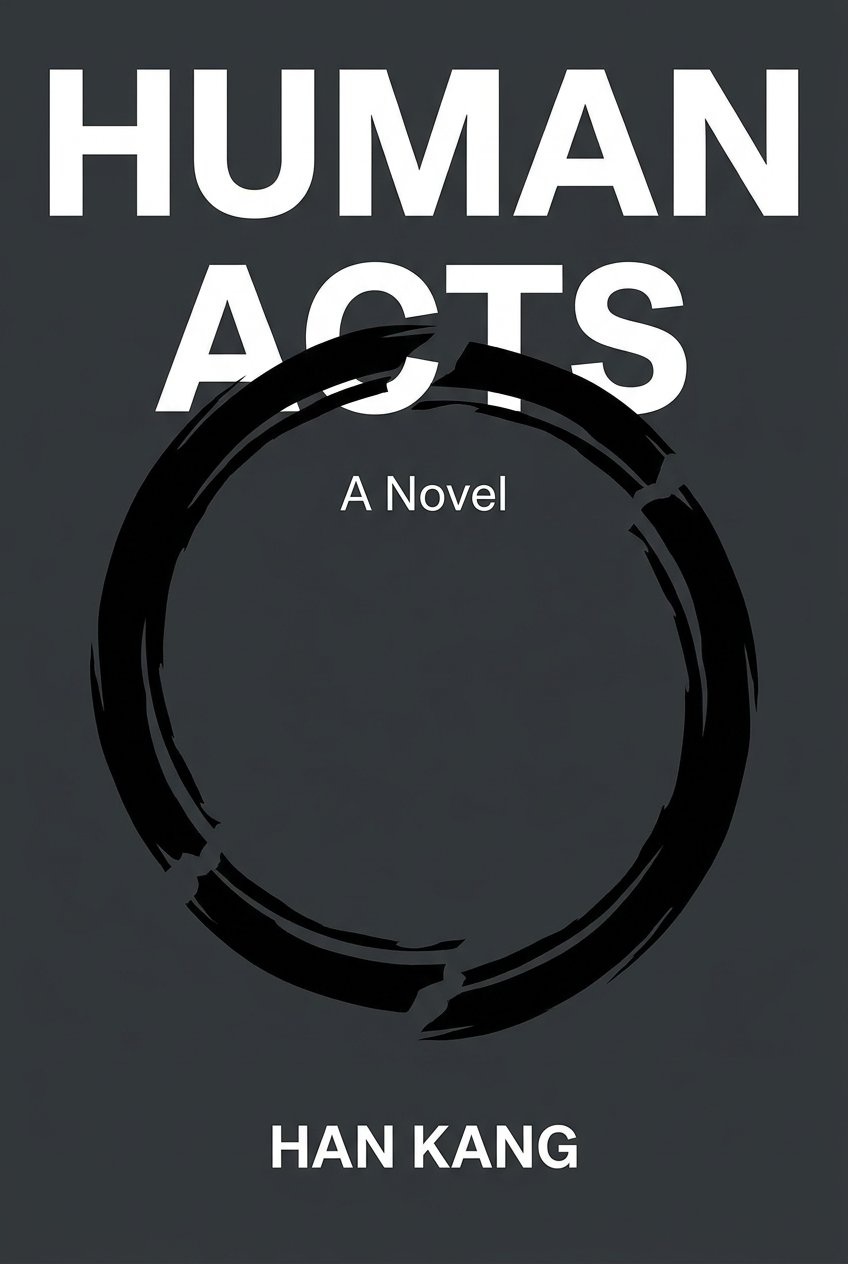
Human Acts

A Novel

13 minHan Kang

What's it about

How do we find humanity in the face of unimaginable violence? This powerful story explores the brutal 1980 Gwangju Uprising in South Korea through the eyes of those who lived it, forcing you to confront the resilience and fragility of the human spirit. You'll follow the intertwined lives of a young boy searching for his friend, a tortured political prisoner, and a factory girl, among others. Discover how their stories reveal the profound impact of trauma, the struggle for remembrance, and the enduring question of what it means to be human.

Meet the author

Han Kang is a towering figure in contemporary literature and the celebrated winner of the 2016 Man Booker International Prize for her novel The Vegetarian. Drawing from her own family's history, she wrote Human Acts to explore the haunting aftermath of the 1980 Gwangju Uprising, an event that deeply shaped her childhood in South Korea. Her work powerfully confronts national trauma and the enduring question of human dignity through visceral, poetic prose, establishing her as a vital voice on memory and resilience.
Listen Now

Opens the App Store to download Voxbrief

Human Acts book cover

The Script

Think of a single, vibrant thread pulled from a grand tapestry. By itself, it is just a strand of color, fragile and incomplete. But when woven back into its place, it becomes part of a larger, coherent image—a face, a hand, a sky. Now imagine that tapestry is violently torn apart. The threads are scattered. Some are shredded, some are stained, some are lost entirely. Someone is then tasked with gathering these fragments and trying to understand the original picture. They hold a single red thread that once depicted a smile, now it just looks like a wound. They find a white thread that was part of a cloud, now it’s just a loose, frayed end. The act of trying to reassemble the story from these broken pieces is an act of memory, but it's also an act of profound, agonizing pain. The original image can never be fully restored; the violence has created permanent gaps and distortions. What remains is a new, fractured narrative—a story of the original picture's destruction and the desperate attempt to hold onto what's left.

This desperate act of gathering the fragments of a shattered human story is precisely what drove the South Korean author Han Kang to write Human Acts. The book is her attempt to reckon with a national trauma that was also deeply personal: the 1980 Gwangju Uprising. When she was a child, her family moved from Gwangju to Seoul just months before the massacre, a move that saved them but left her with a haunting sense of borrowed time and a profound connection to the event. She spent years researching, interviewing survivors, and poring over testimonies, to gather the scattered threads of individual lives—the voices of the dead, the grief of the survivors, the lingering soul of a city—and weave them into a memorial that honors the brutal, fragmented, and undeniable humanity of what was lost.

Module 1: The Body as the First Battlefield

The novel begins not with heroes or politics, but with bodies. Piles of them. Unclaimed and decomposing in a makeshift morgue. This is a deliberate choice. It forces us to confront the most elemental consequence of violence.

The first core insight is that violence is a physical violation of the human body. Han Kang refuses to let us look away. We are introduced to Dong-ho, a middle-school boy volunteering to care for the dead. Through his eyes, we witness the gruesome reality. A young woman’s corpse, her skull caved in. Her pedicured toes, once a sign of life and care, now swell and turn black. The air is thick with the "putrid stink" of decay. By grounding the narrative in this visceral reality, the book argues that any discussion of conflict that ignores the body is a dangerous abstraction. It’s a stark reminder for leaders and innovators. We often talk about disruption and change in clean, theoretical terms. This book forces us to remember the human cost when systems break down violently.

From this foundation, we see how denying proper death rites is a profound act of dehumanization. In many cultures, including the Korean context of the book, burial rituals are crucial. They honor the dead and allow the living to grieve. In Gwangju, the military government’s actions made this impossible. Bodies were unidentifiable. They were dumped in mass graves. This was a spiritual and cultural crime. It was an attempt to erase people from memory. The volunteers in the morgue, like Dong-ho and the women Eun-sook and Seon-ju, fight back against this. Their simple acts—washing the bodies, covering them, lighting candles—are acts of defiance. They are insisting on the humanity of the dead. It’s a powerful lesson. Dignity isn’t just for the living. How we treat people at their most vulnerable, even in death, defines our own humanity.

And here’s the thing. In the face of horror, small acts of care become radical acts of resistance. The volunteers in the makeshift morgue are surrounded by death. Yet, they form connections. They share food—a piece of sponge cake, a yogurt drink. They worry about each other. These moments of connection are small, mundane, and profoundly human. They are a quiet insistence that even when the world is falling apart, our responsibility to one another remains. For anyone leading a team through a crisis, this is a critical insight. The grand strategy matters, but the small, human gestures of support and recognition can be what holds everything together.

Module 2: The Echoes of Trauma

The violence of the uprising doesn't end when the shooting stops. Human Acts shows how trauma reverberates through time, shaping the lives of survivors for decades. The book is structured as a series of interconnected stories, each from a different perspective, jumping forward in time. This structure itself mirrors the nature of trauma. It’s a fragmented, recurring nightmare.

The first key idea here is that trauma fragments the self and disrupts the experience of time. Survivors describe a feeling of detachment. During an interrogation, one character, Eun-sook, notes that "a part of one’s self must be temporarily detached from the whole." It's a survival mechanism. She endures humiliation by mentally stepping outside her own body. This fragmentation continues long after the event. Years later, survivors are haunted by intrusive memories. They suffer from insomnia, nightmares, and phantom pains. The past is a constant, unwelcome presence in the present. This shows us that recovery requires acknowledging the deep, structural changes that trauma creates in a person's psyche.

Building on that idea, the book reveals that survivor's guilt is a prison with no bars. Dong-ho, the young boy from the first chapter, is haunted by a single memory. He was with his friend Jeong-dae when soldiers opened fire. He ran. His friend was shot. He survived. This memory tortures him. He believes he is a coward. He feels he should have died too. Another character, a prisoner, is tormented by the question of why he lived while his friend took his own life years after their release. This guilt is a heavy, invisible burden. It shapes their decisions. It poisons their relationships. It isolates them. It’s a stark illustration that surviving an atrocity is often the beginning of a different kind of life sentence.

So what happens next? The book suggests that trauma becomes a collective, inherited wound. The author, Han Kang, writes herself into the final chapter. She describes her own process of researching the book. She has nightmares. She feels a physical weight in her chest. The trauma of Gwangju, she suggests, became a "radioactive" force, spreading through the nation's psyche. She writes that Gwangju became "another name for whatever is forcibly isolated, beaten down and brutalised." This is a powerful concept. It means that historical traumas become part of a collective identity, a recurring pattern that can reappear in new contexts. Understanding these patterns is essential for any society that wants to avoid repeating its darkest chapters.

Read More