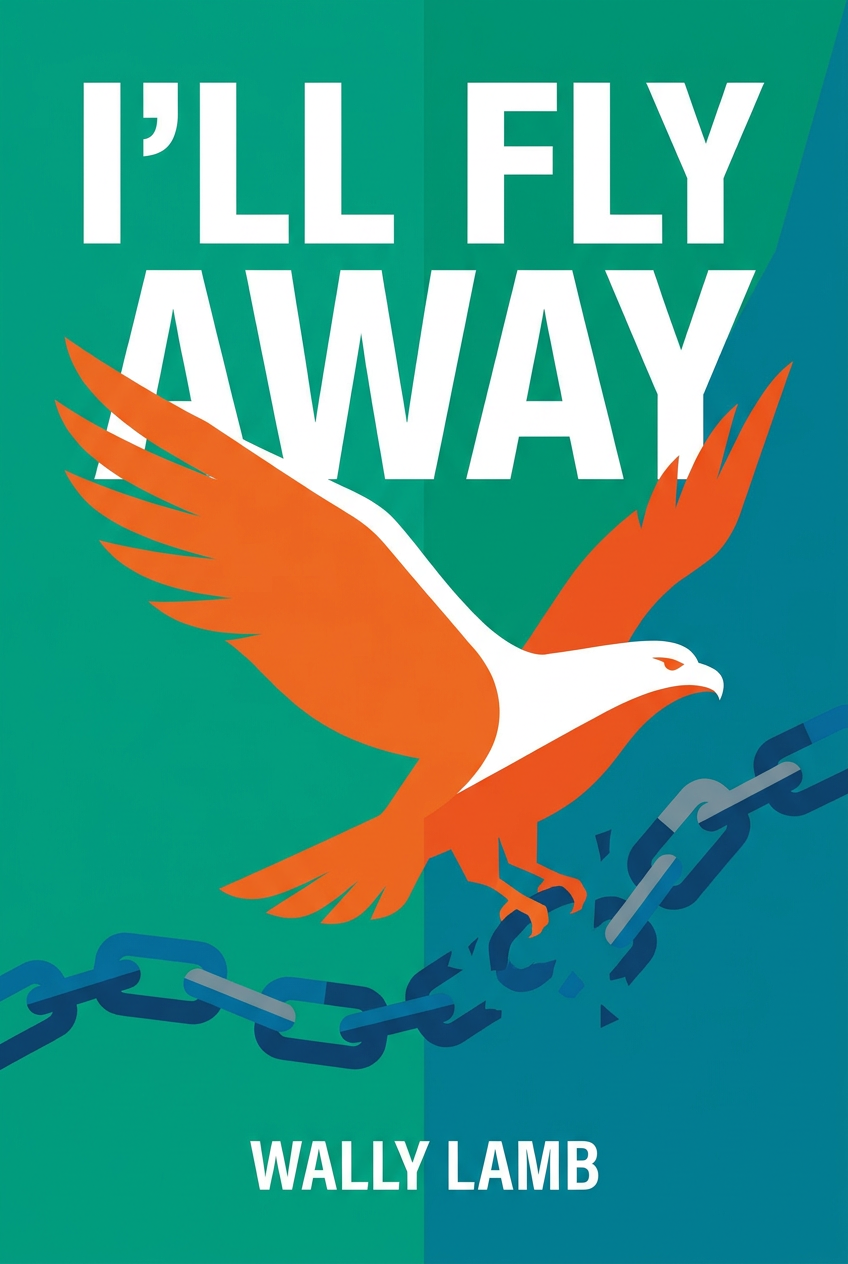
I'll Fly Away
Further Testimonies from the Women of York Prison (P.S.)
What's it about
What if the most profound stories of resilience, hope, and redemption came from behind bars? Discover the raw, unfiltered voices of incarcerated women as they share the powerful truths that transformed their lives and can offer you a new perspective on freedom and forgiveness. You'll explore the intimate and courageous testimonies of women who found their voices through a writing workshop in a maximum-security prison. This collection of essays, poems, and memoirs reveals the complex paths that led them to prison and the unexpected ways they found healing, community, and the strength to fly away from their pasts, offering lessons in empathy and the enduring power of the human spirit.
Meet the author
Wally Lamb is a 1 New York Times bestselling author and the director of a writing workshop at York Correctional Institution, Connecticut's only women's prison, since 1999. His deep, long-standing commitment to these women provides him with unparalleled insight into their lives and stories. Through his guidance, Lamb has empowered incarcerated women to find their voices and share their powerful testimonies of resilience and hope, culminating in this moving collection that continues the work he began two decades ago.
Opens the App Store to download Voxbrief

The Script
Two women arrive at the same prison gate. One is a celebrated author, free to leave at the end of the day. The other is an inmate, her world defined by concrete walls and numbered days. The author has spent his life crafting fictional characters, building entire worlds from imagination. The inmate’s world has been stripped down to its barest facts, her identity reduced to a case file and a sentence. The author holds a pen and a blank notebook, tools of creation. The inmate holds a history of choices and circumstances that brought her here, a story many assume is already finished.
But what happens when the author hands the inmate the pen? What happens when the power to tell the story shifts? The fictional worlds the author is famous for suddenly seem less urgent than the real, unheard stories locked inside the prison. The boundary between the observer and the subject dissolves, replaced by a shared project: to find the human voice that a system is designed to silence. This is about creating a space where a voice, already there, can finally be spoken and heard, transforming both the teller and the listener in the process.
That very scenario is what led to the creation of I'll Fly Away. Bestselling novelist Wally Lamb, known for his deeply empathetic characters in books like She's Come Undone, began volunteering to teach a writing workshop at the York Correctional Institution, a women's prison in his home state of Connecticut. He didn't go in with a book project in mind, but as he witnessed the raw, powerful, and often heartbreaking stories the women began to write, he realized these were narratives the world needed to hear. He saw how the act of writing became a lifeline, a way for these women to process their pasts and reclaim their identities. The book grew organically from that workshop, becoming a powerful collection of memoirs that gives a human face to the statistics of incarceration.
Module 1: The Anatomy of Trauma and Its Legacy
The stories in "I'll Fly Away" return again and again to a central theme: trauma. It is a complex, inherited force. Many of these women did not just experience trauma. They were born into it. The book reveals how these early wounds shape a life's trajectory, often leading directly to the prison gates. One writer, Lynda Gardner, describes horrific childhood abuse from her stepfather, a police detective. He would taunt her mother, "Go ahead and call the cops." He knew the "blue wall of silence"—an informal code among officers—would protect him. Childhood abuse is often enabled by systemic silence. This institutional complicity trapped the family. It taught Lynda that she was unloved and deserving of punishment. Her pain was not just personal; it was reinforced by a system that failed to protect her.
This leads to a crucial insight. Unprocessed trauma manifests in destructive coping mechanisms. For forty years, Lynda used drugs, alcohol, and gambling to feel numb. It was the only way she knew to escape the pain. This self-medication was a survival strategy. It led to poor choices, failed relationships, and eventually, the crime that sent her to prison. Her story is a powerful example of how unhealed wounds can dictate a life path. The addiction becomes the symptom, not the cause.
And here's the thing. The cycle often continues. One writer, Lynne, describes her abusive marriage. She constantly blamed herself for her husband's rage. "If I tried harder," she thought, "he wouldn’t get so angry." This echoes the self-blame she likely learned in a childhood where her own needs were secondary. The book shows how victims internalize guilt, believing they are responsible for their abuser's actions. After a brutal attack, Lynne's first instinct was to apologize to her sister for ruining her vacation. The psychological grip of an abuser systematically erodes a victim's sense of self. Paul, her husband, was charming in public but a tyrant at home. Lynne felt like his puppet, her identity reduced to an object for his use. This objectification is the final stage of psychological control. It leaves the victim feeling hollowed out, a "broken marionette," as she puts it.
So what's the path out? For many of these women, sobriety is the first, terrifying step. When Lynda Gardner got to prison, she was sober for the first time in decades. And she was terrified. "I’m scared shitless," she writes, "because I feel." She felt hurt, sadness, and most of all, anger. Healing begins with the painful process of feeling suppressed emotions. It’s like opening a trunk filled with years of shame and guilt. But through that process, she began to see with "bright eyes," free from the fog of addiction. She started to get her life back. This emotional awakening, however painful, is the necessary foundation for any real rehabilitation. It's the moment a person stops running from their past and starts confronting it.
Module 2: The Prison System: A Crucible of Dehumanization
We've looked at the personal histories that lead women to prison. Now, let's turn to the institution itself. "I'll Fly Away" paints a stark picture of the prison system. It is a machine of dehumanization. The process begins on day one. A new inmate describes being strip-searched, given a delousing shower, and issued a shapeless uniform. The prison intake process is designed to strip away individuality. Personal identity is replaced by a number and a set of rules. Your belongings are taken. Your autonomy vanishes. One writer learns quickly that "prisoners were powerless against inconsistencies." An officer could confiscate your dinner simply because of a bad mood.
This environment fosters a specific kind of social dynamic. One writer, Robin, arrives at the maximum-security facility terrified of the predatory lesbian subculture she's heard about. Her initial reactionWhat if the most powerful stories weren't written by professional authors, but by people with no audience in mind, driven only by the need to make sense of their own shattered lives? What if those stories held keys to understanding resilience, systemic failure, and the raw, unfiltered truth of the human condition?
This is the world of "I'll Fly Away," a collection of testimonies from the women of York Correctional Institution, edited by the novelist Wally Lamb. It's a window into lives lived at the extreme margins of society. It forces us to confront uncomfortable truths about trauma, justice, and the incredible power of a single, honest sentence.
Background
Wally Lamb, a successful novelist, began volunteering to teach a writing workshop at York Correctional Institution, a women's prison in Connecticut. He didn't set out to create a book. The project grew organically from a simple premise: giving incarcerated women a space to write their truths. Many of these women were victims of horrific abuse long before they committed crimes. Writing became their therapy, a way to process trauma they had never spoken about.
The first collection, "Couldn't Keep It to Myself," was a surprise success. It revealed the profound rehabilitative power of creative expression. "I'll Fly Away" is the follow-up, a deeper dive into these testimonies. Lamb's motivation was to provide a platform. Proceeds from the book support the Barbara Fund, a college-in-prison program, turning these stories of pain into a tangible force for hope and rehabilitation. The book exists to honor forgotten voices and prove that art can flourish in the most barren ground.
Module 1: The Anatomy of Trauma and Its Legacy
The stories in "I'll Fly Away" are forensic examinations of trauma. The writers trace the origins of their pain back to childhood, revealing how early wounds fester and shape a life's trajectory. A staggering 70% of the women in the workshop were victims of sexual violence. This is the headline.
One of the most powerful threads is the "don't tell" rule. In many of these families, an unspoken code of silence protected abusers and forced victims to internalize their suffering. One writer, Debbie, recalls being molested by her uncle as a child. The event was never named or addressed. The family simply moved on, enforcing a suffocating silence. Years later, that same uncle returned, and her father, knowing the history, allowed him to stay. This betrayal—the failure of a parent to protect their child—is a recurring theme. The writers show that silence is a form of violence. It communicates to the victim that their pain is less important than the family's fragile peace. This enforced silence doesn't make the trauma disappear. It metastasizes.
This leads to a crucial insight. Unprocessed trauma manifests physically and psychologically. It doesn't stay buried. In one gut-wrenching story, a writer is driving when a Johnny Cash song comes on the radio. The song instantly triggers a repressed memory of her childhood molestation. Her body reacts before her mind can process it. She's overcome with nausea, pulls over, and vomits uncontrollably. The physical purge is a metaphor for the emotional one. The memory, once unlocked, demands to be confronted. For many of these women, writing is the first time they confront these demons head-on. The act of putting words to the unspeakable makes them feel "less weighted down."
So what happens next? The book reveals how trauma creates dysfunctional coping mechanisms. For one writer, Lynda Gardner, forty years of addiction was a direct response to the horrific abuse she suffered from her police detective stepfather. She explains that being numb on drugs and alcohol made her feel safe. It was the only way she could stop thinking about the pain. This self-medication led directly to the crimes that landed her in prison. Her story is an explanation. It shows a clear, devastating line from childhood abuse to adult incarceration.
And here's the thing. The cycle often continues. Trauma is intergenerational. One writer, Savannah, describes how her mother uses guilt to control her, a manipulative technique her mother learned from her own parents. These toxic patterns are passed down like family heirlooms. Another writer, Brenda, was raised in a family with a strict "code of silence." As a result, when she was molested as a child, she couldn't speak. She outwardly acted as if nothing happened while her internal world crumbled. This learned suppression of truth becomes a blueprint for navigating life, a blueprint that ultimately fails.
Module 2: The Prison System: Dehumanization and Unexpected Humanity
Once inside the prison system, the writers find themselves in an environment that often mirrors the abusive dynamics they fled. The book paints a stark picture of how institutions can strip away identity and perpetuate trauma.
The process begins immediately. Upon arrival, women are strip-searched, deloused, and issued identical, ill-fitting uniforms. Personal identity is erased. One writer, a former lawyer, describes feeling as if the words "liar, cheat, thief" are branded on her chest. In the holding cell, she observes that every woman, regardless of her crime, has a story and a desperate need to be heard. But the system isn't built for listening. It's built for processing. The prison system often functions through dehumanization. Inmates become numbers. Rules are arbitrary. An officer can confiscate a meal based on a whim, reinforcing a sense of powerlessness that is painfully familiar to abuse survivors.
This environment breeds a specific kind of social dynamic. Relationships in prison are often transactional and rooted in control. One writer, Zoë, details how women enter relationships out of a need for power, loneliness, or boredom. These bonds are volatile, marked by jealousy and manipulation. It's a survival strategy in a place where facing life alone is "too bleak to bear." Another writer, Robin, arrives at a maximum-security facility terrified of predatory lesbians. But she quickly learns the reality is more complex. Friendships are alliances for protection. Loyalty is pragmatic. The social structure is a microcosm of survival, with its own codes and hierarchies.
But flip the coin. Amidst the chaos and control, unexpected moments of grace appear. Writing and education become powerful tools for rehabilitation. The writing workshop itself is a sanctuary. It's a space where these women can be vulnerable without fear of manipulation. Through revision and feedback, they transform raw, painful drafts into polished, publishable work. This process helps them see the patterns in their own lives, as if hovering above the labyrinth of their past. For many, it's the first time they gain any perspective on their own stories.
Furthermore, other programs offer lifelines. One writer, Barbara, participates in the Prison Pup Partnership, training service dogs. The unconditional love from an animal provides a powerful counter-narrative to a life of abuse and rejection. It gives her a sense of purpose. Another writer, Bonnie, becomes a mentor to younger inmates and a hospice volunteer, comforting the terminally ill. These acts of service allow them to reclaim a part of their humanity. Meaningful work can restore a sense of agency and self-worth. It's a reminder that even within the walls of a prison, it's possible to contribute, to care, and to heal.
Module 3: The Search for Redemption and a Different Kind of Freedom
"I'll Fly Away" is a testament to the resilience of the human spirit. The title itself points toward a longing for escape, but the stories reveal that true freedom is an internal state. It's about finding peace and meaning, even in the most restrictive circumstances.
A central theme is the agonizing search for forgiveness. This is about the hard work of self-forgiveness. One writer, Lynda, explains that sobriety is terrifying because it forces her to feel everything she spent decades trying to numb. She feels hurt, sadness, and most of all, anger. But she describes this emotional awakening as "seeing through bright eyes now—no fog, no haze." She is finally beginning to empty the trunk of shame and guilt she's carried her whole life. This shows that authentic healing requires confronting suppressed pain.
In another story, a writer details smashing her grandmother's car windows in a fit of rage after being rejected. Years later, after she's arrested for murder, her grandmother visits her in detention. She offers no judgment, only a hug and a kiss. This act of unconditional love becomes "the most precious gift." It builds a bridge across the chasm of anger and betrayal. The story powerfully illustrates that unconditional love and forgiveness can be transformative. They provide a foundation for a "second start" when all seems lost.
Building on that idea, many writers find solace and strength in nature. Even small connections to the natural world become profound acts of freedom. One inmate, Kathleen, finds her sanctuary in the prison garden. Tending to the plants and watching the bumblebees allows her to mentally escape the "drab ugliness" of the prison. She finds freedom "in the chambers of [her] mind." Another writer, Barbara, is sustained by watching birds at a feeder outside her window. It's a simple ritual, but it connects her to a world beyond the walls and reminds her that life continues. Connection to nature provides a powerful anchor to hope.
Ultimately, the act of writing itself becomes the ultimate flight. It's a way to reclaim their narratives and assert their humanity. One writer, Chasity West, serving a life sentence, says that writing helps her escape reality, heal her broken soul, and feel human again. The women are remaking themselves, word by word. They write to understand their pasts, to make sense of their presents, and to imagine a future. Writing is an act of defiance against erasure. It ensures their stories, and the lessons they hold, will not be forgotten.
Conclusion
"I'll Fly Away" is a difficult but essential read. It challenges our comfortable notions of justice, criminality, and rehabilitation. The women of York prison are presented as flawed, complex human beings who have made terrible mistakes. But their stories demand that we look beyond their crimes to the crushing weight of the trauma that preceded them.
The book is a powerful argument that punishment alone is a failed strategy. Dehumanization doesn't heal; it perpetuates cycles of violence. True rehabilitation comes from restoring dignity, providing education, and creating space for healing. The writing in this book is evidence. It proves that when we give people the tools to understand their own lives, they can begin to build new ones. These stories, born from the darkest corners of human experience, shine a powerful light on the possibility of redemption.
Actionable Takeaways
Before we wrap up, here are three things you can do this week:
- Audit your own "don't tell" rules. This week, identify one difficult truth in your professional or personal life that is being kept silent. You don't have to voice it yet. Just acknowledge its existence and the cost of that silence.
- Practice active listening with one person. Find a moment this week to listen to a colleague or friend without interrupting or formulating your response. Focus solely on understanding their story, just as the facilitators did for the women in this book.
- Find your "prison garden." Identify one small, simple activity that connects you to something real and grounding outside of your work. It could be a five-minute walk, watching the sky, or listening to a piece of music. Schedule it and treat it as non-negotiable.
Closing Question
This week, I want you to write down one story from your own life that you've never told anyone. Just one. You don't have to show it to anybody; the act of writing it is the entire point. And do it because your unexamined stories hold power over you, and putting them on paper is the first step to taking that power back.